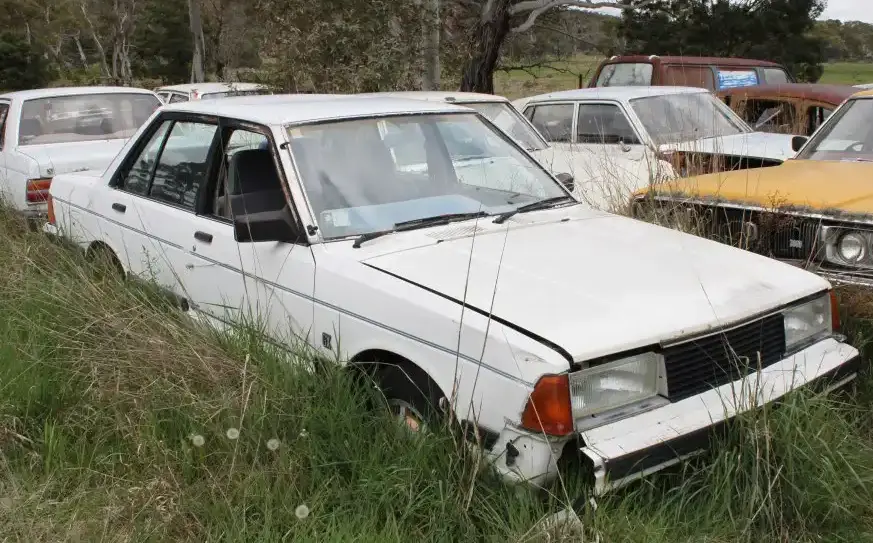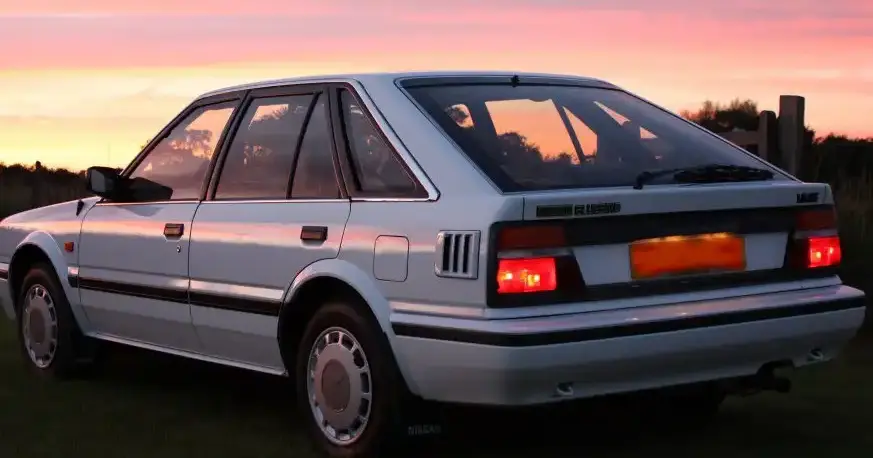
The Nissan Bluebird Hatchback (T72, T12) 2.0, produced between 1985 and 1987, represented a significant offering in Nissan’s lineup during a period of increasing popularity for compact, practical hatchbacks. This variant, powered by a 2.0-liter engine producing 102 horsepower, occupied a middle ground within the T72/T12 Bluebird range, offering a balance between affordability and performance. It was primarily marketed towards families and individuals seeking a reliable and spacious vehicle for everyday use. The T72 designation refers to the chassis code, while T12 specifically denotes the body style and engine configuration. This generation Bluebird aimed to compete with established rivals like the Toyota Corolla and Honda Civic in various global markets, particularly in Australia and New Zealand, where it gained a strong following.
Technical Specifications
| Brand | Nissan |
| Model | Bluebird |
| Generation | Bluebird Hatchback (T72, T12) |
| Type (Engine) | 2.0 (T12) (102 Hp) |
| Start of Production | 1985 |
| End of Production | 1987 |
| Powertrain Architecture | Internal Combustion Engine |
| Body Type | Hatchback |
| Seats | 5 |
| Doors | 5 |
| Fuel Type | Petrol (Gasoline) |
| Power | 102 Hp |
| Engine Aspiration | Naturally Aspirated |
| Drivetrain | Front Wheel Drive |
Powertrain & Engine Architecture
The heart of the Bluebird T12 2.0 was Nissan’s Z20 engine, a 1991cc, naturally aspirated inline-four cylinder gasoline engine. This engine utilized a cast iron block and an aluminum cylinder head, a common configuration for the era. Fuel delivery was managed by a carburetor, typical for vehicles of this period, rather than fuel injection. The Z20 featured a single overhead camshaft (SOHC) valvetrain, operating two valves per cylinder. While not a particularly high-revving engine, it was known for its durability and relatively smooth power delivery. The 102 horsepower output was achieved at approximately 5,200 rpm, with peak torque of around 128 lb-ft at 3,200 rpm. The transmission paired with this engine was a three-speed automatic, designed for ease of use and comfort rather than outright performance. This automatic transmission was a conventional hydraulic unit, offering smooth but not particularly quick shifts.
Driving Characteristics
The combination of the 2.0-liter Z20 engine and the three-speed automatic transmission resulted in a driving experience geared towards practicality and comfort. Acceleration was adequate for everyday driving, but not particularly brisk. Zero to sixty mph times were estimated to be around 11-12 seconds. The automatic transmission’s gear ratios were optimized for fuel economy and smooth cruising, rather than aggressive acceleration. Compared to the manual transmission versions of the Bluebird, the automatic variant felt noticeably slower, particularly during overtaking maneuvers. The automatic also diminished the driver’s control over engine braking. However, the automatic provided a more relaxed driving experience, especially in urban traffic. The front-wheel-drive layout provided predictable handling, although it wasn’t particularly sporty. The steering was light and easy, making it well-suited for city driving.
Equipment & Trim Levels
The T12 2.0 Bluebird Hatchback typically came with a reasonable level of standard equipment for its time. Base models included cloth upholstery, a basic AM/FM radio, and manual windows and door locks. Higher trim levels, often denoted by “GL” or “SL” designations, added features such as upgraded interior trim, a more sophisticated radio with cassette player, and optional power windows and locks. Air conditioning was often an optional extra. The dashboard layout was functional and straightforward, with clearly labeled controls. Interior space was a strong point of the Bluebird, offering ample room for five passengers and a reasonably sized cargo area with the rear seats folded down. Exterior features generally included steel wheels with hubcaps, although alloy wheels were available as an option on higher trim levels.
Chassis & Braking
The Bluebird T72/T12 utilized a conventional front-wheel-drive chassis layout. The front suspension consisted of MacPherson struts with coil springs and an anti-roll bar, while the rear suspension employed a semi-independent torsion beam setup. This suspension configuration provided a comfortable ride, although it wasn’t particularly sophisticated. Braking was typically accomplished with disc brakes on the front wheels and drum brakes on the rear wheels. Power assistance was standard. The braking system was adequate for normal driving conditions, but lacked the stopping power of more modern vehicles. Steering was rack-and-pinion, providing reasonably precise control. The overall chassis design prioritized comfort and practicality over sporty handling.
Market Reception & Comparison
The Nissan Bluebird T12 2.0 received generally positive reviews from automotive critics. It was praised for its reliability, spacious interior, and comfortable ride. However, the automatic transmission was often criticized for its sluggish performance. Compared to other trims in the Bluebird lineup, the 2.0-liter automatic offered a compromise between the more economical 1.6-liter engine and the more powerful (but also more expensive) 2.0-liter manual. Fuel economy was respectable for the time, averaging around 25-30 mpg in mixed driving conditions. The 1.6-liter Bluebird offered better fuel economy, while the 2.0-liter manual provided superior performance. In terms of reliability, the Z20 engine proved to be a durable unit, with relatively few major issues reported.
Legacy
The Nissan Bluebird T72/T12 2.0, while not a particularly groundbreaking vehicle, established a reputation for reliability and practicality. The Z20 engine, in particular, is known for its longevity and relatively low maintenance costs. Today, these Bluebirds are becoming increasingly rare, and well-maintained examples are sought after by collectors and enthusiasts. The three-speed automatic transmission, while not the most desirable feature, doesn’t typically present major reliability concerns. The Bluebird’s simple mechanical design makes it relatively easy to maintain and repair. In the used car market, these vehicles are often valued for their affordability and classic appeal, representing a piece of automotive history from a bygone era. The T12 Bluebird remains a fondly remembered vehicle in regions where it was widely sold, particularly Australia and New Zealand.