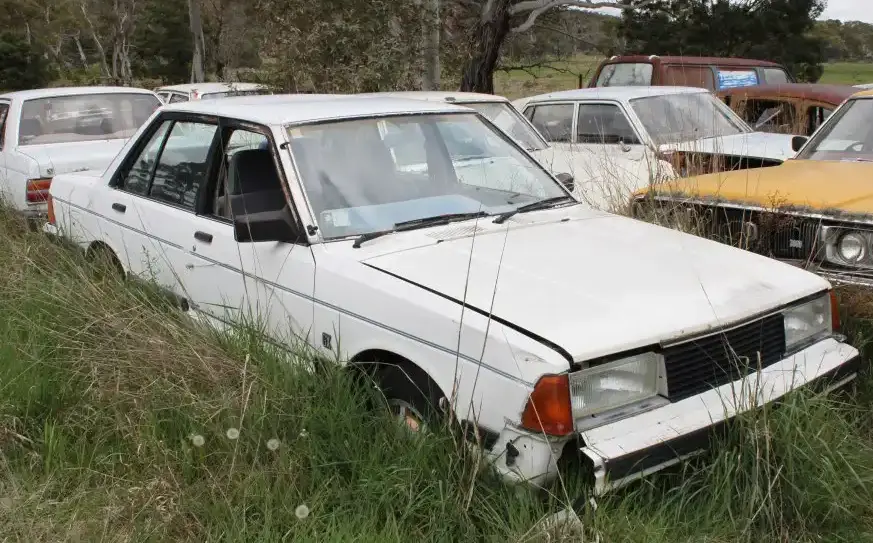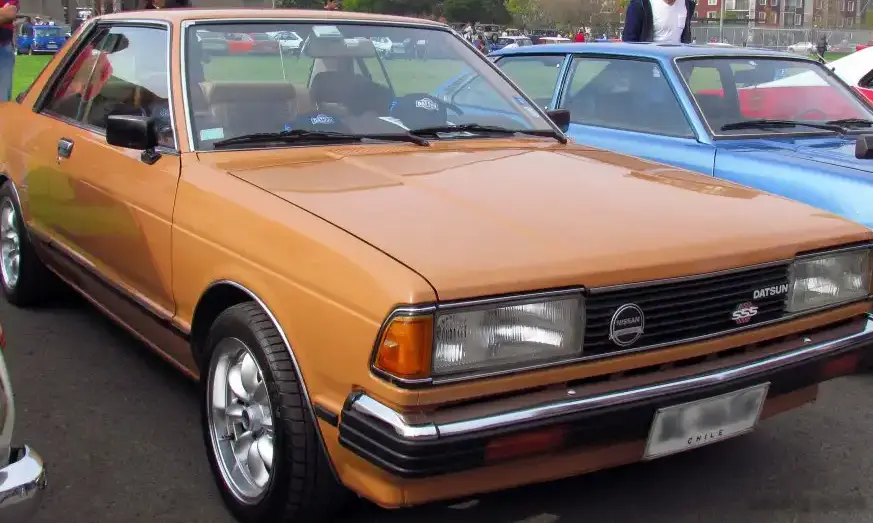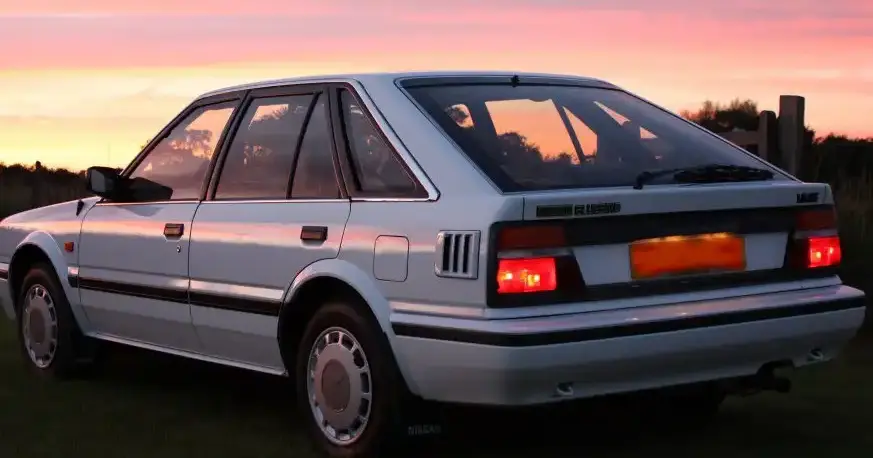
The Nissan Bluebird Sylphy I 1.5i Automatic, produced between 2000 and 2003, represented a key offering in Nissan’s lineup aimed at providing comfortable and economical transportation. Positioned as a mainstream sedan, the Sylphy, particularly in this 1.5-liter, 105 horsepower configuration with an automatic transmission, targeted buyers prioritizing ease of use and fuel efficiency over outright performance. It was a significant model for Nissan, especially in markets like Japan and Australia, where the Bluebird name held considerable brand recognition. This generation, known internally as the N16 series, was built on the Nissan FF-S platform, a front-engine, front-wheel-drive architecture shared with other Nissan models of the era.
Technical Specifications
| Brand | Nissan |
| Model | Bluebird |
| Generation | Bluebird Sylphy I |
| Type (Engine) | 1.5i (105 Hp) Automatic |
| Start of production | 2000 year |
| End of production | 2003 year |
| Powertrain Architecture | Internal Combustion engine |
| Body type | Sedan |
| Seats | 5 |
| Doors | 4 |
| Fuel consumption (urban) | 7.9-10.4 l/100 km (29.8 – 22.6 US mpg, 35.8 – 27.2 UK mpg, 12.7 – 9.6 km/l) |
| Fuel consumption (extra urban) | 5.6-7.4 l/100 km (42 – 31.8 US mpg, 50.4 – 38.2 UK mpg, 17.9 – 13.5 km/l) |
| Fuel consumption (combined) | 7.5 l/100 km (31.4 US mpg, 37.7 UK mpg, 13.3 km/l) |
| Fuel Type | Petrol (Gasoline) |
| Acceleration 0 – 100 km/h | 12.9 sec |
| Acceleration 0 – 62 mph | 12.9 sec |
| Acceleration 0 – 60 mph | 12.3 sec |
| Maximum speed | 182 km/h (113.09 mph) |
| Weight-to-power ratio | 10.8 kg/Hp, 92.9 Hp/tonne |
| Weight-to-torque ratio | 8.4 kg/Nm, 119.5 Nm/tonne |
| Power | 105 Hp @ 6000 rpm |
| Power per litre | 70.1 Hp/l |
| Torque | 135 Nm @ 4400 rpm (99.57 lb.-ft. @ 4400 rpm) |
| Engine layout | Front, Transverse |
| Engine Model/Code | QG15DE |
| Engine displacement | 1498 cm3 (91.41 cu. in.) |
| Number of cylinders | 4 |
| Engine configuration | Inline |
| Cylinder Bore | 73.6 mm (2.9 in.) |
| Piston Stroke | 88 mm (3.46 in.) |
| Compression ratio | 9.9:1 |
| Number of valves per cylinder | 4 |
| Fuel injection system | Multi-port manifold injection |
| Engine aspiration | Naturally aspirated engine |
| Valvetrain | DOHC |
| Kerb Weight | 1130 kg (2491.22 lbs.) |
| Max. weight | 1405 kg (3097.49 lbs.) |
| Max load | 275 kg (606.27 lbs.) |
| Fuel tank capacity | 50 l (13.21 US gal | 11 UK gal) |
| Length | 4470 mm (175.98 in.) |
| Width | 1695 mm (66.73 in.) |
| Height | 1445 mm (56.89 in.) |
| Wheelbase | 2535 mm (99.8 in.) |
| Front track | 1490 mm (58.66 in.) |
| Rear (Back) track | 1470 mm (57.87 in.) |
| Ride height (ground clearance) | 145 mm (5.71 in.) |
| Drag coefficient (Cd) | 0.32 |
| Minimum turning circle | 9.2 m (30.18 ft.) |
| Drivetrain Architecture | The Internal combustion engine (ICE) drives the front wheels of the vehicle. |
| Drive wheel | Front wheel drive |
| Number of gears and type of gearbox | 4 gears, automatic transmission |
| Front brakes | Ventilated discs |
| Rear brakes | Drum |
| Assisting systems | ABS (Anti-lock braking system) |
| Steering type | Steering rack and pinion |
| Power steering | Hydraulic Steering |
| Tires size | 175/70 R14 |
| Wheel rims size | 14 |
Powertrain & Engine Architecture
The heart of the Bluebird Sylphy I 1.5i Automatic was the QG15DE engine, a 1.5-liter inline-four cylinder powerplant. This engine was part of Nissan’s QG series, known for its relatively simple design, good reliability, and focus on fuel economy. The QG15DE featured a cast iron block and an aluminum cylinder head, incorporating a dual overhead camshaft (DOHC) valvetrain with four valves per cylinder. Fuel delivery was handled by a multi-point fuel injection system, optimizing combustion for efficiency and reduced emissions. The engine produced 105 horsepower at 6000 rpm and 135 Nm (99.57 lb-ft) of torque at 4400 rpm. Paired with this engine was a four-speed automatic transmission, chosen for its convenience and ease of use, catering to the target demographic. This transmission wasn’t known for sporty performance, but it provided smooth shifts and adequate acceleration for everyday driving.
Driving Characteristics
The 1.5i Automatic variant of the Bluebird Sylphy I offered a comfortable, but not particularly engaging, driving experience. Acceleration from 0-60 mph took around 12.3 seconds, and top speed was limited to 182 km/h (113 mph). The four-speed automatic transmission, while smooth, lacked the responsiveness of a manual gearbox or a more modern automatic with additional gears. Gear ratios were optimized for fuel economy rather than performance, resulting in a somewhat leisurely pace. Compared to other Sylphy trims, such as those equipped with a manual transmission or a larger 1.8-liter engine, the 1.5i Automatic felt noticeably slower. However, it excelled in urban environments, offering effortless cruising and easy maneuverability.
Equipment & Trim Levels
The 1.5i Automatic trim of the Bluebird Sylphy I typically included standard features such as air conditioning, power windows, power steering, and an AM/FM radio. Higher trim levels offered options like alloy wheels, a CD player, and upgraded interior upholstery. The interior was generally functional and well-built, with a focus on practicality rather than luxury. The dashboard layout was straightforward and easy to use, with clearly labeled controls. Safety features included ABS (Anti-lock Braking System) as standard equipment, a notable inclusion for the time.
Chassis & Braking
The Bluebird Sylphy I utilized a MacPherson strut front suspension and a torsion beam rear suspension. This setup provided a comfortable ride, absorbing bumps and imperfections in the road effectively. The front brakes were ventilated discs, offering adequate stopping power, while the rear brakes were drums, a cost-saving measure common in this class of vehicle. The steering was rack and pinion with hydraulic power assistance, providing light and easy steering feel. Tire size was typically 175/70 R14.
Market Reception & Comparison
The Nissan Bluebird Sylphy I 1.5i Automatic was generally well-received by critics as a practical and economical family sedan. It was praised for its comfortable ride, spacious interior, and fuel efficiency. However, it was often criticized for its lack of performance and somewhat uninspired styling. Compared to competitors like the Toyota Corolla and Honda Civic, the Sylphy offered a similar level of practicality and reliability, but often at a slightly lower price point. Fuel economy was competitive, with combined figures around 7.5 l/100 km (31.4 US mpg).
Legacy
The QG15DE engine, when properly maintained, proved to be a reliable and durable powerplant. The four-speed automatic transmission, while not known for its sophistication, also demonstrated reasonable longevity. Today, used examples of the Bluebird Sylphy I 1.5i Automatic are relatively affordable and can be found in good condition, particularly in regions where they were originally sold in high numbers. While not a particularly sought-after model by enthusiasts, it remains a viable option for those seeking a dependable and economical used car. Common maintenance issues include wear and tear on suspension components and potential oil leaks as the engine ages. Overall, the Bluebird Sylphy I 1.5i Automatic represents a solid, if unremarkable, entry in the compact sedan segment.