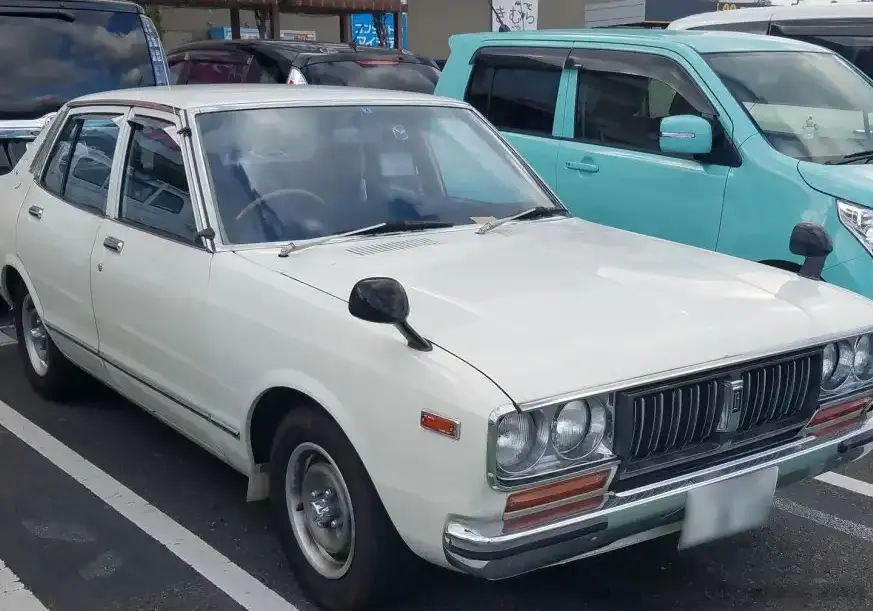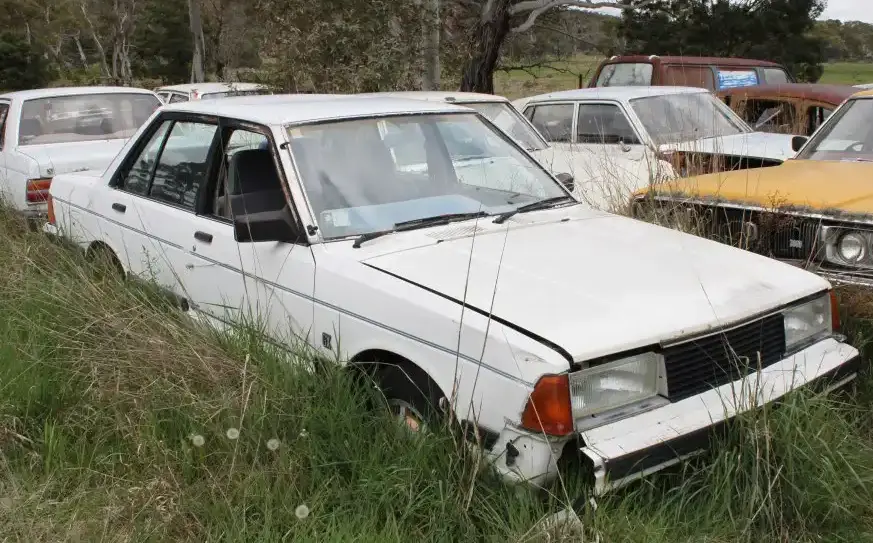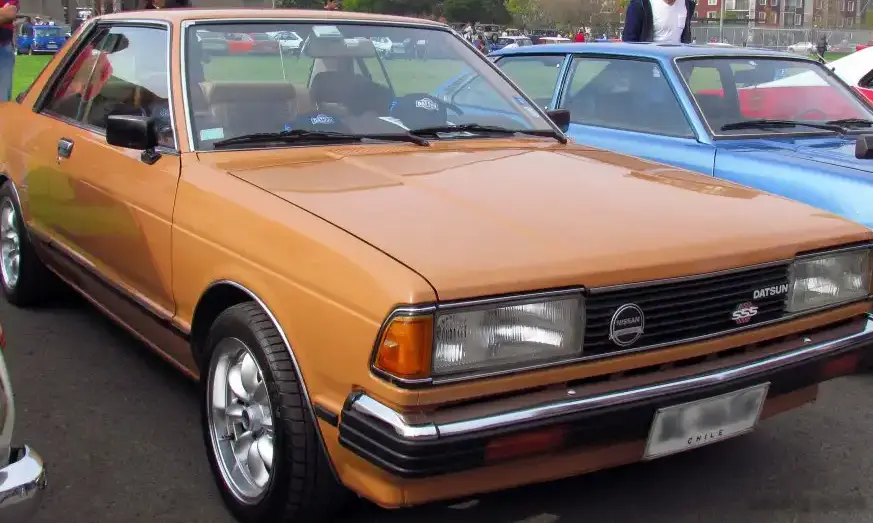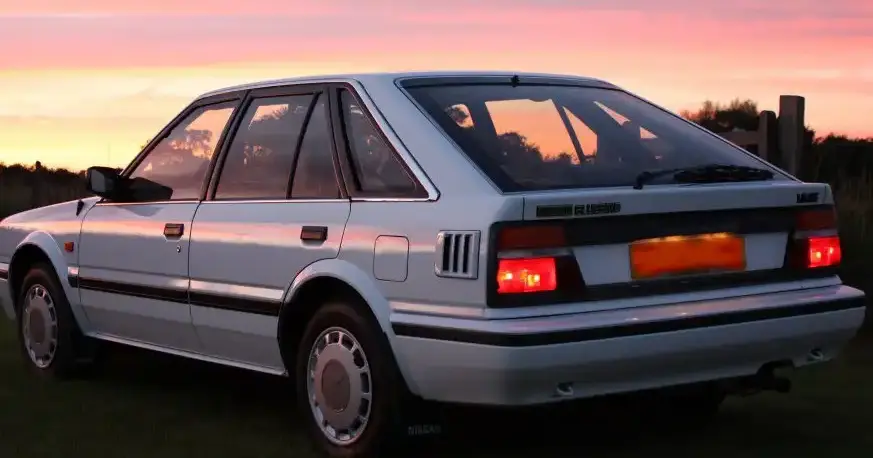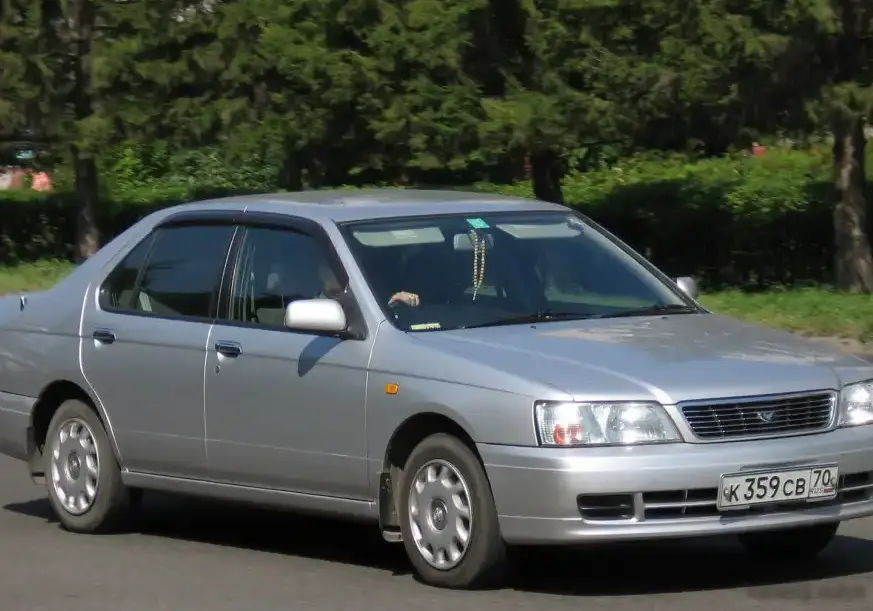
The Nissan Bluebird U14, produced between 1996 and 1997, represented a significant evolution of Nissan’s long-running Bluebird lineage. This generation, designated U14, aimed to blend comfort, practicality, and a degree of sporting appeal within the mid-size sedan segment. The 1.8 FE (125 Hp) variant occupied a central position in the U14 lineup, offering a balance between performance and fuel efficiency. It was positioned as a step up from the base 1.6L models, while remaining more accessible than the higher-performance 2.0L options. The U14 Bluebird was primarily marketed in Japan and select Asian markets, serving as a competitor to models like the Toyota Corolla and Honda Accord.
Technical Specifications
| Brand | Nissan |
| Model | Bluebird |
| Generation | Bluebird (U14) |
| Type (Engine) | 1.8 FE (125 Hp) |
| Start of production | 1996 |
| End of production | 1997 |
| Powertrain Architecture | Internal Combustion engine |
| Body type | Sedan |
| Seats | 5 |
| Doors | 4 |
| Fuel consumption (urban) | 9.5-12.5 l/100 km (24.8 – 18.8 US mpg, 29.7 – 22.6 UK mpg, 10.5 – 8 km/l) |
| Fuel consumption (extra urban) | 6.1-8 l/100 km (38.6 – 29.4 US mpg, 46.3 – 35.3 UK mpg, 16.4 – 12.5 km/l) |
| Fuel consumption (combined) | 8.5 l/100 km (27.7 US mpg, 33.2 UK mpg, 11.8 km/l) |
| Fuel Type | Petrol (Gasoline) |
| Acceleration 0 – 100 km/h | 10.5 sec |
| Acceleration 0 – 62 mph | 10.5 sec |
| Acceleration 0 – 60 mph | 10 sec |
| Maximum speed | 198 km/h (123.03 mph) |
| Weight-to-power ratio | 9.3 kg/Hp, 107.8 Hp/tonne |
| Weight-to-torque ratio | 7.4 kg/Nm, 135.3 Nm/tonne |
| Power | 125 Hp @ 6000 rpm |
| Power per litre | 68 Hp/l |
| Torque | 157 Nm @ 4800 rpm (115.8 lb.-ft. @ 4800 rpm) |
| Engine layout | Front, Transverse |
| Engine Model/Code | SR18DE |
| Engine displacement | 1838 cm3 (112.16 cu. in.) |
| Number of cylinders | 4 |
| Engine configuration | Inline |
| Cylinder Bore | 82.5 mm (3.25 in.) |
| Piston Stroke | 86 mm (3.39 in.) |
| Compression ratio | 9.5:1 |
| Number of valves per cylinder | 4 |
| Fuel injection system | Multi-port manifold injection |
| Engine aspiration | Naturally aspirated engine |
| Valvetrain | DOHC |
| Kerb Weight | 1160 kg (2557.36 lbs.) |
| Length | 4565 mm (179.72 in.) |
| Width | 1695 mm (66.73 in.) |
| Height | 1395 mm (54.92 in.) |
| Wheelbase | 2600 mm (102.36 in.) |
| Front track | 1465 mm (57.68 in.) |
| Rear track | 1455 mm (57.28 in.) |
| Ride height (ground clearance) | 140 mm (5.51 in.) |
| Drag coefficient (Cd) | 0.32 |
| Minimum turning circle | 10.4 m (34.12 ft.) |
| Drivetrain Architecture | Front wheel drive |
| Number of gears and type of gearbox | 5 gears, manual transmission |
| Front brakes | Ventilated discs |
| Rear brakes | Drum |
| Steering type | Steering rack and pinion |
| Tires size | 175/70 R14 |
| Wheel rims size | 14 |
Powertrain & Engine Architecture
The heart of the Bluebird 1.8 FE was the SR18DE engine, a 1.8-liter inline-four cylinder powerplant. This engine featured a double overhead camshaft (DOHC) valvetrain and multi-port fuel injection, contributing to its relatively smooth operation and respectable power output. The SR18DE was known for its durability and relatively simple design, making it easier to maintain compared to some of its more technologically advanced counterparts. The 5-speed manual transmission was the standard offering for this trim, providing drivers with a direct connection to the engine. The transmission’s gear ratios were tuned for a balance of acceleration and fuel economy, prioritizing everyday usability over outright performance.
Driving Characteristics
The 1.8 FE variant of the U14 Bluebird offered a comfortable and predictable driving experience. With 125 horsepower and 157 Nm of torque, acceleration was adequate for typical commuting and highway driving, achieving 0-60 mph in around 10 seconds. While not a sports sedan, the SR18DE engine provided sufficient power for overtaking maneuvers. The manual transmission allowed for precise gear selection, and the engine responded reasonably well to throttle inputs. Compared to the higher-output 2.0L versions, the 1.8 FE felt less eager to rev, but it offered better fuel economy and a more relaxed driving experience. The 1.8L engine was noticeably more responsive than the base 1.6L models.
Equipment & Trim Levels
The 1.8 FE trim typically included features such as power windows, power steering, and an AM/FM radio. Air conditioning was often standard, though it could be optional depending on the specific market. Interior upholstery was typically cloth, with a relatively simple and functional dashboard layout. Optional extras included alloy wheels, a sunroof, and upgraded audio systems. The overall interior ambiance was geared towards practicality and comfort rather than luxury.
Chassis & Braking
The U14 Bluebird utilized a front-engine, front-wheel-drive layout. The suspension consisted of MacPherson struts at the front and a torsion beam rear suspension. This setup provided a comfortable ride quality, although it wasn’t particularly sporty. The braking system featured ventilated discs at the front and drum brakes at the rear. While adequate for everyday driving, the braking performance wasn’t as strong as some of its competitors equipped with four-wheel disc brakes. The relatively lightweight nature of the 1.8 FE variant helped to mitigate the limitations of the drum brakes.
Market Reception & Comparison
The Nissan Bluebird U14 1.8 FE was generally well-received as a practical and reliable family sedan. Critics praised its fuel efficiency and comfortable ride, but noted that its performance wasn’t particularly exciting. Compared to the 2.0L variants, the 1.8 FE offered a more affordable entry point into the U14 lineup, appealing to buyers who prioritized economy and practicality over outright performance. The 1.8 FE also proved to be more reliable than some of the more complex engine options, reducing long-term maintenance costs.
Legacy
The Nissan Bluebird U14 1.8 FE has developed a reputation for long-term reliability, particularly the SR18DE engine. Many examples are still on the road today, testament to the engine’s durability. In the used car market, the 1.8 FE variant is often sought after by buyers looking for an affordable and dependable transportation option. Parts availability remains relatively good, and the engine’s simple design makes it relatively easy to repair. While it may not be a collector’s item, the U14 Bluebird 1.8 FE represents a solid and dependable example of 1990s Japanese automotive engineering.