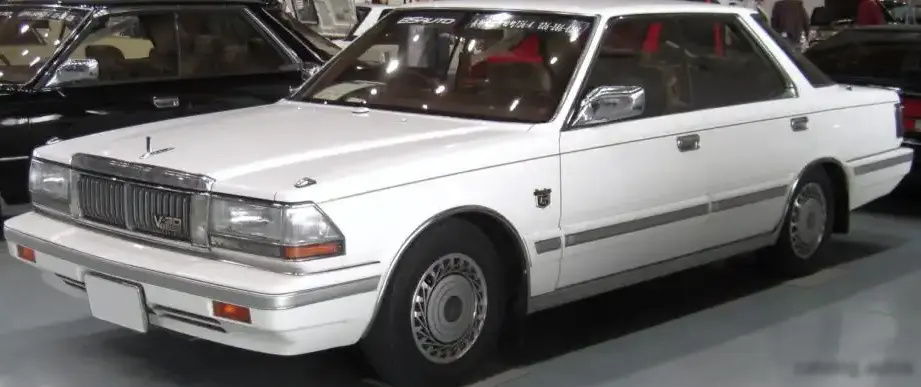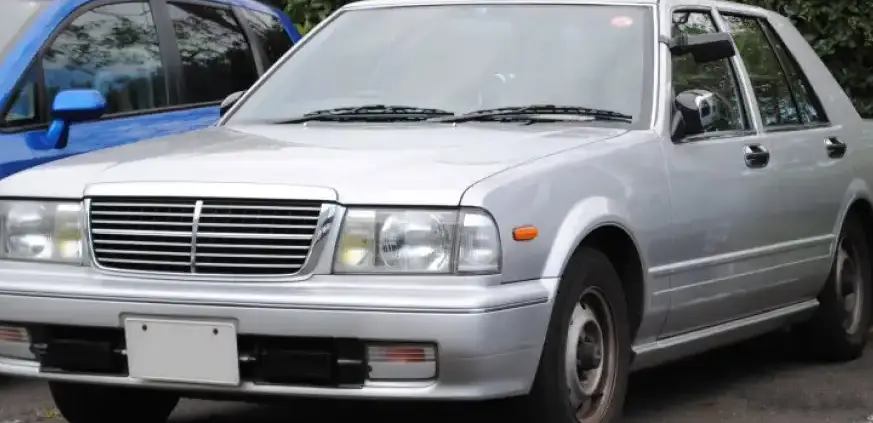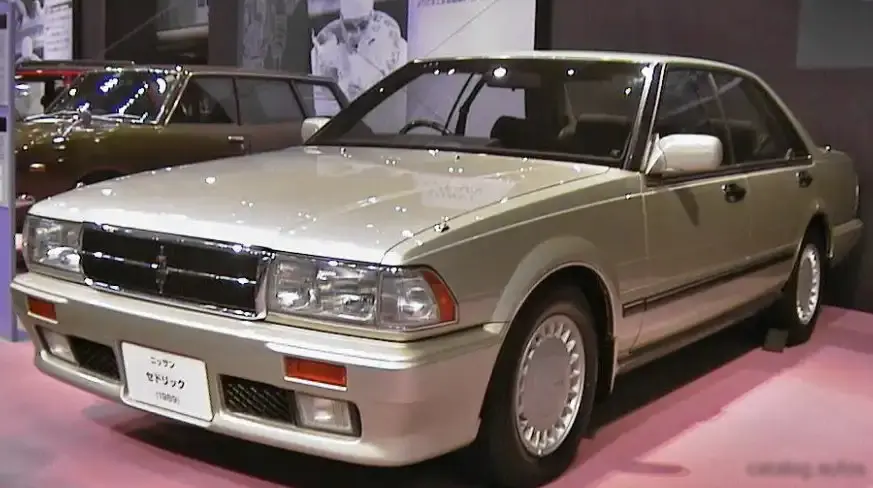
The Nissan Cedric Y31 2.8d, produced between 1987 and 1989, represented a significant offering in the Japanese domestic market (JDM) as a large, comfortable, and relatively affordable diesel-powered sedan. Positioned as a step down from the gasoline-powered variants, particularly the 2.0 and 2.8 liter inline-six engines, the 2.8d catered to buyers prioritizing fuel economy and durability over outright performance. The Y31 generation Cedric, built on the S130 platform, aimed to blend traditional Japanese luxury with modern engineering, competing with rivals like the Toyota Crown and Mazda Changan. This variant, with its 94 horsepower diesel engine, was primarily aimed at fleet buyers and those seeking a robust, long-distance cruiser.
Technical Specifications
| Brand | Nissan |
| Model | Cedric |
| Generation | Cedric (Y31) |
| Type (Engine) | 2.8d (94 Hp) |
| Start of production | 1987 |
| End of production | 1989 |
| Powertrain Architecture | Internal Combustion engine |
| Body type | Sedan |
| Seats | 5 |
| Doors | 4 |
| Fuel consumption (urban) | 9.7-12.8 l/100 km (24.2 – 18.4 US mpg, 29.1 – 22.1 UK mpg, 10.3 – 7.8 km/l) |
| Fuel consumption (extra urban) | 7.1-9.4 l/100 km (33.1 – 25 US mpg, 39.8 – 30.1 UK mpg, 14.1 – 10.6 km/l) |
| Fuel consumption (combined) | 9.3 l/100 km (25.3 US mpg, 30.4 UK mpg, 10.8 km/l) |
| Fuel Type | Diesel |
| Acceleration 0 – 100 km/h | 14.3 sec |
| Acceleration 0 – 62 mph | 14.3 sec |
| Acceleration 0 – 60 mph | 13.6 sec |
| Maximum speed | 167 km/h (103.77 mph) |
| Weight-to-power ratio | 15 kg/Hp, 66.7 Hp/tonne |
| Weight-to-torque ratio | 8 kg/Nm, 125.5 Nm/tonne |
| Power | 94 Hp @ 4800 rpm |
| Power per litre | 33.3 Hp/l |
| Torque | 177 Nm @ 2400 rpm (130.55 lb.-ft. @ 2400 rpm) |
| Engine layout | Front, Longitudinal |
| Engine displacement | 2825 cm3 (172.39 cu. in.) |
| Number of cylinders | 6 |
| Engine configuration | Inline |
| Cylinder Bore | 85 mm (3.35 in.) |
| Piston Stroke | 83 mm (3.27 in.) |
| Compression ratio | 21.2:1 |
| Number of valves per cylinder | 2 |
| Fuel injection system | Precombustion chamber injection |
| Engine aspiration | Naturally aspirated engine |
| Valvetrain | SOHC |
| Kerb Weight | 1410 kg (3108.52 lbs.) |
| Fuel tank capacity | 72 l (19.02 US gal | 15.84 UK gal) |
| Length | 4690 mm (184.65 in.) |
| Width | 1690 mm (66.54 in.) |
| Height | 1425 mm (56.1 in.) |
| Wheelbase | 2735 mm (107.68 in.) |
| Front track | 1440 mm (56.69 in.) |
| Rear track | 1450 mm (57.09 in.) |
| Ride height (ground clearance) | 160 mm (6.3 in.) |
| Drag coefficient (Cd) | 0.4 |
| Minimum turning circle | 11 m (36.09 ft.) |
| Drivetrain Architecture | Rear wheel drive |
| Drive wheel | Rear wheel drive |
| Number of gears | 5 gears, manual transmission |
| Front brakes | Ventilated discs |
| Rear brakes | Disc |
| Steering type | Steering rack and pinion |
| Tires size | 195/70 R14 |
| Wheel rims size | 14 |
INTRODUCTION
The Nissan Cedric Y31 2.8d, manufactured from 1987 to 1989, was a variant within the broader Y31 Cedric lineage. The Y31, launched in 1987, represented the seventh generation of the Cedric, a nameplate with a long history in the Japanese automotive industry dating back to 1960. This generation saw a move towards more rounded styling and increased interior space. The 2.8d model specifically offered a diesel engine option, appealing to those seeking improved fuel efficiency and a more economical alternative to the gasoline engines available. It was positioned as an entry-level diesel option within the Y31 range, offering a balance between practicality and comfort.
Powertrain & Engine Architecture
The heart of the Cedric Y31 2.8d is the 2.8-liter (2825 cc) inline-six cylinder diesel engine. Nissan designated this engine family as the RD series, with the specific engine code for this variant being RD28. This engine utilized a precombustion chamber injection system, a common technology for diesel engines of the era. This system involved injecting fuel into a small precombustion chamber within the cylinder head, where it was partially ignited before entering the main combustion chamber, aiding in cold-start performance and reducing engine noise. The engine features a single overhead camshaft (SOHC) valvetrain, operating two valves per cylinder. The RD28 produced 94 horsepower at 4800 rpm and 177 Nm (130.55 lb-ft) of torque at 2400 rpm. The engine is longitudinally mounted in the front of the vehicle, driving the rear wheels. The 2.8d was exclusively offered with a 5-speed manual transmission, prioritizing fuel economy and simplicity over the convenience of an automatic.
Driving Characteristics
The Cedric Y31 2.8d, with its 94 horsepower and 177 Nm of torque, offered a driving experience focused on relaxed cruising rather than spirited acceleration. Acceleration from 0 to 100 km/h (0-62 mph) took approximately 14.3 seconds, and top speed was limited to 167 km/h (103.77 mph). The manual transmission, while offering more driver control, required more engagement than the automatic transmissions found in other Cedric variants. The gear ratios were optimized for fuel efficiency, meaning the engine often needed to be revved to maintain speed, especially when climbing hills or overtaking. Compared to the gasoline-powered Cedric models, the 2.8d lacked the responsiveness and refinement of the smoother, higher-revving gasoline engines. However, the diesel engine’s torque delivery provided adequate pulling power for everyday driving and long-distance journeys.
Equipment & Trim Levels
The Cedric Y31 2.8d typically came with a fairly standard level of equipment, reflecting its position as a more affordable variant. Standard features generally included cloth upholstery, power steering, and basic instrumentation. Air conditioning was often included, but could be optional depending on the specific package. The dashboard layout was functional and straightforward, prioritizing ease of use over elaborate design. Optional extras available for the 2.8d included power windows, central locking, and an upgraded audio system. The interior trim was generally more subdued compared to the higher-spec Cedric models, with simpler materials and fewer chrome accents.
Chassis & Braking
The Cedric Y31 2.8d utilized a traditional body-on-frame construction, providing a robust and durable chassis. The suspension consisted of independent front suspension with MacPherson struts and a live rear axle with leaf springs. The rear brakes were typically disc brakes, while the front brakes were ventilated discs. The steering system employed a rack and pinion setup, offering reasonable precision and feedback. The 2.8d model, being heavier than some of the gasoline variants, benefited from a slightly stiffer suspension setup to manage body roll and maintain stability. Tire size was typically 195/70 R14.
Market Reception & Comparison
The Nissan Cedric Y31 2.8d received a mixed reception from critics. While praised for its fuel economy and durability, it was often criticized for its lack of performance and refinement compared to its gasoline-powered counterparts. The diesel engine was considered noisy and lacked the smoothness of the gasoline engines. However, the 2.8d appealed to a specific segment of the market – those prioritizing practicality and cost-effectiveness. Compared to the 2.0-liter and 2.8-liter gasoline models, the 2.8d offered significantly better fuel economy, making it a popular choice for fleet operators and high-mileage drivers. The manual transmission, while appreciated by some, was seen as a drawback by others who preferred the convenience of an automatic.
Legacy
The Nissan Cedric Y31 2.8d, while not the most sought-after variant of the Y31 generation, has developed a loyal following among enthusiasts who appreciate its simplicity and durability. The RD28 diesel engine is known for its robustness and longevity, and well-maintained examples can still be found in operation today. In the used car market, the 2.8d typically commands a lower price than the gasoline-powered models, making it an affordable entry point into the world of classic Japanese sedans. The Y31 Cedric, in general, is remembered as a comfortable and reliable car that represented a high point in Japanese automotive engineering of the late 1980s.