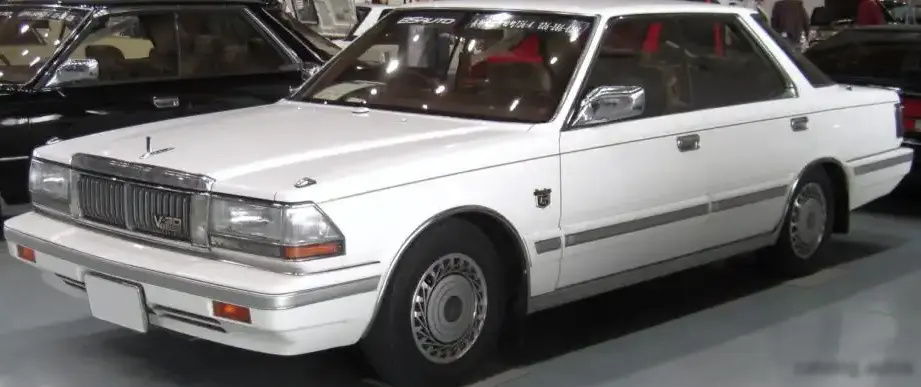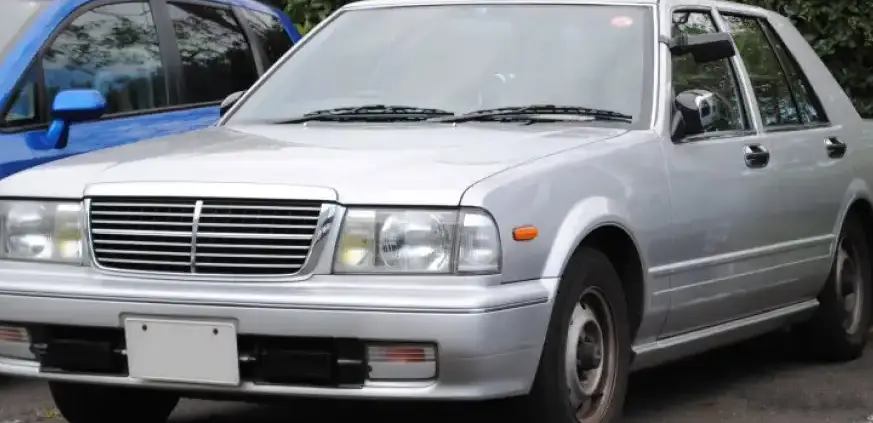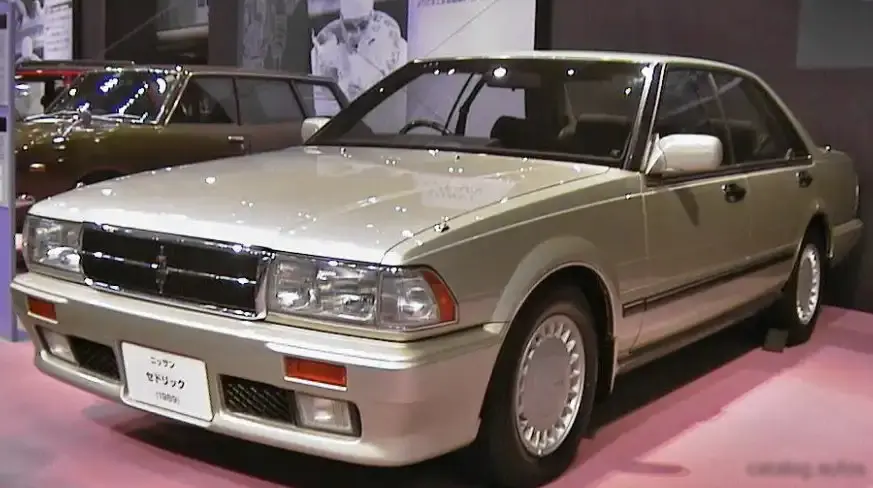
The Nissan Cedric Y31 3.0i V6 Automatic, produced between 1987 and 1989, represents a significant iteration of Nissan’s flagship sedan. Part of the broader Y31 generation (1987-1991), this variant occupied a mid-to-upper position within the Cedric lineup, offering a blend of luxury, performance, and technology aimed at the Japanese domestic market. While not officially exported to the United States, the Y31 Cedric gained a following among enthusiasts for its comfortable ride, robust engineering, and distinctive styling. This specific 3.0-liter V6 automatic configuration was designed to appeal to buyers seeking a refined driving experience without the engagement of a manual transmission.
Technical Specifications
| Brand | Nissan |
| Model | Cedric |
| Generation | Cedric (Y31) |
| Type (Engine) | 3.0i V6 (160 Hp) Automatic |
| Start of production | 1987 |
| End of production | 1989 |
| Powertrain Architecture | Internal Combustion engine |
| Body type | Sedan |
| Seats | 5 |
| Doors | 4 |
| Fuel consumption (urban) | 13.3-17.5 l/100 km (17.7 – 13.4 US mpg, 21.2 – 16.1 UK mpg, 7.5 – 5.7 km/l) |
| Fuel consumption (extra urban) | 8.4-11 l/100 km (28 – 21.4 US mpg, 33.6 – 25.7 UK mpg, 11.9 – 9.1 km/l) |
| Fuel consumption (combined) | 11.8 l/100 km (19.9 US mpg, 23.9 UK mpg, 8.5 km/l) |
| Fuel Type | Petrol (Gasoline) |
| Acceleration 0 – 100 km/h | 10.6 sec |
| Acceleration 0 – 62 mph | 10.6 sec |
| Acceleration 0 – 60 mph | 10.1 sec |
| Maximum speed | 189 km/h (117.44 mph) |
| Weight-to-power ratio | 9.3 kg/Hp, 107.4 Hp/tonne |
| Weight-to-torque ratio | 6 kg/Nm, 166.4 Nm/tonne |
| Power | 160 Hp @ 5200 rpm |
| Power per litre | 54.1 Hp/l |
| Torque | 248 Nm @ 3200 rpm (182.92 lb.-ft. @ 3200 rpm) |
| Engine layout | Front, Longitudinal |
| Engine displacement | 2960 cm3 (180.63 cu. in.) |
| Number of cylinders | 6 |
| Engine configuration | V-engine |
| Cylinder Bore | 87 mm (3.43 in.) |
| Piston Stroke | 83 mm (3.27 in.) |
| Compression ratio | 9:1 |
| Number of valves per cylinder | 2 |
| Fuel injection system | Multi-port manifold injection |
| Engine aspiration | Naturally aspirated engine |
| Valvetrain | SOHC |
| Kerb Weight | 1490 kg (3284.89 lbs.) |
| Fuel tank capacity | 72 l (19.02 US gal | 15.84 UK gal) |
| Length | 4690 mm (184.65 in.) |
| Width | 1720 mm (67.72 in.) |
| Height | 1425 mm (56.1 in.) |
| Wheelbase | 2735 mm (107.68 in.) |
| Front track | 1440 mm (56.69 in.) |
| Rear track | 1450 mm (57.09 in.) |
| Ride height (ground clearance) | 135 mm (5.31 in.) |
| Drag coefficient (Cd) | 0.4 |
| Minimum turning circle | 11 m (36.09 ft.) |
| Drivetrain Architecture | Rear wheel drive |
| Number of gears | 4 |
| Gearbox type | Automatic transmission |
| Front brakes | Ventilated discs |
| Rear brakes | Disc |
| Steering type | Steering rack and pinion |
| Tires size | 205/65 R15 |
| Wheel rims size | 15 |
Powertrain & Engine Architecture
The heart of the Y31 Cedric 3.0i is the VG30E engine, a 2,960cc (180.6 cu in) naturally aspirated V6. This engine, part of Nissan’s VG series, is known for its smoothness and relative reliability. The VG30E utilizes a single overhead camshaft (SOHC) valvetrain with two valves per cylinder. Fuel delivery is managed by a multi-port fuel injection system, contributing to improved efficiency and throttle response compared to earlier carbureted designs. The engine produces 160 horsepower at 5,200 rpm and 248 Nm (182.92 lb-ft) of torque at 3,200 rpm. Paired with the VG30E is a four-speed automatic transmission, designed for comfortable cruising and ease of use. This transmission, while not particularly sporty, provides smooth shifts and is well-suited to the Cedric’s grand touring character.
Driving Characteristics
The Cedric 3.0i Automatic delivers a comfortable and refined driving experience. The automatic transmission, while lacking the responsiveness of a manual, offers seamless gear changes and makes the car easy to drive in urban environments. Acceleration to 60 mph takes approximately 10.1 seconds, and the car has a top speed of around 117 mph. The engine provides adequate power for highway cruising and overtaking, but it’s not a particularly sporty performer. The focus is on smoothness and quietness rather than outright speed. The suspension is tuned for comfort, absorbing bumps and providing a stable ride. The rear-wheel-drive configuration contributes to balanced handling, although it’s not as agile as some front-wheel-drive competitors.
Equipment & Trim Levels
The 3.0i Automatic trim level of the Y31 Cedric typically included features such as power windows, power locks, air conditioning, and a high-quality audio system. Interior upholstery was typically cloth or velour, with options for leather available. The dashboard layout is functional and well-designed, with clear instrumentation. Optional extras could include a sunroof, upgraded audio systems, and power-adjustable seats. The Cedric was positioned as a luxury sedan, and the 3.0i Automatic trim reflected this with a higher level of standard equipment compared to lower-spec models.
Chassis & Braking
The Y31 Cedric utilizes a traditional body-on-frame construction, providing a robust and durable chassis. The suspension consists of independent front suspension with MacPherson struts and a solid rear axle with leaf springs. Braking duties are handled by ventilated discs at the front and solid discs at the rear. The steering is rack and pinion, providing precise and responsive control. The car rides on 15-inch wheels with 205/65 R15 tires. While the braking system is adequate for normal driving conditions, it lacks the stopping power of more modern systems.
Market Reception & Comparison
The Nissan Cedric Y31 was well-received in the Japanese market as a comfortable, reliable, and stylish sedan. The 3.0i V6 Automatic variant was praised for its smooth engine and effortless cruising ability. Compared to other trims, such as the 2.0-liter models, the 3.0i offered significantly more power and refinement. However, it came at a higher price point and with slightly lower fuel economy. Critics noted that the automatic transmission, while convenient, detracted from the driving experience for those seeking a more engaging drive. Compared to competitors like the Toyota Crown and Honda Legend, the Cedric offered a unique blend of luxury and value.
Legacy
The Nissan Cedric Y31, particularly the 3.0i V6 Automatic, has developed a cult following among enthusiasts. The VG30E engine is known for its durability and relatively simple maintenance requirements. While finding parts can sometimes be challenging outside of Japan, the engine is generally considered reliable. The Y31 Cedric remains a popular choice for classic car collectors and those seeking a comfortable and stylish vintage sedan. The car’s robust construction and well-engineered powertrain ensure that many examples remain on the road today, a testament to Nissan’s engineering prowess during the late 1980s.