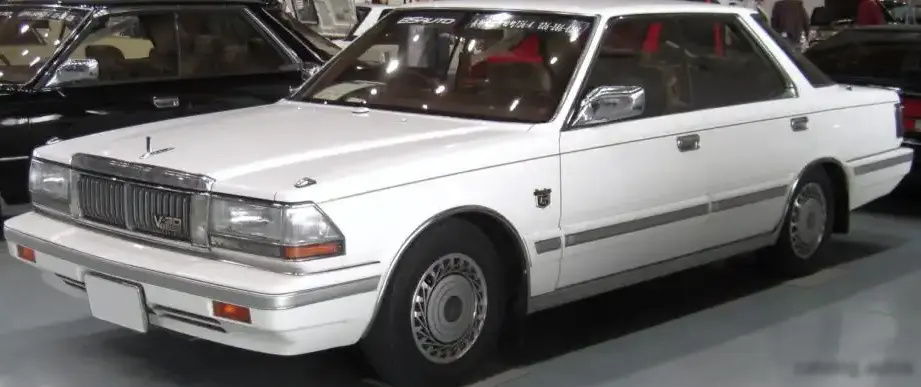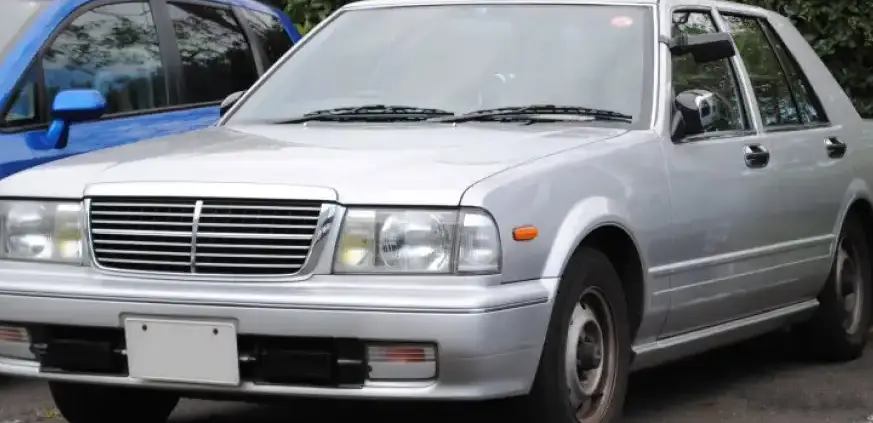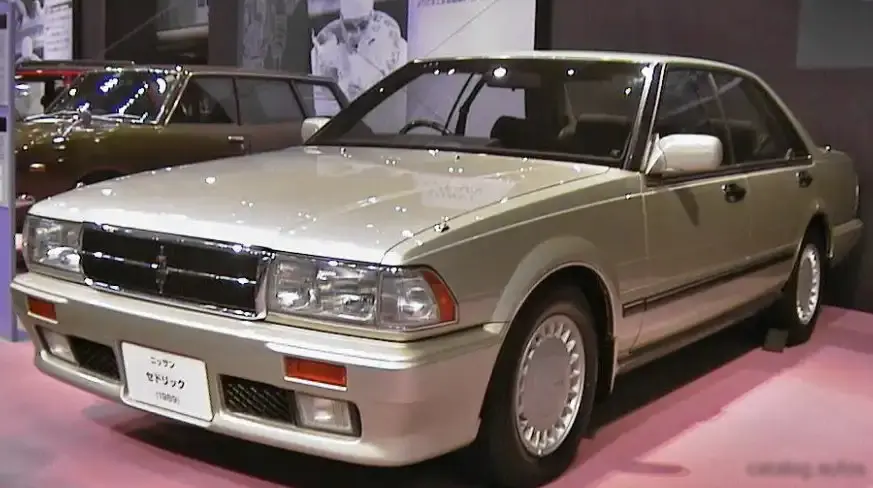
The Nissan Cedric Y31 3.0i V6, produced between 1987 and 1989, represents a sophisticated iteration of Nissan’s flagship sedan. Positioned as a premium offering within the Y31 generation (1987-1991), this variant featured a 3.0-liter V6 engine paired exclusively with a four-speed automatic transmission. The Y31 Cedric, and its sibling the Gloria, were aimed at the Japanese domestic market (JDM) as comfortable, luxurious, and reliable transportation for executives and families. This model competed directly with the Toyota Crown and other large Japanese sedans, emphasizing refinement and a smooth driving experience over outright sportiness. The 3.0i V6 was a step up from the smaller displacement engines offered in the Cedric lineup, providing a noticeable increase in performance and a more prestigious image.
Technical Specifications
| Brand | Nissan |
| Model | Cedric |
| Generation | Cedric (Y31) |
| Type | 3.0i V6 (195 Hp) Automatic |
| Start of production | 1987 |
| End of production | 1989 |
| Powertrain Architecture | Internal Combustion engine |
| Body type | Sedan |
| Seats | 5 |
| Doors | 4 |
| Fuel consumption (urban) | 14.2-18.6 l/100 km (16.6 – 12.6 US mpg, 19.9 – 15.2 UK mpg, 7 – 5.4 km/l) |
| Fuel consumption (extra urban) | 8.6-11.3 l/100 km (27.4 – 20.8 US mpg, 32.8 – 25 UK mpg, 11.6 – 8.8 km/l) |
| Fuel consumption (combined) | 12.3 l/100 km (19.1 US mpg, 23 UK mpg, 8.1 km/l) |
| Fuel Type | Petrol (Gasoline) |
| Acceleration 0 – 100 km/h | 9 sec |
| Acceleration 0 – 62 mph | 9 sec |
| Acceleration 0 – 60 mph | 8.6 sec |
| Maximum speed | 204 km/h (126.76 mph) |
| Weight-to-power ratio | 7.8 kg/Hp, 128.3 Hp/tonne |
| Weight-to-torque ratio | 5.2 kg/Nm, 193.4 Nm/tonne |
| Power | 195 Hp @ 5200 rpm |
| Power per litre | 65.9 Hp/l |
| Torque | 294 Nm @ 3200 rpm (216.84 lb.-ft. @ 3200 rpm) |
| Engine layout | Front, Longitudinal |
| Engine displacement | 2960 cm3 (180.63 cu. in.) |
| Number of cylinders | 6 |
| Engine configuration | V-engine |
| Cylinder Bore | 87 mm (3.43 in.) |
| Piston Stroke | 83 mm (3.27 in.) |
| Compression ratio | 8.3:1 |
| Number of valves per cylinder | 2 |
| Fuel injection system | Multi-port manifold injection |
| Engine aspiration | Naturally Aspirated |
| Valvetrain | SOHC |
| Kerb Weight | 1520 kg (3351.03 lbs.) |
| Fuel tank capacity | 72 l (19.02 US gal, 15.84 UK gal) |
| Length | 4690 mm (184.65 in.) |
| Width | 1720 mm (67.72 in.) |
| Height | 1400 mm (55.12 in.) |
| Wheelbase | 2735 mm (107.68 in.) |
| Front track | 1445 mm (56.89 in.) |
| Rear track | 1460 mm (57.48 in.) |
| Ride height (ground clearance) | 135 mm (5.31 in.) |
| Drag coefficient (Cd) | 0.4 |
| Minimum turning circle | 11 m (36.09 ft.) |
| Drivetrain Architecture | Rear wheel drive |
| Drive wheel | Rear wheel drive |
| Number of gears | 4 |
| Gearbox type | Automatic transmission |
| Front brakes | Ventilated discs |
| Rear brakes | Ventilated discs |
| Steering type | Steering rack and pinion |
| Tires size | 205/65 R15 |
| Wheel rims size | 15 |
Powertrain & Engine Architecture
The heart of the Y31 Cedric 3.0i is the Nissan VQ30E engine, a 3.0-liter (2960 cc) naturally aspirated V6. This engine utilizes a single overhead camshaft (SOHC) valvetrain with two valves per cylinder. The VQ30E employed multi-port fuel injection, delivering fuel directly into each intake port for improved combustion efficiency. While not turbocharged, the engine’s design focused on smooth power delivery and reliability. The engine produced 195 horsepower at 5200 rpm and 294 Nm (216.84 lb-ft) of torque at 3200 rpm. This power was channeled through a four-speed automatic transmission, a common pairing for luxury-oriented vehicles of the era. The transmission was designed for smooth shifts and comfortable cruising, prioritizing refinement over aggressive acceleration. The engine is longitudinally mounted, driving the rear wheels.
Driving Characteristics
The Cedric Y31 3.0i Automatic offered a comfortable and refined driving experience. The automatic transmission, while not offering the quickest shifts, provided smooth transitions between gears. Acceleration to 60 mph took approximately 8.6 seconds, and top speed was around 127 mph. Compared to the manual transmission versions of the Cedric, the automatic sacrificed some responsiveness. The 3.0i V6 provided ample power for highway cruising and overtaking, but it wasn’t designed for sporty driving. The suspension was tuned for comfort, absorbing bumps and providing a stable ride. The rear-wheel-drive configuration contributed to balanced handling, although it wasn’t particularly engaging for enthusiastic drivers. The gear ratios were optimized for fuel efficiency and relaxed cruising, rather than maximizing acceleration.
Equipment & Trim Levels
The 3.0i V6 Automatic trim level was generally well-equipped, reflecting its position as a premium offering. Standard features typically included power windows, power locks, power steering, air conditioning, and a high-quality audio system. Interior upholstery was typically cloth or velour, with optional leather available. Dashboard configuration featured woodgrain accents and analog gauges. Optional extras could include a sunroof, upgraded audio systems, and more advanced climate control systems. The Cedric Y31 prioritized a luxurious and comfortable interior environment.
Chassis & Braking
The Y31 Cedric utilized a traditional body-on-frame construction, providing a robust and durable chassis. The suspension consisted of independent front suspension with MacPherson struts and a solid rear axle with leaf springs. Braking duties were handled by ventilated disc brakes on all four wheels, providing adequate stopping power for the vehicle’s weight and performance. Stabilizer bars were fitted to both the front and rear axles to reduce body roll during cornering. The suspension setup prioritized ride comfort over sporty handling.
Market Reception & Comparison
The Nissan Cedric Y31 3.0i V6 Automatic was generally well-received in the Japanese market. Critics praised its comfortable ride, spacious interior, and refined engine. However, some noted that the automatic transmission could feel sluggish compared to manual options. Compared to the smaller-engined Cedric variants, the 3.0i offered a significant performance upgrade, but at a higher price point. Fuel economy was reasonable for a vehicle of its size and engine displacement, but not exceptional. The Cedric competed directly with the Toyota Crown, offering a similar level of luxury and refinement. The Crown often had a slight edge in terms of brand prestige, but the Cedric offered a compelling alternative.
Legacy
The Nissan Cedric Y31 3.0i V6 Automatic has developed a reputation for reliability and durability. The VQ30E engine is known for its longevity, and the automatic transmission, while not the most advanced, is generally dependable. Today, these vehicles are becoming increasingly collectible, particularly among enthusiasts of JDM cars. Finding well-maintained examples can be challenging, but they offer a unique glimpse into the Japanese automotive landscape of the late 1980s. The Y31 Cedric represents a high point in Nissan’s commitment to building comfortable, luxurious, and reliable sedans.