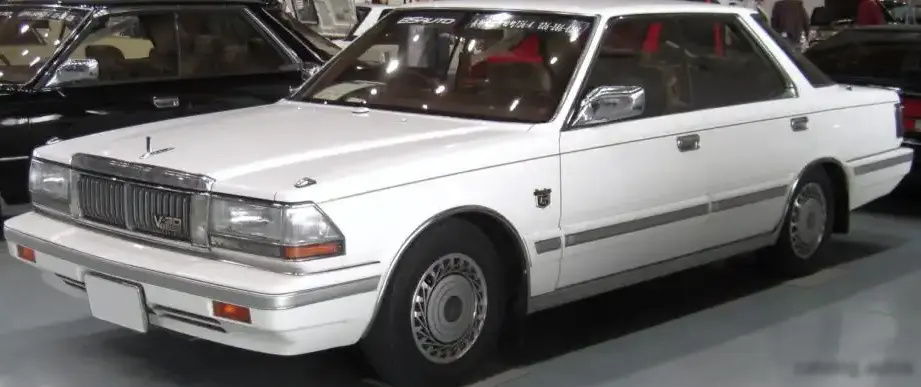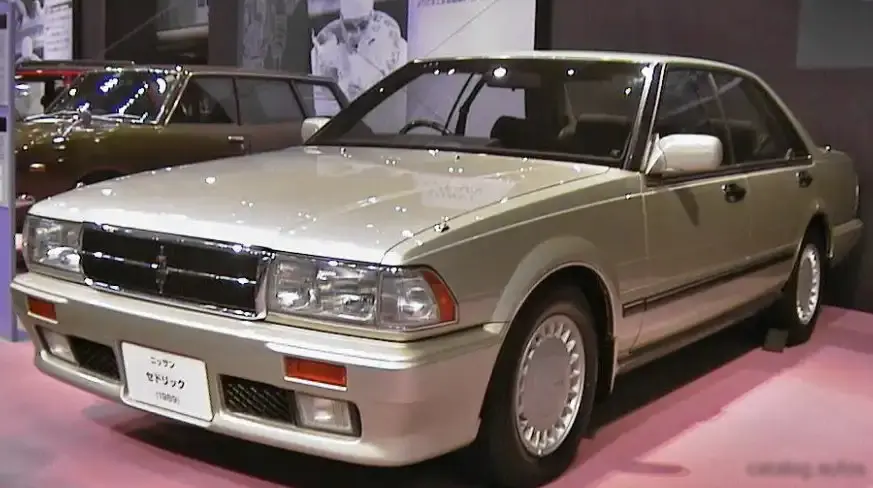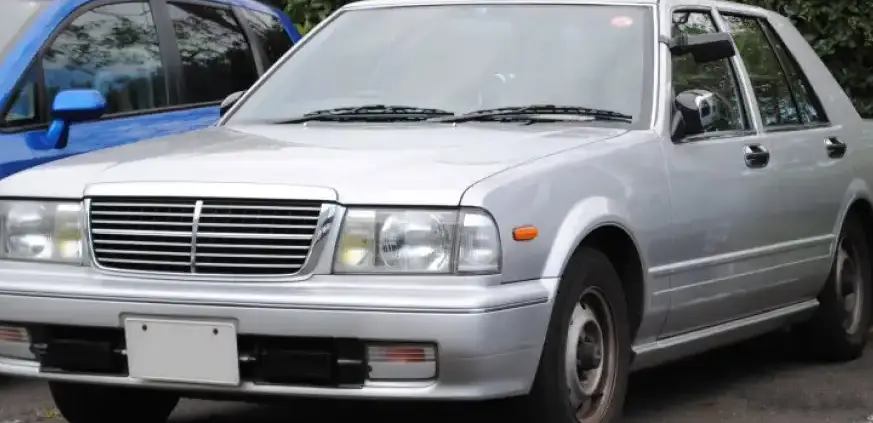
The Nissan Cedric Y31, particularly the 2.0-liter (85 hp) variant equipped with an automatic transmission and LPG capability, represents a specific configuration within the broader Y31 generation produced from 1987 to 1991 (with a facelift in 1991 extending production). This model, primarily sold in Japan and export markets, occupied a middle-ground position in the Cedric lineup, offering a balance between affordability and comfort. Production of this specific configuration continued, with minor updates, until 2014, catering to markets where large, comfortable sedans remained popular. The Y31 Cedric, as a whole, was designed to appeal to a more mature clientele seeking a spacious and reliable vehicle, often used for family transport or as a chauffeur-driven car.
Technical Specifications
| Brand | Nissan |
| Model | Cedric |
| Generation | Cedric (Y31, facelift 1991) |
| Type (Engine) | 2.0 (85 Hp) LPG Automatic |
| Start of production | 2002 year |
| End of production | 2014 year |
| Powertrain Architecture | Internal Combustion engine |
| Body type | Sedan |
| Seats | 5 |
| Doors | 4 |
| Fuel consumption (urban) | 12-15.8 l/100 km (19.6 – 14.9 US mpg, 23.5 – 17.9 UK mpg, 8.3 – 6.3 km/l) |
| Fuel consumption (extra urban) | 8.3-10.9 l/100 km (28.3 – 21.6 US mpg, 34 – 25.9 UK mpg, 12 – 9.2 km/l) |
| Fuel consumption (combined) | 11.1 l/100 km (21.2 US mpg, 25.4 UK mpg, 9 km/l) |
| Fuel Type | Petrol / LPG |
| Acceleration 0 – 100 km/h | 18.4 sec |
| Acceleration 0 – 62 mph | 18.4 sec |
| Acceleration 0 – 60 mph | 17.5 sec |
| Maximum speed | 157 km/h (97.56 mph) |
| Weight-to-power ratio | 17.4 kg/Hp, 57.4 Hp/tonne |
| Weight-to-torque ratio | 8.7 kg/Nm, 114.9 Nm/tonne |
| Power | 85 Hp @ 4400 rpm |
| Power per litre | 42.5 Hp/l |
| Torque | 170 Nm @ 2400 rpm (125.39 lb.-ft. @ 2400 rpm) |
| Engine layout | Front, Longitudinal |
| Engine Model/Code | NA20PE |
| Engine displacement | 1998 cm3 (121.93 cu. in.) |
| Number of cylinders | 4 |
| Engine configuration | Inline |
| Cylinder Bore | 86 mm (3.39 in.) |
| Piston Stroke | 86 mm (3.39 in.) |
| Compression ratio | 10.4:1 |
| Number of valves per cylinder | 2 |
| Engine aspiration | Naturally aspirated engine |
| Valvetrain | SOHC |
| Kerb Weight | 1480 kg (3262.84 lbs.) |
| Length | 4690 mm (184.65 in.) |
| Width | 1695 mm (66.73 in.) |
| Height | 1445 mm (56.89 in.) |
| Wheelbase | 2735 mm (107.68 in.) |
| Front track | 1440 mm (56.69 in.) |
| Rear track | 1400 mm (55.12 in.) |
| Ride height (ground clearance) | 175 mm (6.89 in.) |
| Drag coefficient (Cd) | 0.4 |
| Minimum turning circle | 11 m (36.09 ft.) |
| Drivetrain Architecture | The Internal combustion engine (ICE) drives the rear wheels of the vehicle. |
| Drive wheel | Rear wheel drive |
| Number of gears | 4 |
| Gearbox type | automatic transmission |
| Front brakes | Ventilated discs |
| Rear brakes | Disc |
| Steering type | Steering rack and pinion |
| Tires size | 195/65 R15 |
| Wheel rims size | 15 |
Powertrain & Engine Architecture
The heart of this Cedric variant is the NA20PE engine, a 1.998-liter inline-four cylinder gasoline engine. This engine utilizes a single overhead camshaft (SOHC) valvetrain, operating with two valves per cylinder. Fuel delivery is managed by a multi-point fuel injection system, a common feature for the era, contributing to improved fuel efficiency and smoother operation compared to carbureted engines. The engine’s 85 horsepower output at 4400 rpm and 170 Nm (125 lb-ft) of torque at 2400 rpm were considered modest, even for the early 1990s. The inclusion of LPG capability was a significant feature in some markets, offering a lower-cost alternative fuel source and potentially reducing emissions. This engine is paired with a four-speed automatic transmission, chosen for its convenience and ease of use, aligning with the Cedric’s target demographic. The transmission’s gear ratios were optimized for comfortable cruising rather than sporty acceleration.
Driving Characteristics
The 2.0-liter automatic Cedric delivers a driving experience focused on comfort and refinement. Acceleration is leisurely, with a 0-60 mph time of around 17.5 seconds. The automatic transmission, while smooth, doesn’t offer the responsiveness of a manual gearbox, and the engine feels strained when pushed hard. Compared to the more powerful 2.0-liter turbocharged or V6 variants of the Y31, this model lacks the punch for spirited driving. However, the relaxed power delivery and comfortable suspension make it well-suited for city driving and long highway journeys. The rear-wheel-drive configuration provides a balanced feel, although it doesn’t offer the handling precision of more modern vehicles.
Equipment & Trim Levels
The 2.0-liter LPG automatic Cedric typically came equipped with a reasonable level of standard features. These included power steering, central locking, electric windows, and an AM/FM radio. Interior upholstery was usually cloth, with options for upgraded velour or leather in higher trim levels. Dashboard configuration was relatively straightforward, prioritizing functionality over flashy design. Optional extras could include air conditioning, a sunroof, and upgraded audio systems. The specific trim level (e.g., GL, Super Saloon) determined the availability of these optional features.
Chassis & Braking
The Y31 Cedric utilizes a traditional body-on-frame construction, providing a robust and durable chassis. The suspension consists of independent front suspension with MacPherson struts and a solid rear axle with leaf springs. This setup prioritizes ride comfort over handling sharpness. Braking duties are handled by ventilated discs on the front wheels and discs on the rear, providing adequate stopping power for the vehicle’s weight and performance. Stabilizer bars were fitted to both the front and rear axles to reduce body roll during cornering.
Market Reception & Comparison
The 2.0-liter automatic Cedric was generally well-received as a comfortable and reliable family sedan. Critics acknowledged its spacious interior and smooth ride, but often noted its lack of performance compared to competitors. Fuel economy, while reasonable for its size and age, wasn’t a standout feature. Compared to the more powerful Cedric variants, this model offered a more affordable entry point into the range, appealing to buyers who prioritized comfort and practicality over performance. The LPG option was a significant selling point in markets where LPG fuel was readily available and cost-effective.
Legacy
The Nissan Cedric Y31, particularly the 2.0-liter LPG automatic variant, has developed a reputation for durability and reliability. The NA20PE engine, while not particularly powerful, is known for its longevity when properly maintained. Today, these vehicles are increasingly sought after by enthusiasts and collectors who appreciate their classic styling and comfortable driving experience. Parts availability can be a challenge, but many components are still available through specialist suppliers. The LPG conversion, if well-maintained, can extend the engine’s lifespan and reduce running costs. While not a performance icon, the Y31 Cedric remains a testament to Nissan’s commitment to building comfortable and reliable vehicles.