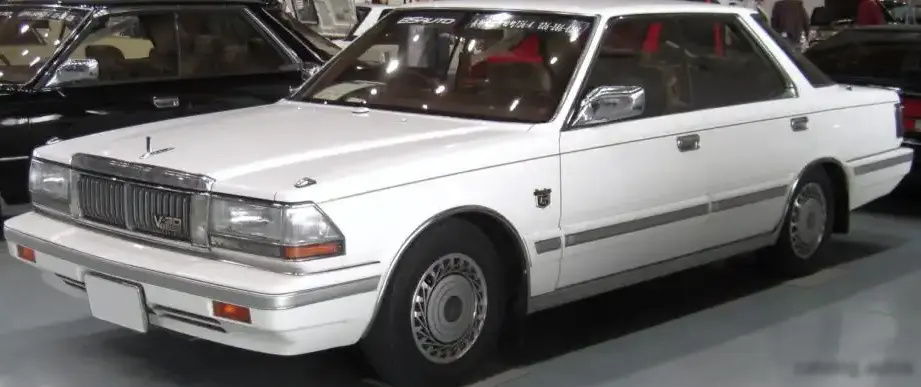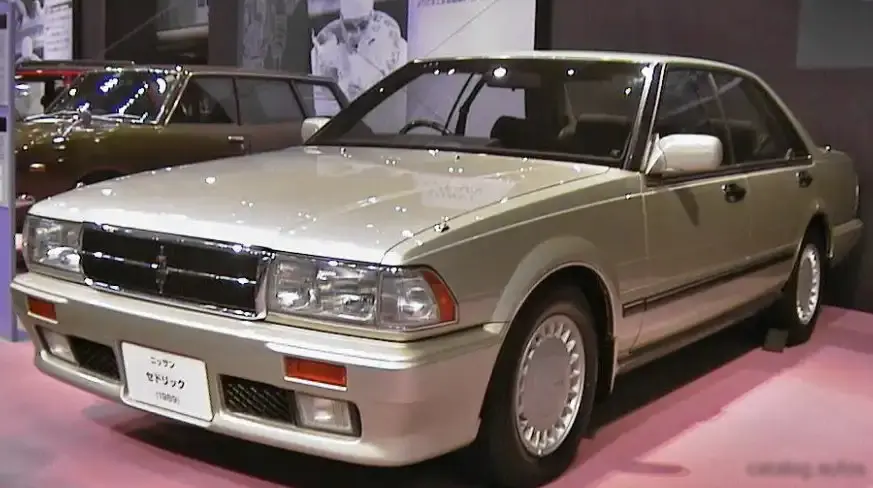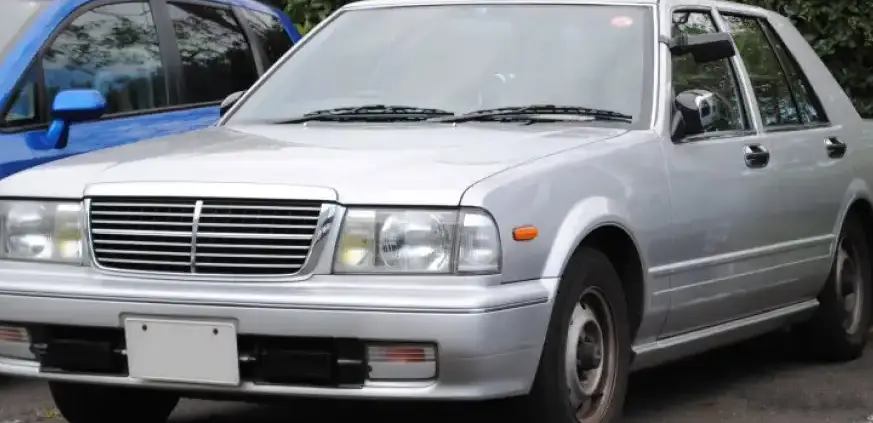
The Nissan Cedric Y31, particularly the 2.0i V6 variant with automatic transmission produced from 1991-1999, represents a significant iteration of Nissan’s long-running flagship sedan. Positioned as a comfortable and well-equipped vehicle for the Japanese domestic market (JDM), the Y31 Cedric aimed to provide a luxurious experience at a more accessible price point than its more prestigious sibling, the Nissan President. This 2.0-liter version served as a mid-range offering within the Y31 lineup, slotting between the smaller displacement engines and the more powerful 3.0-liter variants. It was designed to appeal to families and business professionals seeking a reliable and refined sedan.
Technical Specifications
| Brand | Nissan |
| Model | Cedric |
| Generation | Cedric (Y31, facelift 1991) |
| Type (Engine) | 2.0i V6 (125 Hp) Automatic |
| Start of production | 1991 |
| End of production | 1999 |
| Powertrain Architecture | Internal Combustion engine |
| Body type | Sedan |
| Seats | 5 |
| Doors | 4 |
| Fuel consumption (urban) | 10.7-14.1 l/100 km (22 – 16.7 US mpg, 26.4 – 20 UK mpg, 9.3 – 7.1 km/l) |
| Fuel consumption (extra urban) | 7.4-9.8 l/100 km (31.8 – 24 US mpg, 38.2 – 28.8 UK mpg, 13.5 – 10.2 km/l) |
| Fuel consumption (combined) | 10 l/100 km (23.5 US mpg, 28.2 UK mpg, 10 km/l) |
| Fuel Type | Petrol (Gasoline) |
| Acceleration 0 – 100 km/h | 13.1 sec |
| Acceleration 0 – 62 mph | 13.1 sec |
| Acceleration 0 – 60 mph | 12.4 sec |
| Maximum speed | 172 km/h (106.88 mph) |
| Weight-to-power ratio | 11.8 kg/Hp, 85 Hp/tonne |
| Weight-to-torque ratio | 8.8 kg/Nm, 113.6 Nm/tonne |
| Power | 125 Hp @ 6000 rpm |
| Power per litre | 62.6 Hp/l |
| Torque | 167 Nm @ 3200 rpm (123.17 lb.-ft. @ 3200 rpm) |
| Engine layout | Front, Longitudinal |
| Engine Model/Code | VG20 |
| Engine displacement | 1998 cm3 (121.93 cu. in.) |
| Number of cylinders | 6 |
| Engine configuration | V-engine |
| Cylinder Bore | 78 mm (3.07 in.) |
| Piston Stroke | 69.7 mm (2.74 in.) |
| Compression ratio | 9.5:1 |
| Number of valves per cylinder | 2 |
| Fuel injection system | Multi-port manifold injection |
| Engine aspiration | Naturally aspirated engine |
| Valvetrain | SOHC |
| Kerb Weight | 1470 kg (3240.8 lbs.) |
| Fuel tank capacity | 72 l (19.02 US gal | 15.84 UK gal) |
| Length | 4690 mm (184.65 in.) |
| Width | 1690 mm (66.54 in.) |
| Height | 1425 mm (56.1 in.) |
| Wheelbase | 2735 mm (107.68 in.) |
| Front track | 1440 mm (56.69 in.) |
| Rear track | 1450 mm (57.09 in.) |
| Ride height (ground clearance) | 155 mm (6.1 in.) |
| Drag coefficient (Cd) | 0.4 |
| Minimum turning circle | 11 m (36.09 ft.) |
| Drivetrain Architecture | Rear wheel drive |
| Number of gears | 4 |
| Gearbox type | Automatic transmission |
| Front brakes | Ventilated discs |
| Rear brakes | Disc |
| Steering type | Steering rack and pinion |
| Tires size | 195/70 R14 |
| Wheel rims size | 14 |
Introduction
The Y31 Nissan Cedric, launched in 1989 and receiving a facelift in 1991, continued the Cedric’s tradition as a large, comfortable sedan. The 2.0i V6 Automatic model, produced from 1991 through 1999, was a popular choice for buyers seeking a balance between performance, fuel efficiency, and affordability. Built on the Nissan S platform (also known as the 1HX0), the Y31 Cedric shared its underpinnings with the Gloria and, to a lesser extent, the President. This generation saw a move towards more rounded styling and increased emphasis on interior comfort and technology. The facelift in 1991 brought subtle cosmetic changes, including revised headlights and taillights, and minor improvements to the interior.
Powertrain & Engine Architecture
The heart of the Cedric 2.0i is the VG20E, a 2.0-liter V6 engine. This engine, part of Nissan’s VG series, is known for its smoothness and relative reliability. The VG20E features a single overhead camshaft (SOHC) valvetrain operating two valves per cylinder. Fuel delivery is handled by a multi-port fuel injection system, contributing to improved efficiency and responsiveness compared to earlier carbureted engines. The engine produces 125 horsepower at 6000 rpm and 167 Nm (123.17 lb-ft) of torque at 3200 rpm. The engine’s longitudinal mounting and rear-wheel-drive configuration were typical for Japanese sedans of this era. Paired with the VG20E is a four-speed automatic transmission, designed for smooth and comfortable shifting. This transmission wasn’t particularly advanced, lacking features like overdrive found in some contemporary automatics, but it was durable and well-suited to the engine’s power characteristics.
Driving Characteristics
The Cedric 2.0i Automatic offers a comfortable and relaxed driving experience. Acceleration is adequate for everyday driving, with a 0-60 mph time of around 12.4 seconds, but it’s not a particularly sporty vehicle. The automatic transmission prioritizes smoothness over aggressive shifting, resulting in a somewhat leisurely pace. Compared to the manual transmission versions or the larger 3.0-liter V6 models, the 2.0i feels noticeably less powerful. However, the automatic transmission makes it easier to drive in congested urban environments. The gear ratios are tuned for fuel economy and cruising comfort, rather than outright performance. The rear-wheel-drive layout provides a balanced feel, but the suspension is tuned for comfort, resulting in some body roll during cornering.
Equipment & Trim Levels
The 2.0i V6 Automatic trim typically included features such as power windows, power steering, central locking, and an AM/FM radio with a cassette player. Higher trim levels offered options like leather upholstery, woodgrain interior trim, a sunroof, and upgraded audio systems. Air conditioning was standard equipment. The interior design emphasized spaciousness and comfort, with ample legroom for both front and rear passengers. The dashboard layout was functional and straightforward, with easy-to-read gauges and controls. The quality of materials used in the interior was generally good, reflecting the Cedric’s position as a premium sedan.
Chassis & Braking
The Y31 Cedric utilizes a traditional body-on-frame construction, contributing to its robust feel. The suspension consists of independent front suspension with MacPherson struts and a solid rear axle with leaf springs. This setup prioritizes ride comfort over handling precision. Braking duties are handled by ventilated discs at the front and solid discs at the rear. The braking system is adequate for normal driving conditions, but it lacks the stopping power of more modern braking systems. The steering is a rack-and-pinion system, providing reasonably precise steering feel.
Market Reception & Comparison
The Nissan Cedric Y31 2.0i Automatic was well-received in the Japanese market as a comfortable, reliable, and relatively affordable luxury sedan. Critics praised its spacious interior, smooth ride, and fuel efficiency. However, some reviewers noted its lack of sporty handling and its somewhat dated technology compared to some European and American competitors. Compared to the 3.0-liter V6 models, the 2.0i offered a lower purchase price and better fuel economy, but at the expense of performance. The 1.8-liter and 2.0-liter models were often chosen by buyers who prioritized fuel efficiency and affordability over outright power.
Legacy
The Nissan Cedric Y31, including the 2.0i V6 Automatic variant, has developed a loyal following among enthusiasts. The VG20E engine is known for its durability and relatively simple maintenance requirements. While not a high-performance engine, it is capable of providing years of reliable service. Today, well-maintained Y31 Cedrics are becoming increasingly collectible, particularly those in original condition. The car represents a bygone era of Japanese automotive engineering, characterized by comfort, reliability, and understated elegance. Finding parts can sometimes be a challenge outside of Japan, but a dedicated community of owners and online resources helps to keep these cars on the road.