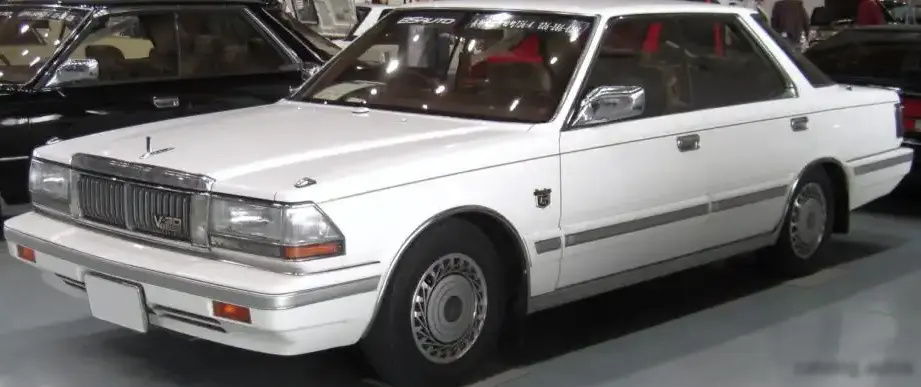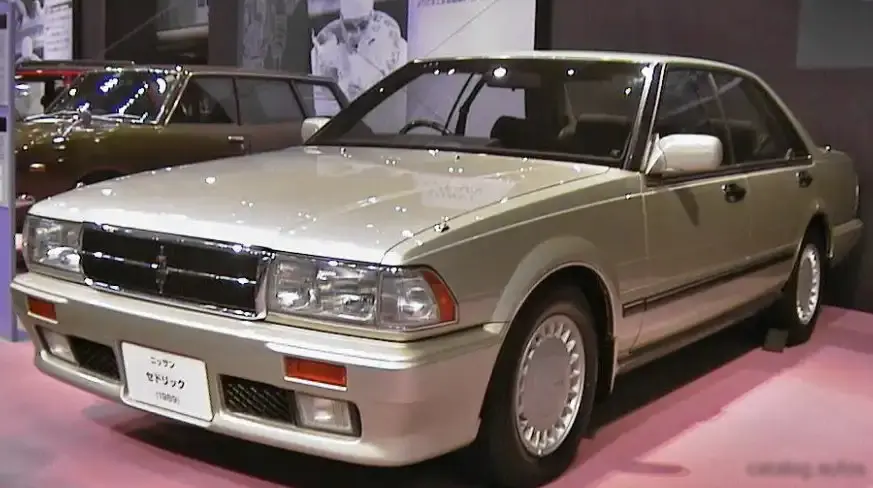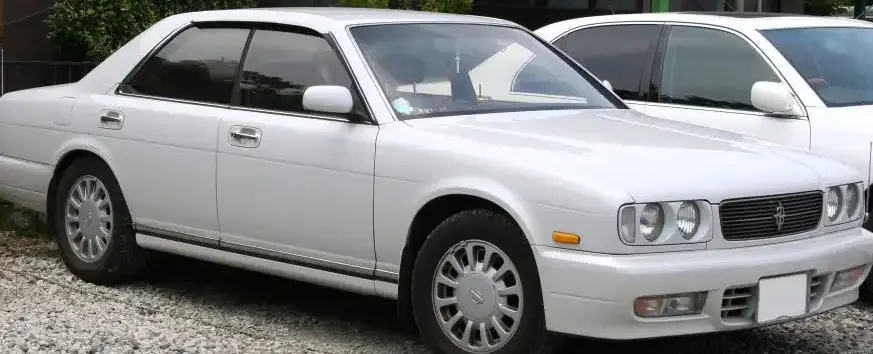
The Nissan Cedric Y32 2.8d Automatic, produced between 1991 and 1993, represented a somewhat unusual offering within the broader Y32 Cedric lineage. While the Y32 generation is largely remembered for its sophisticated styling and available inline-six gasoline engines, the 2.8d variant catered to a specific segment of the Japanese domestic market (JDM) seeking fuel efficiency and a more economical luxury experience. Positioned as an entry-level option within the Y32 range, it provided a comfortable and spacious sedan experience at a lower price point than its petrol-powered counterparts. The Y32 Cedric, as a whole, aimed to blend traditional Japanese luxury with contemporary design, and the 2.8d attempted to extend that appeal to budget-conscious buyers.
Technical Specifications
| Brand | Nissan |
| Model | Cedric |
| Generation | Cedric (Y32) |
| Type (Engine) | 2.8d (94 Hp) Automatic |
| Start of production | 1991 |
| End of production | 1993 |
| Powertrain Architecture | Internal Combustion engine |
| Body type | Sedan |
| Seats | 5 |
| Doors | 4 |
| Fuel consumption (urban) | 9.9-13 l/100 km (23.8 – 18.1 US mpg, 28.5 – 21.7 UK mpg, 10.1 – 7.7 km/l) |
| Fuel consumption (extra urban) | 7.2-9.5 l/100 km (32.7 – 24.8 US mpg, 39.2 – 29.7 UK mpg, 13.9 – 10.5 km/l) |
| Fuel consumption (combined) | 9.5 l/100 km (24.8 US mpg, 29.7 UK mpg, 10.5 km/l) |
| Fuel Type | Diesel |
| Acceleration 0 – 100 km/h | 18.2 sec |
| Acceleration 0 – 62 mph | 18.2 sec |
| Acceleration 0 – 60 mph | 17.3 sec |
| Maximum speed | 161 km/h (100.04 mph) |
| Weight-to-power ratio | 16.9 kg/Hp, 59.1 Hp/tonne |
| Weight-to-torque ratio | 9 kg/Nm, 111.3 Nm/tonne |
| Power | 94 Hp @ 4800 rpm |
| Power per litre | 33.3 Hp/l |
| Torque | 177 Nm @ 2400 rpm (130.55 lb.-ft. @ 2400 rpm) |
| Engine layout | Front, Longitudinal |
| Engine displacement | 2825 cm3 (172.39 cu. in.) |
| Number of cylinders | 6 |
| Engine configuration | Inline |
| Cylinder Bore | 85 mm (3.35 in.) |
| Piston Stroke | 83 mm (3.27 in.) |
| Compression ratio | 21.2:1 |
| Fuel injection system | Precombustion chamber injection |
| Engine aspiration | Naturally aspirated engine |
| Valvetrain | SOHC |
| Kerb Weight | 1590 kg (3505.35 lbs.) |
| Fuel tank capacity | 80 l (21.13 US gal | 17.6 UK gal) |
| Length | 4780 mm (188.19 in.) |
| Width | 1745 mm (68.7 in.) |
| Height | 1410 mm (55.51 in.) |
| Wheelbase | 2760 mm (108.66 in.) |
| Front track | 1500 mm (59.06 in.) |
| Rear track | 1495 mm (58.86 in.) |
| Ride height (ground clearance) | 150 mm (5.91 in.) |
| Drag coefficient (Cd) | 0.38 |
| Minimum turning circle | 11 m (36.09 ft.) |
| Drivetrain Architecture | The Internal combustion engine (ICE) drives the rear wheels of the vehicle. |
| Drive wheel | Rear wheel drive |
| Number of gears | 4 |
| Gearbox type | automatic transmission |
| Front brakes | Ventilated discs |
| Rear brakes | Ventilated discs |
| Steering type | Steering rack and pinion |
| Tires size | 205/65 R15 |
| Wheel rims size | 15 |
Powertrain & Engine Architecture
The heart of the Y32 Cedric 2.8d was the Nissan RD28 diesel engine, a 2.8-liter inline-six cylinder unit. This engine utilized a precombustion chamber injection system, a common design for diesel engines of the era, aimed at improving combustion efficiency and reducing noise. The RD28 produced 94 horsepower at 4800 rpm and 177 Nm (130.55 lb-ft) of torque at 2400 rpm. The engine featured a single overhead camshaft (SOHC) valvetrain. Paired with this engine was a 4-speed automatic transmission, chosen for its ease of use and suitability for the target market. This transmission was not known for its sportiness, prioritizing smooth shifts and fuel economy over rapid acceleration. The engine was mounted longitudinally in the front of the vehicle, driving the rear wheels.
Driving Characteristics
The 2.8d Automatic Cedric offered a distinctly different driving experience compared to the gasoline-powered versions. Acceleration was leisurely, with a 0-60 mph time of around 17.3 seconds. The focus was on relaxed cruising and fuel efficiency. The automatic transmission, while smooth, lacked the responsiveness of a manual gearbox, and the relatively low horsepower meant overtaking required careful planning. The gear ratios were optimized for fuel economy rather than performance. However, the RD28 engine provided adequate torque for everyday driving, and the Cedric’s comfortable suspension absorbed bumps effectively, making it a pleasant long-distance cruiser.
Equipment & Trim Levels
The 2.8d Automatic trim typically included features such as power windows, power steering, and air conditioning as standard equipment. Interior upholstery was generally cloth, though higher trim levels within the 2.8d range might have offered optional velour or leather seating. Dashboard configuration was consistent across the Y32 range, featuring a woodgrain finish and analog gauges. Optional extras included a sunroof, upgraded audio systems, and central locking. The 2.8d was generally positioned as a more basic version, with fewer luxury features compared to the higher-spec gasoline models.
Chassis & Braking
The Y32 Cedric 2.8d utilized a traditional body-on-frame construction, contributing to its robust feel. The suspension consisted of independent front suspension with MacPherson struts and a multi-link rear suspension. Braking was handled by ventilated discs on all four wheels, providing adequate stopping power for the vehicle’s weight and performance. Stabilizer bars were fitted to both the front and rear axles to reduce body roll during cornering. The relatively heavy diesel engine necessitated a slightly firmer suspension setup compared to the lighter gasoline models.
Market Reception & Comparison
The Nissan Cedric 2.8d Automatic received mixed reviews. Critics acknowledged its fuel efficiency and comfortable ride but often criticized its lack of performance. Compared to the 2.0-liter and 3.0-liter gasoline engines available in the Y32 range, the 2.8d was significantly slower. However, it offered superior fuel economy, making it an attractive option for drivers prioritizing cost savings. The 2.8d also compared favorably to other diesel-powered sedans of the era in terms of refinement and interior space. Its primary appeal lay in offering a relatively affordable and comfortable luxury experience.
Legacy
The RD28 diesel engine, while not known for being particularly high-tech, proved to be remarkably durable and reliable. Many Y32 Cedric 2.8d models have remained on the road for decades, a testament to the engine’s robust construction. In the used car market, the 2.8d variant is often the most affordable entry point into Y32 Cedric ownership. While it lacks the performance and prestige of the gasoline models, it offers a practical and comfortable classic car experience. Parts availability can be a challenge, but the RD28 engine shares components with other Nissan diesel engines, making sourcing replacements relatively straightforward. The Y32 Cedric 2.8d represents a unique chapter in Nissan’s history, offering a blend of luxury, economy, and durability that appealed to a specific segment of the Japanese car market.