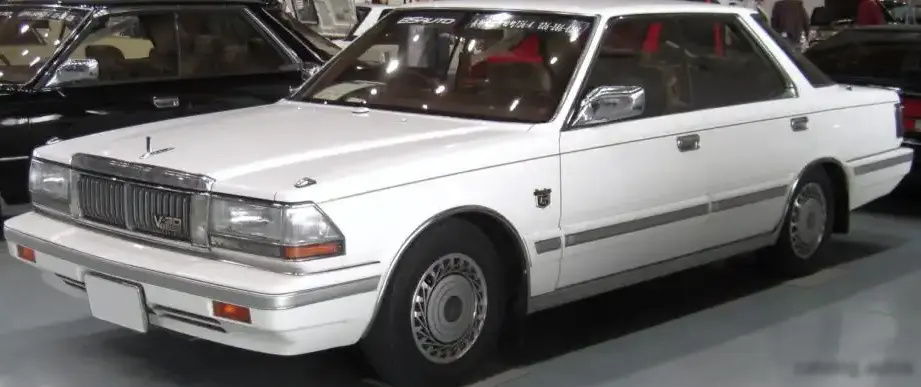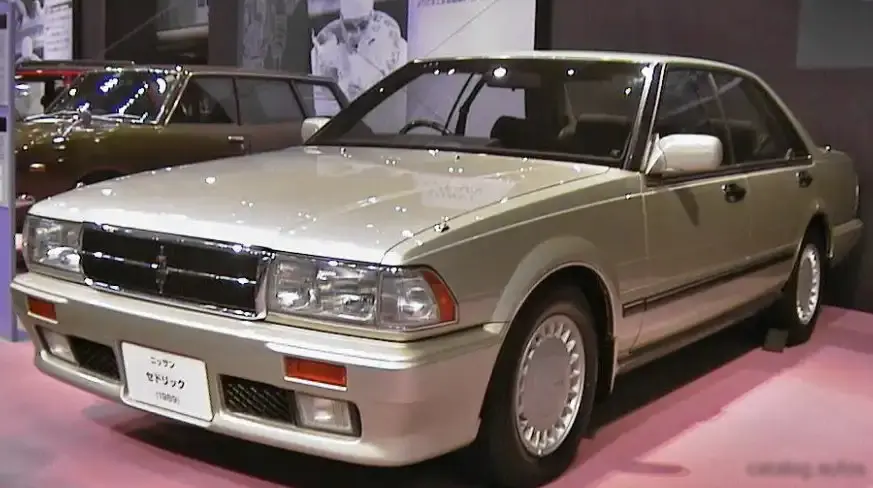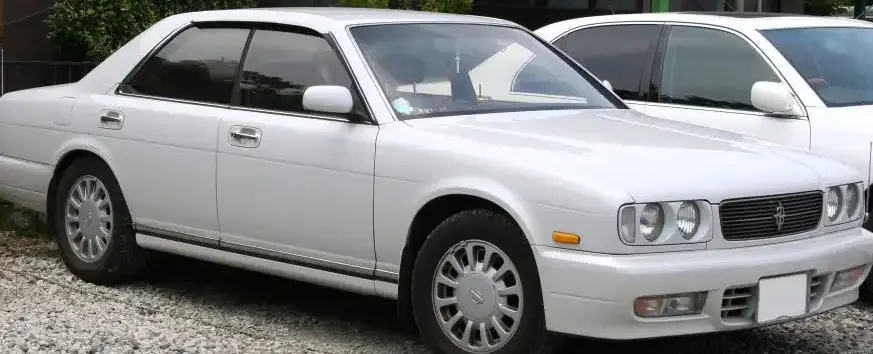
The Nissan Cedric Y32 3.0i V6 24V Automatic, produced between 1991 and 1995, represents a significant iteration of Nissan’s flagship sedan. Positioned as a premium offering within the Y32 generation (1989-1999), this variant catered to buyers seeking a blend of luxury, performance, and refinement. The Y32 Cedric, along with its sibling the Gloria, were traditionally aimed at the Japanese domestic market (JDM) as chauffeur-driven vehicles and executive transport, offering a spacious interior and comfortable ride. This 3.0-liter V6 automatic configuration occupied a mid-to-upper tier within the Y32 lineup, sitting below the more powerful 4.1-liter V8 models but above the smaller displacement engines.
Technical Specifications
| Brand | Nissan |
| Model | Cedric |
| Generation | Cedric (Y32) |
| Type (Engine) | 3.0i V6 24V (200 Hp) Automatic |
| Start of production | 1991 |
| End of production | 1995 |
| Powertrain Architecture | Internal Combustion engine |
| Body type | Sedan |
| Seats | 5 |
| Doors | 4 |
| Fuel consumption (combined) | 9.4 l/100 km (25 US mpg, 30.1 UK mpg, 10.6 km/l) |
| Fuel Type | Petrol (Gasoline) |
| Maximum speed | 220 km/h (136.7 mph) |
| Weight-to-power ratio | 8.1 kg/Hp, 124.2 Hp/tonne |
| Weight-to-torque ratio | 6.2 kg/Nm, 161.5 Nm/tonne |
| Power | 200 Hp @ 6000 rpm |
| Power per litre | 67.6 Hp/l |
| Torque | 260 Nm @ 4400 rpm (191.77 lb.-ft. @ 4400 rpm) |
| Engine layout | Front, Longitudinal |
| Engine displacement | 2960 cm3 (180.63 cu. in.) |
| Number of cylinders | 6 |
| Engine configuration | V-engine |
| Cylinder Bore | 87 mm (3.43 in.) |
| Piston Stroke | 83 mm (3.27 in.) |
| Compression ratio | 10.5:1 |
| Number of valves per cylinder | 4 |
| Fuel injection system | Multi-port manifold injection |
| Engine aspiration | Naturally aspirated engine |
| Valvetrain | DOHC |
| Kerb Weight | 1610 kg (3549.44 lbs.) |
| Max. weight | 1885 kg (4155.71 lbs.) |
| Max load | 275 kg (606.27 lbs.) |
| Fuel tank capacity | 80 l (21.13 US gal | 17.6 UK gal) |
| Length | 4780 mm (188.19 in.) |
| Width | 1745 mm (68.7 in.) |
| Height | 1410 mm (55.51 in.) |
| Wheelbase | 2760 mm (108.66 in.) |
| Front track | 1500 mm (59.06 in.) |
| Rear track | 1495 mm (58.86 in.) |
| Drivetrain Architecture | Rear wheel drive |
| Drive wheel | Rear wheel drive |
| Number of gears and type of gearbox | 5 gears, automatic transmission |
| Front suspension | Coil spring |
| Rear suspension | Coil spring |
| Front brakes | Ventilated discs |
| Rear brakes | Ventilated discs |
| Assisting systems | ABS (Anti-lock braking system) |
| Steering type | Steering rack and pinion |
| Power steering | Hydraulic Steering |
| Tires size | 205/65 R15 H |
Powertrain & Engine Architecture
The heart of the Y32 3.0i is the Nissan VQ30DE engine, a 2,960cc (180.6 cu in) 60-degree V6. This engine utilizes a double overhead camshaft (DOHC) valvetrain with four valves per cylinder, contributing to its relatively high specific output. The VQ30DE employs multi-port fuel injection, delivering fuel directly to each intake port for optimized combustion. The engine’s design prioritized smoothness and quiet operation, befitting the Cedric’s luxury positioning. Paired with this engine is a 5-speed automatic transmission, designed for comfortable and refined shifts. This transmission wasn’t known for particularly sporty performance, instead focusing on seamless gear changes and a relaxed driving experience. The transmission’s gear ratios were tuned for fuel efficiency and cruising comfort, rather than aggressive acceleration.
Driving Characteristics
The 200 horsepower and 260 Nm (191.77 lb-ft) of torque provided by the V6 engine and automatic transmission delivered adequate, though not exhilarating, performance. Acceleration from 0 to 60 mph was estimated to be around 9-10 seconds. The automatic transmission, while smooth, did result in some power loss compared to the available manual transmission options. The focus was on providing a comfortable and effortless driving experience, making it well-suited for long highway journeys. Compared to the larger 4.1-liter V8 models, the 3.0i offered a more manageable fuel consumption figure, though it lacked the V8’s substantial low-end torque. The rear-wheel-drive configuration provided a balanced feel, but the suspension tuning prioritized ride comfort over sharp handling.
Equipment & Trim Levels
The Y32 Cedric 3.0i Automatic typically came well-equipped, reflecting its premium status. Standard features often included power windows, power locks, power steering, air conditioning, and a high-quality audio system. Interior upholstery was typically cloth or velour, with leather options available as upgrades. Dashboard design featured woodgrain accents and a generally conservative, elegant aesthetic. Optional extras could include a sunroof, upgraded audio systems, and more advanced climate control systems. The trim level often dictated the availability of these features, with higher trims offering more luxurious appointments.
Chassis & Braking
The Y32 Cedric utilized a traditional body-on-frame construction, contributing to its robust feel and comfortable ride. Suspension consisted of coil springs all around, with independent suspension in the front and a solid rear axle. Braking was handled by ventilated disc brakes on all four wheels, supplemented by an Anti-lock Braking System (ABS) for improved stopping power and stability. The suspension was tuned for comfort, prioritizing a smooth ride over sporty handling. Stabilizer bars were present both front and rear, helping to reduce body roll during cornering, but the overall setup was geared towards a relaxed driving experience.
Market Reception & Comparison
The Nissan Cedric Y32 3.0i Automatic was generally well-received in the Japanese market as a comfortable and reliable luxury sedan. Critics praised its spacious interior, smooth ride, and refined engine. However, some noted that its handling wasn’t as sharp as some of its European competitors. Compared to the 2.0-liter and 2.5-liter versions, the 3.0i offered a noticeable performance improvement, justifying its higher price point. Fuel economy was reasonable for a vehicle of its size and class, averaging around 9.4 l/100km. The 4.1-liter V8 models offered significantly more power but came with a substantial increase in fuel consumption and cost.
Legacy
The Nissan Cedric Y32 3.0i V6 Automatic has developed a reputation for reliability, particularly when well-maintained. The VQ30DE engine is known for its durability, and the automatic transmission, while not particularly advanced, is generally robust. In the used car market, these Cedrics are often sought after by enthusiasts who appreciate their classic styling, comfortable ride, and relatively simple mechanicals. Parts availability can be a challenge outside of Japan, but many components are still obtainable. The Y32 Cedric remains a testament to Nissan’s commitment to building comfortable, reliable, and well-equipped luxury sedans.