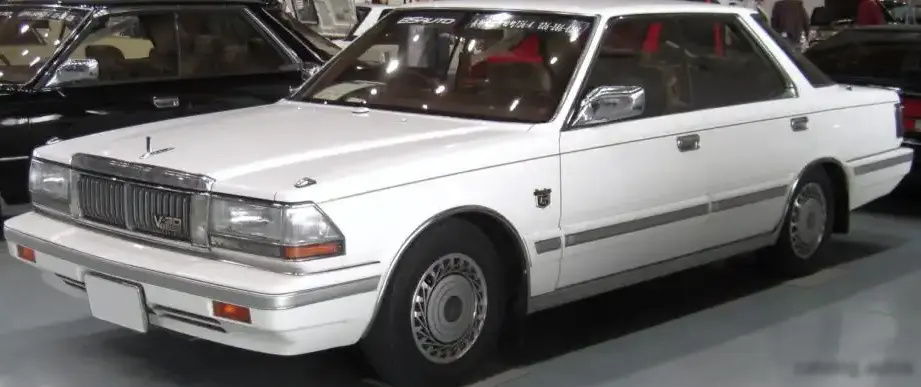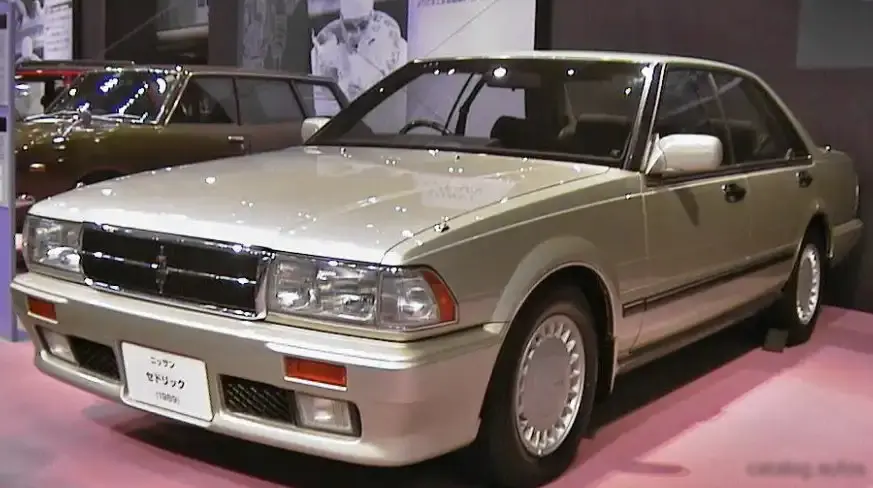
The Nissan Cedric Y32 Gran Turismo 2.0i V6 Automatic, produced between 1993 and 1995, represents a significant iteration of Nissan’s long-running Cedric lineage. Positioned as a mid-range offering within the Y32 generation (1989-1999), this variant aimed to provide a balance of comfort, refinement, and reasonable performance for the Japanese domestic market. The Y32 series, known for its spacious interior and luxurious appointments, catered to a clientele seeking a large, comfortable sedan. This 2.0i V6 Automatic model served as a more accessible entry point into the Y32 range compared to the higher-specification 3.0-liter variants, offering a compelling alternative for buyers prioritizing fuel efficiency and a smoother driving experience.
Technical Specifications
| Brand | Nissan |
| Model | Cedric |
| Generation | Cedric (Y32) Gran Turismo |
| Type (Engine) | 2.0i V6 (125 Hp) Automatic |
| Start of production | 1993 |
| End of production | 1995 |
| Powertrain Architecture | Internal Combustion engine |
| Body type | Sedan |
| Seats | 5 |
| Doors | 4 |
| Fuel consumption (urban) | 10.8-14.3 l/100 km (21.8 – 16.4 US mpg, 26.2 – 19.8 UK mpg, 9.3 – 7 km/l) |
| Fuel consumption (extra urban) | 7.4-9.8 l/100 km (31.8 – 24 US mpg, 38.2 – 28.8 UK mpg, 13.5 – 10.2 km/l) |
| Fuel consumption (combined) | 10 l/100 km (23.5 US mpg, 28.2 UK mpg, 10 km/l) |
| Fuel Type | Petrol (Gasoline) |
| Acceleration 0 – 100 km/h | 13.4 sec |
| Acceleration 0 – 62 mph | 13.4 sec |
| Acceleration 0 – 60 mph | 12.7 sec |
| Maximum speed | 174 km/h (108.12 mph) |
| Weight-to-power ratio | 12 kg/Hp, 83.3 Hp/tonne |
| Weight-to-torque ratio | 9 kg/Nm, 111.3 Nm/tonne |
| Power | 125 Hp @ 6000 rpm |
| Power per litre | 62.6 Hp/l |
| Torque | 167 Nm @ 3200 rpm (123.17 lb.-ft. @ 3200 rpm) |
| Engine layout | Front, Longitudinal |
| Engine Model/Code | VG20 |
| Engine displacement | 1998 cm3 (121.93 cu. in.) |
| Number of cylinders | 6 |
| Engine configuration | V-engine |
| Cylinder Bore | 78 mm (3.07 in.) |
| Piston Stroke | 69.7 mm (2.74 in.) |
| Compression ratio | 9.5:1 |
| Number of valves per cylinder | 2 |
| Fuel injection system | Multi-port manifold injection |
| Engine aspiration | Naturally aspirated engine |
| Valvetrain | SOHC |
| Kerb Weight | 1500 kg (3306.93 lbs.) |
| Fuel tank capacity | 80 l (21.13 US gal | 17.6 UK gal) |
| Length | 4800 mm (188.98 in.) |
| Width | 1745 mm (68.7 in.) |
| Height | 1410 mm (55.51 in.) |
| Wheelbase | 2760 mm (108.66 in.) |
| Front track | 1500 mm (59.06 in.) |
| Rear (Back) track | 1495 mm (58.86 in.) |
| Ride height (ground clearance) | 145 mm (5.71 in.) |
| Drag coefficient (Cd) | 0.38 |
| Minimum turning circle (turning diameter) | 11 m (36.09 ft.) |
| Drivetrain Architecture | The Internal combustion engine (ICE) drives the rear wheels of the vehicle. |
| Drive wheel | Rear wheel drive |
| Number of gears and type of gearbox | 4 gears, automatic transmission |
| Front brakes | Ventilated discs |
| Rear brakes | Ventilated discs |
| Steering type | Steering rack and pinion |
| Tires size | 195/70 R14 |
| Wheel rims size | 14 |
Powertrain & Engine Architecture
At the heart of the Cedric Y32 2.0i Gran Turismo lies the VG20E engine, a 1,998 cc (121.93 cu. in.) V6. This engine, part of Nissan’s VG series, is a naturally aspirated, 60-degree V6 featuring a single overhead camshaft (SOHC) valvetrain with two valves per cylinder. The VG20E utilizes multi-port fuel injection, contributing to improved fuel efficiency and smoother power delivery compared to earlier carbureted designs. The engine produces 125 horsepower at 6000 rpm and 167 Nm (123.17 lb-ft) of torque at 3200 rpm. This power is then channeled through a four-speed automatic transmission, a common pairing for this trim level, prioritizing ease of use and comfort over outright performance. The transmission itself is electronically controlled, offering smoother shifts than older hydraulic systems.
Driving Characteristics
The 2.0i V6 Automatic Cedric offers a comfortable and refined driving experience, but it’s not designed for sporty performance. Acceleration from 0-60 mph takes around 12.7 seconds, and the top speed is approximately 108 mph. The automatic transmission, while smooth, does contribute to a slight loss of responsiveness compared to the available manual transmission options. Gear ratios are tuned for fuel economy and relaxed cruising, meaning the engine can feel somewhat strained during hard acceleration. However, for everyday driving, the powertrain provides adequate power for overtaking and maintaining highway speeds. The rear-wheel-drive configuration contributes to balanced handling, although the relatively soft suspension setup prioritizes ride comfort over sharp cornering.
Equipment & Trim Levels
The Gran Turismo trim level of the Y32 Cedric offered a good balance of features. Standard equipment typically included power windows, power steering, central locking, and air conditioning. Interior upholstery was generally cloth, although leather options were available as upgrades. The dashboard layout is functional and straightforward, with a focus on ease of use. Optional extras could include a sunroof, upgraded audio systems, and power-adjustable seats. The Y32 Cedric, even in its mid-range Gran Turismo guise, was known for its spacious interior and comfortable seating, making it a popular choice for families and long-distance drivers.
Chassis & Braking
The Y32 Cedric utilizes a traditional body-on-frame construction, contributing to its robust feel and durability. The suspension consists of independent front suspension with MacPherson struts and a multi-link rear suspension. Stabilizer bars are fitted to both the front and rear axles to reduce body roll. Braking duties are handled by ventilated disc brakes on all four wheels, providing adequate stopping power for the vehicle’s weight. The steering system is a rack-and-pinion setup, offering precise and responsive steering feel.
Market Reception & Comparison
The Nissan Cedric Y32 2.0i V6 Automatic was generally well-received in the Japanese market as a comfortable and reliable family sedan. Critics praised its spacious interior, smooth ride, and relatively fuel-efficient engine. Compared to the 3.0-liter variants, the 2.0i offered a more affordable entry point into the Y32 range, but at the expense of some performance. The 1.8L models were even more fuel efficient but offered less power. Compared to competitors like the Toyota Crown and Honda Inspire, the Cedric offered a similar level of comfort and refinement, with a slightly more traditional styling approach.
Legacy
The VG20E engine, while not known for being particularly high-performance, is generally considered a reliable and durable powerplant. With proper maintenance, these engines can accumulate high mileage without major issues. The four-speed automatic transmission is also relatively robust. Today, the Y32 Cedric is becoming increasingly sought after by enthusiasts and collectors, particularly well-maintained examples. The 2.0i V6 Automatic variant represents a sweet spot in the lineup, offering a good balance of affordability, reliability, and comfort. Parts availability can be a challenge outside of Japan, but a dedicated community of owners and enthusiasts helps to keep these classic sedans on the road.