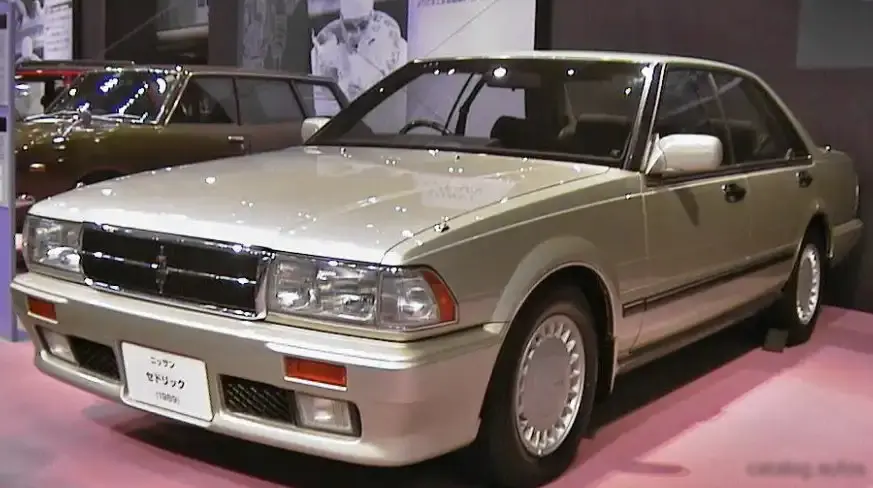
The Nissan Cedric Y33 2.5i 4×4 Automatic, produced between 1997 and 1999, represents a significant iteration of Nissan’s flagship sedan. Positioned as a premium offering within the Y33 generation (1995-1999), this variant combined a potent 2.5-liter inline-six engine with a four-speed automatic transmission and a full-time four-wheel drive system. The Cedric, historically a competitor to the Toyota Crown and Mitsubishi Debonair, aimed to provide a comfortable and technologically advanced experience for Japanese buyers, emphasizing luxury and refinement. This particular model catered to those seeking a blend of performance and all-weather capability within the large sedan segment.
Technical Specifications
| Brand | Nissan |
| Model | Cedric |
| Generation | Cedric (Y33) |
| Type | 2.5i (235 Hp) 4×4 Automatic |
| Start of production | 1997 |
| End of production | 1999 |
| Powertrain Architecture | Internal Combustion engine |
| Body type | Sedan |
| Seats | 5 |
| Doors | 4 |
| Fuel consumption (combined) | 12.6 l/100 km (18.7 US mpg, 22.4 UK mpg, 7.9 km/l) |
| Fuel Type | Petrol (Gasoline) |
| Acceleration 0 – 100 km/h | 9.2 sec |
| Acceleration 0 – 62 mph | 9.2 sec |
| Acceleration 0 – 60 mph | 8.7 sec |
| Maximum speed | 209 km/h (129.87 mph) |
| Weight-to-power ratio | 7.2 kg/Hp, 138.2 Hp/tonne |
| Weight-to-torque ratio | 6.2 kg/Nm, 161.2 Nm/tonne |
| Power | 235 Hp @ 6400 rpm |
| Power per litre | 94.1 Hp/l |
| Torque | 274 Nm @ 4800 rpm (202.09 lb.-ft. @ 4800 rpm) |
| Engine layout | Front, Transverse |
| Engine Model/Code | RB25 |
| Engine displacement | 2498 cm3 (152.44 cu. in.) |
| Number of cylinders | 6 |
| Engine configuration | Inline |
| Cylinder Bore | 86 mm (3.39 in.) |
| Piston Stroke | 71.7 mm (2.82 in.) |
| Compression ratio | 9:1 |
| Number of valves per cylinder | 4 |
| Fuel injection system | Multi-port manifold injection |
| Engine aspiration | Naturally aspirated engine |
| Valvetrain | DOHC |
| Kerb Weight | 1700 kg (3747.86 lbs.) |
| Fuel tank capacity | 80 l (21.13 US gal | 17.6 UK gal) |
| Drag coefficient (Cd) | 0.37 |
| Minimum turning circle | 11.8 m (38.71 ft.) |
| Drive wheel | All wheel drive (4×4) |
| Number of gears and type of gearbox | 4 gears, automatic transmission |
| Front brakes | Ventilated discs |
| Rear brakes | Ventilated discs |
| Tires size | 205/65 R15 |
| Wheel rims size | 15 |
Powertrain & Engine Architecture
The heart of the Cedric Y33 2.5i 4×4 is the RB25DE engine, a 2.5-liter inline-six cylinder powerplant. This engine, part of Nissan’s renowned RB series, utilizes a cast iron block and an aluminum cylinder head. The RB25DE features a dual overhead camshaft (DOHC) valvetrain with four valves per cylinder, contributing to its respectable power output. Fuel delivery is managed by a multi-port fuel injection system, ensuring precise fuel metering for optimal combustion. The 9:1 compression ratio strikes a balance between performance and reliability. The four-speed automatic transmission, while not the most modern by today’s standards, was chosen for its smoothness and ease of use, aligning with the Cedric’s luxury-oriented character. It’s a conventional torque converter automatic, prioritizing comfort over outright shift speed.
Driving Characteristics
The 235 horsepower and 274 Nm (202 lb-ft) of torque provided by the RB25DE, coupled with the all-wheel drive system, resulted in a capable and confident driving experience. Acceleration from 0-60 mph in approximately 8.7 seconds was respectable for a large, luxury sedan of the late 1990s. The automatic transmission, while smooth, did contribute to a slight loss of responsiveness compared to the available manual transmission options. Gear ratios were tuned for comfortable cruising rather than aggressive acceleration. The all-wheel drive system provided enhanced traction, particularly in inclement weather, making the Cedric a practical choice for regions experiencing rain or snow. Compared to the lower-powered 2.0-liter variants, the 2.5i offered a noticeable performance boost, while remaining more accessible and fuel-efficient than the higher-end models.
Equipment & Trim Levels
The Cedric Y33 2.5i 4×4 Automatic typically came well-equipped, reflecting its position as a premium vehicle. Standard features often included power windows, power locks, power steering, air conditioning, and a high-quality audio system. Interior upholstery was typically cloth or a combination of cloth and leather, with woodgrain accents adorning the dashboard and door panels. Optional extras could include a sunroof, leather seats, upgraded audio systems, and advanced climate control. The dashboard layout was designed for ease of use, with clearly labeled controls and a focus on driver comfort. The trim level often denoted the level of interior refinement and the availability of optional features.
Chassis & Braking
The Y33 Cedric featured an independent suspension system at all four corners, designed to provide a comfortable and controlled ride. Front suspension utilized MacPherson struts, while the rear employed a multi-link setup. Ventilated disc brakes were fitted on all four wheels, providing adequate stopping power for the vehicle’s weight. The all-wheel drive system added to the vehicle’s stability, particularly during cornering. Stabilizer bars were present at both the front and rear, helping to reduce body roll. The suspension tuning prioritized ride comfort over sporty handling, aligning with the Cedric’s overall character.
Market Reception & Comparison
The Nissan Cedric Y33 2.5i 4×4 Automatic was generally well-received in the Japanese market. Critics praised its comfortable ride, spacious interior, and refined engine. The all-wheel drive system was seen as a valuable asset, enhancing its practicality. Compared to the 2.0-liter variants, the 2.5i offered a significant performance upgrade, while remaining more affordable than the top-of-the-line models. Fuel economy, at 12.6 l/100km, was typical for a large, naturally aspirated sedan of that era. Reliability was generally good, although maintenance costs could be higher due to the complexity of the engine and all-wheel drive system.
Legacy
The Nissan Cedric Y33 2.5i 4×4 Automatic, while not widely exported outside of Japan, remains a respected vehicle among enthusiasts. The RB25DE engine is known for its durability and potential for modification. The all-wheel drive system adds to its appeal for those seeking a classic Japanese sedan with all-weather capability. In the used car market, well-maintained examples of this variant are becoming increasingly collectible. The powertrain, while aging, is generally reliable if properly maintained, although parts availability can be a concern. The Y33 Cedric represents a high point in Japanese luxury sedan design, offering a blend of comfort, performance, and technology that continues to appeal to enthusiasts today.