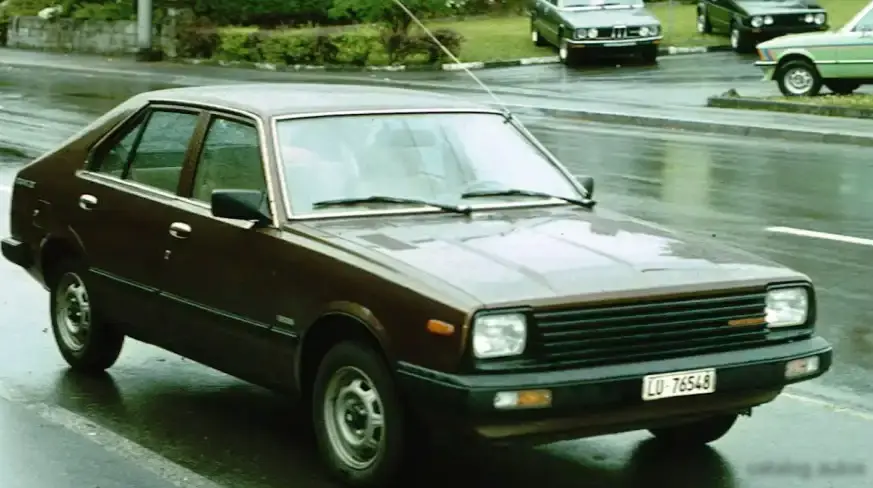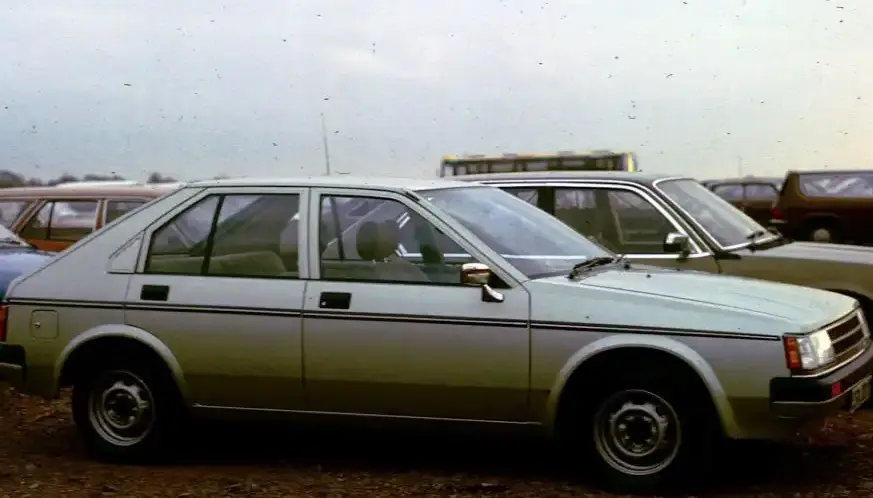
The Nissan Cherry N12, produced between 1982 and 1986, represented Nissan’s entry into the supermini class, primarily aimed at the European market. Positioned as a practical and affordable family car, the N12 Cherry was a significant departure from its predecessor, offering a more modern design and improved interior space. This article focuses specifically on the 1.3-liter (60 hp) variant, which served as the base model within the N12 lineup, and was commonly paired with a four-speed manual transmission. While automatic transmissions were available in some markets, the 1.3L engine was predominantly offered with a manual gearbox, making it the most accessible and fuel-efficient option for budget-conscious buyers.
Technical Specifications
| Brand | Nissan |
| Model | Cherry |
| Generation | Cherry (N12) |
| Type (Engine) | 1.3 (60 Hp) |
| Start of production | 1982 |
| End of production | 1986 |
| Powertrain Architecture | Internal Combustion engine |
| Body type | Sedan |
| Seats | 5 |
| Doors | 5 |
| Fuel consumption (urban) | 7.6 l/100 km (30.9 US mpg) |
| Fuel consumption (extra urban) | 5.5 l/100 km (42.8 US mpg) |
| Fuel Type | Petrol (Gasoline) |
| Acceleration 0 – 100 km/h | 14.4 sec |
| Acceleration 0 – 62 mph | 14.4 sec |
| Acceleration 0 – 60 mph | 13.7 sec |
| Maximum speed | 155 km/h (96.31 mph) |
| Weight-to-power ratio | 13.7 kg/Hp |
| Weight-to-torque ratio | 8.2 kg/Nm |
| Power | 60 Hp @ 5600 rpm |
| Torque | 100 Nm @ 3600 rpm (73.76 lb.-ft. @ 3600 rpm) |
| Engine layout | Front, Transverse |
| Engine Model/Code | E13 |
| Engine displacement | 1270 cm3 (77.5 cu. in.) |
| Number of cylinders | 4 |
| Engine configuration | Inline |
| Cylinder Bore | 76 mm (2.99 in.) |
| Piston Stroke | 70 mm (2.76 in.) |
| Compression ratio | 9:1 |
| Number of valves per cylinder | 2 |
| Fuel injection system | Carburettor |
| Engine aspiration | Naturally aspirated |
| Engine oil capacity | 3.9 l (4.12 US qt | 3.43 UK qt) |
| Kerb Weight | 820 kg (1807.79 lbs.) |
| Max. weight | 1285 kg (2832.94 lbs.) |
| Max load | 465 kg (1025.15 lbs.) |
| Fuel tank capacity | 50 l (13.21 US gal | 11 UK gal) |
| Length | 3960 mm (155.91 in.) |
| Width | 1620 mm (63.78 in.) |
| Height | 1385 mm (54.53 in.) |
| Wheelbase | 2415 mm (95.08 in.) |
| Front track | 1395 mm (54.92 in.) |
| Rear track | 1375 mm (54.13 in.) |
| Drivetrain Architecture | Front wheel drive |
| Number of gears | 4 |
| Type of gearbox | Manual transmission |
| Front suspension | Independent type McPherson |
| Rear suspension | Double wishbone |
| Front brakes | Disc |
| Rear brakes | Drum |
| Steering type | Steering rack and pinion |
| Wheel rims size | 4.5J x 13 |
Powertrain & Engine Architecture
The heart of the N12 Cherry 1.3 was the E13 engine, a 1.3-liter inline-four cylinder petrol engine. This engine utilized a single overhead camshaft (SOHC) valvetrain with two valves per cylinder. Fuel delivery was managed by a carburetor, a common feature for vehicles of this era, prioritizing simplicity and cost-effectiveness over the more advanced fuel injection systems. The E13 produced 60 horsepower at 5600 rpm and 100 Nm (73.76 lb-ft) of torque at 3600 rpm. The four-speed manual transmission was a standard offering, providing a relatively direct connection between the engine and the front wheels. The transmission was chosen for its simplicity and contribution to the car’s overall fuel efficiency.
Driving Characteristics
The 1.3-liter Cherry, with its modest power output, offered a driving experience focused on economy and practicality. Acceleration was leisurely, taking approximately 14.4 seconds to reach 62 mph (100 km/h). The four-speed manual transmission required frequent shifting to maintain momentum, particularly when tackling hills or overtaking. Compared to the later 1.5-liter variants, the 1.3 felt noticeably underpowered, but it provided a lighter and more nimble feel. The gear ratios were optimized for fuel efficiency rather than outright performance. The steering was light and responsive, making it easy to maneuver in urban environments.
Equipment & Trim Levels
The base-level 1.3 Cherry was typically equipped with basic amenities. Standard features included cloth upholstery, a simple dashboard layout with analog gauges, and manual windows and door locks. Optional extras, depending on the market, could include a radio, upgraded interior trim, and a sunroof. The interior was designed with practicality in mind, offering sufficient space for five passengers, although rear legroom was somewhat limited. The overall finish was functional rather than luxurious, reflecting the car’s affordable price point.
Chassis & Braking
The N12 Cherry featured a front-engine, front-wheel-drive layout. The front suspension utilized an independent McPherson strut setup, providing a comfortable ride and reasonable handling. The rear suspension employed a double wishbone configuration. Braking duties were handled by disc brakes on the front wheels and drum brakes on the rear. The braking system was adequate for the car’s weight and performance, but lacked the stopping power of more modern vehicles. The car’s relatively light weight (approximately 820 kg or 1808 lbs) contributed to its agility and fuel efficiency.
Market Reception & Comparison
The Nissan Cherry N12 1.3 was generally well-received as an affordable and reliable supermini. Critics praised its fuel efficiency and practicality, but noted its lack of performance. Compared to other vehicles in its class, such as the Ford Fiesta and Volkswagen Polo, the Cherry offered a competitive price point and a spacious interior. However, it lacked the refinement and driving dynamics of some of its rivals. The 1.5-liter versions of the Cherry offered a noticeable performance improvement, but came at a higher cost. The 1.3L model was favored by buyers prioritizing economy and low running costs.
Legacy
The Nissan Cherry N12 played a significant role in establishing Nissan’s presence in the European supermini market. The E13 engine, while not particularly powerful, proved to be durable and reliable. Today, the N12 Cherry 1.3 is a relatively rare sight on the roads, but it has gained a following among classic car enthusiasts. Parts availability can be challenging, but the car’s simple mechanical design makes it relatively easy to maintain for those with mechanical skills. The N12 Cherry represents a significant step forward in Nissan’s design and engineering, and remains a fondly remembered vehicle for many who owned one in the 1980s.