Technical Specifications
| Brand | Nissan |
| Model | Cube |
| Generation | Cube (Z12) |
| Type (Engine) | 1.6 (110 Hp) |
| Start of production | January, 2010 |
| End of production | March, 2011 |
| Powertrain Architecture | Internal Combustion engine |
| Body type | Station wagon (estate) |
| Seats | 5 |
| Doors | 5 |
| Fuel consumption (urban) | 8.3 l/100 km (28.3 US mpg, 34 UK mpg, 12 km/l) |
| Fuel consumption (extra urban) | 5.6 l/100 km (42 US mpg, 50.4 UK mpg, 17.9 km/l) |
| Fuel consumption (combined) | 6.6 l/100 km (35.6 US mpg, 42.8 UK mpg, 15.2 km/l) |
| CO2 emissions | 151 g/km |
| Fuel Type | Petrol (Gasoline) |
| Acceleration 0 – 100 km/h | 11.3 sec |
| Acceleration 0 – 62 mph | 11.3 sec |
| Acceleration 0 – 60 mph | 10.7 sec |
| Maximum speed | 175 km/h (108.74 mph) |
| Emission standard | Euro 5 |
| Weight-to-power ratio | 11.5 kg/Hp, 87 Hp/tonne |
| Weight-to-torque ratio | 8.3 kg/Nm, 120.9 Nm/tonne |
| Power | 110 Hp @ 6000 rpm |
| Power per litre | 68.8 Hp/l |
| Torque | 153 Nm @ 4400 rpm (112.85 lb.-ft. @ 4400 rpm) |
| Engine layout | Front, Transverse |
| Engine Model/Code | HR16DE |
| Engine displacement | 1598 cm3 (97.52 cu. in.) |
| Number of cylinders | 4 |
| Engine configuration | Inline |
| Cylinder Bore | 78 mm (3.07 in.) |
| Piston Stroke | 83.6 mm (3.29 in.) |
| Compression ratio | 10.7:1 |
| Number of valves per cylinder | 4 |
| Fuel injection system | Multi-port manifold injection |
| Engine aspiration | Naturally aspirated engine |
| Valvetrain | DOHC |
| Engine oil capacity | 4.3 l (4.54 US qt | 3.78 UK qt) |
| Coolant | 6.3 l (6.66 US qt | 5.54 UK qt) |
| Kerb Weight | 1265-1321 kg (2788.85 – 2912.31 lbs.) |
| Max. weight | 1700 kg (3747.86 lbs.) |
| Max load | 379-435 kg (835.55 – 959.01 lbs.) |
| Trunk (boot) space – minimum | 260 l (9.18 cu. ft.) |
| Trunk (boot) space – maximum | 1563 l (55.2 cu. ft.) |
| Fuel tank capacity | 52 l (13.74 US gal | 11.44 UK gal) |
| Max. roof load | 40 kg (88.18 lbs.) |
| Permitted trailer load with brakes (12%) | 1000 kg (2204.62 lbs.) |
| Permitted trailer load without brakes | 510 kg (1124.36 lbs.) |
| Permitted towbar download | 40 kg (88.18 lbs.) |
| Length | 3980 mm (156.69 in.) |
| Width | 1695 mm (66.73 in.) |
| Height | 1670 mm (65.75 in.) |
| Wheelbase | 2530 mm (99.61 in.) |
| Front track | 1475 mm (58.07 in.) |
| Rear (Back) track | 1480 mm (58.27 in.) |
| Front overhang | 790 mm (31.1 in.) |
| Rear overhang | 660 mm (25.98 in.) |
| Minimum turning circle (turning diameter) | 10.2 m (33.46 ft.) |
| Drivetrain Architecture | The Internal combustion engine (ICE) drives the front wheels of the vehicle. |
| Drive wheel | Front wheel drive |
| Number of gears and type of gearbox | 5 gears, manual transmission |
| Front suspension | Independent, type McPherson with coil spring and anti-roll bar |
| Rear suspension | Transverse stabilizer, Torsion |
| Front brakes | Ventilated discs |
| Rear brakes | Disc |
| Assisting systems | ABS (Anti-lock braking system) |
| Steering type | Steering rack and pinion |
| Power steering | Hydraulic Steering |
| Tires size | 195/60 R15; 195/55 R16 |
| Wheel rims size | 6J x 15; 6J x 16 |
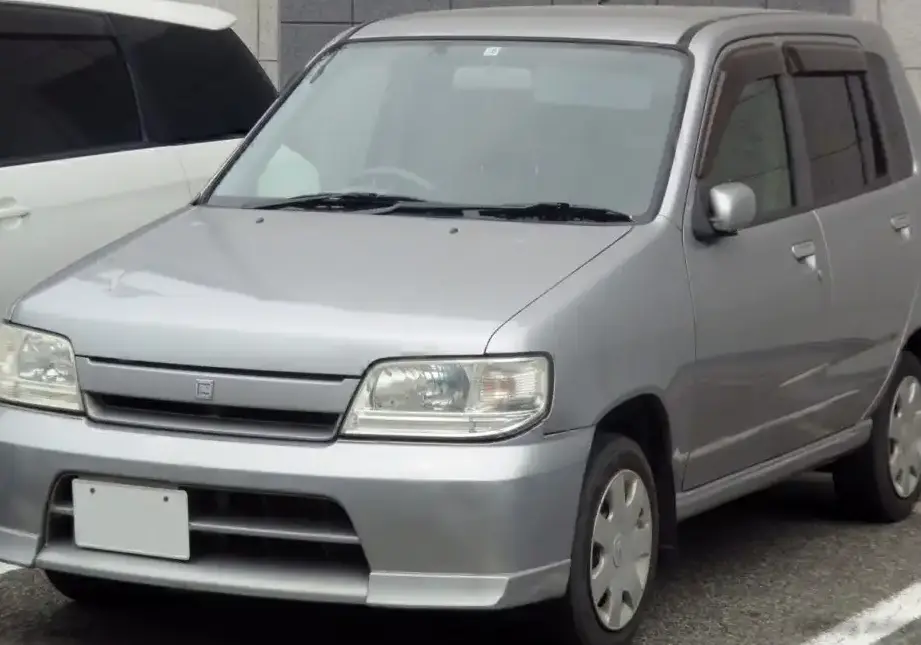
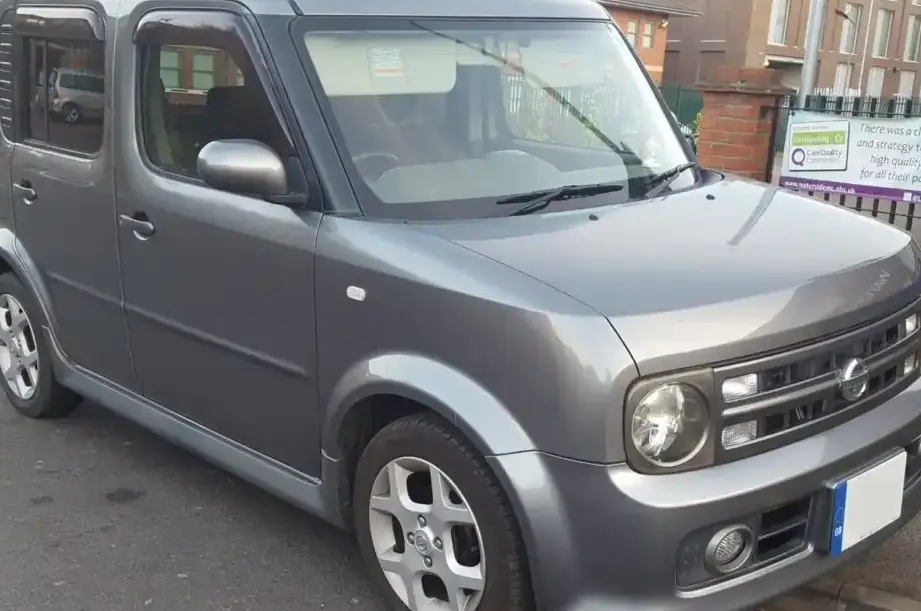
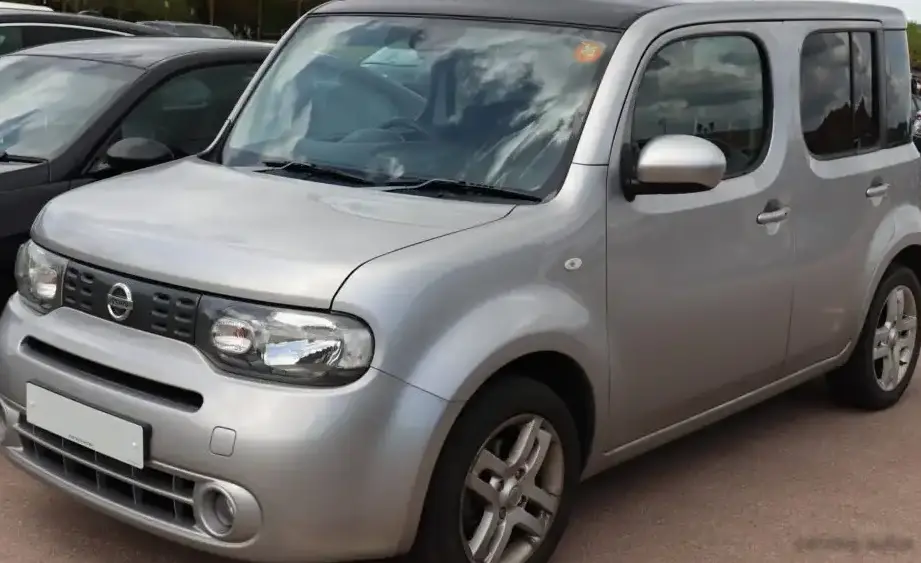
The Nissan Cube Z12 1.6 represented a key entry point into the third generation of the Cube, launched in Japan in 2008 and subsequently offered in other markets. Built on the Nissan B platform, shared with vehicles like the Renault Modus and Nissan Note, the Z12 Cube aimed for a youthful demographic with its distinctive, asymmetrical styling. The 1.6-liter engine and five-speed manual transmission combination was designed to provide a balance of affordability and reasonable performance, making it a popular choice for urban commuters and first-time car buyers. Production of this specific variant was relatively short-lived, ending in March 2011.
Powertrain & Engine Architecture
The heart of the Cube 1.6 is the HR16DE engine, a 1.6-liter inline-four cylinder gasoline engine. This engine utilizes a multi-point fuel injection system and a double overhead camshaft (DOHC) valvetrain with four valves per cylinder. The HR16DE is known for its relatively simple design and decent reliability. The engine produces 110 horsepower at 6000 rpm and 153 Nm (112.85 lb-ft) of torque at 4400 rpm. Paired with a five-speed manual transmission, the powertrain delivers power to the front wheels. The transmission itself is a conventional unit, chosen for its cost-effectiveness and ease of maintenance. While not particularly sophisticated, it provides smooth shifts when properly maintained. The HR16DE engine family is a common sight in Nissan and Renault vehicles of the era, benefitting from economies of scale and a well-established parts supply chain.
Driving Characteristics
The 1.6-liter Cube, with its manual transmission, offered a reasonably engaging driving experience, especially considering its focus on practicality. Acceleration from 0-60 mph took around 10.7 seconds, which was adequate for everyday driving but not particularly sporty. The gear ratios were tuned for fuel efficiency and urban usability, meaning the engine needed to be revved to access its full potential. Compared to higher-spec Cubes equipped with larger engines, the 1.6 felt noticeably less powerful, particularly when fully loaded or tackling inclines. However, the lighter weight of this variant, compared to some of its siblings, helped to mitigate the power deficit. The steering was light and precise, making it easy to maneuver in tight city streets. The suspension provided a comfortable ride, absorbing bumps and imperfections in the road surface effectively. Overall, the driving experience was geared towards ease of use and practicality rather than performance.
Equipment & Trim Levels
The 1.6-liter Cube typically came with a fairly basic level of equipment, reflecting its position as the entry-level model. Standard features generally included air conditioning, power windows, power door locks, and a basic audio system with CD player. Interior upholstery was typically cloth, and the dashboard featured a simple, functional design. Optional extras, such as alloy wheels, a more advanced audio system, and a navigation system, were available, but added to the overall cost. The asymmetrical interior design, a hallmark of the Z12 Cube, featured a unique dashboard layout and a spacious cabin despite its compact exterior dimensions. The Cube’s interior prioritized functionality and a sense of openness, with a high roofline and large windows contributing to a bright and airy feel.
Chassis & Braking
The Cube 1.6 utilized a McPherson strut front suspension and a torsion beam rear suspension. This setup provided a comfortable ride quality, well-suited for urban environments. Front brakes were ventilated discs, while rear brakes were solid discs. ABS (Anti-lock Braking System) was standard, enhancing safety. The suspension was tuned for comfort rather than outright handling performance. Stabilizer bars were included to reduce body roll during cornering, but the overall driving experience was geared towards practicality and ease of use. The relatively simple suspension design contributed to lower maintenance costs and increased reliability.
Market Reception & Comparison
The Nissan Cube 1.6 received mixed reviews. Critics praised its unique styling and spacious interior, but some found the engine underpowered, particularly when compared to other compact cars in the market. Fuel economy was generally considered good, with combined figures around 35.6 US mpg. Compared to the higher-spec Cube 1.5, the 1.6 offered a more affordable price point but sacrificed performance. Against competitors like the Honda Fit and Toyota Yaris, the Cube stood out with its distinctive design but often lagged in terms of overall refinement and driving dynamics. The Cube’s unconventional styling appealed to a niche market, while more mainstream competitors focused on broader appeal.
Legacy
The Nissan Cube Z12 1.6, while not a high-performance vehicle, has developed a cult following among those who appreciate its quirky styling and practicality. The HR16DE engine is generally considered reliable, although regular maintenance is essential. In the used car market, these Cubes are relatively affordable and can be a good option for buyers seeking a unique and economical vehicle. Parts availability is generally good, although some specific trim pieces may be difficult to find. The Z12 Cube, and particularly the 1.6 variant, represents a bold design statement from Nissan and remains a distinctive presence on the roads today. Its enduring appeal lies in its individuality and its ability to stand out from the crowd, making it a favorite among those who value originality.