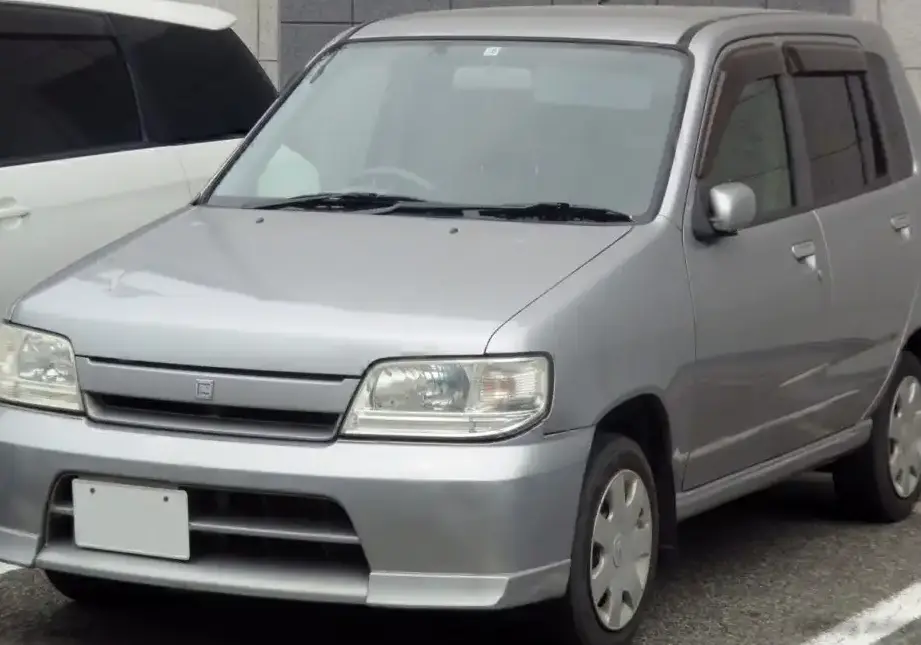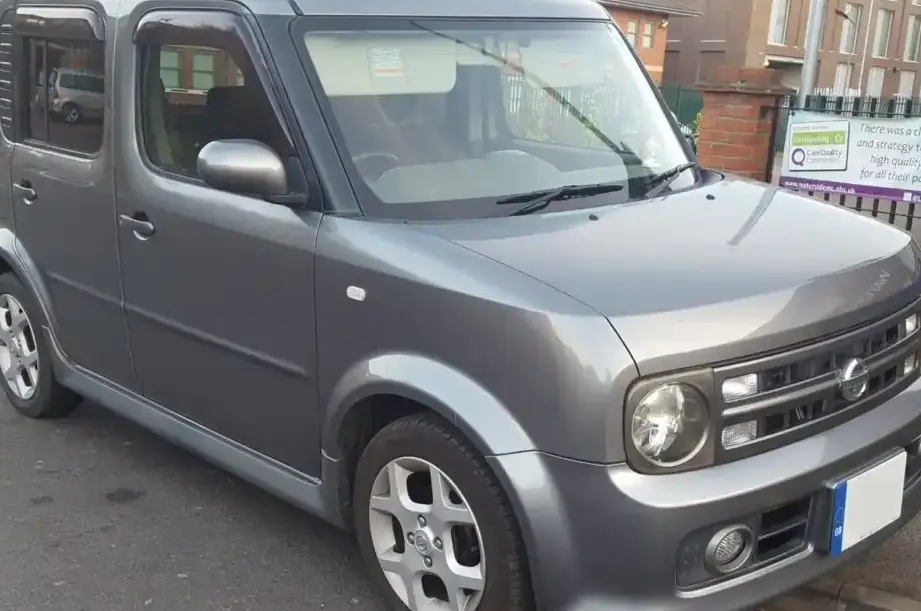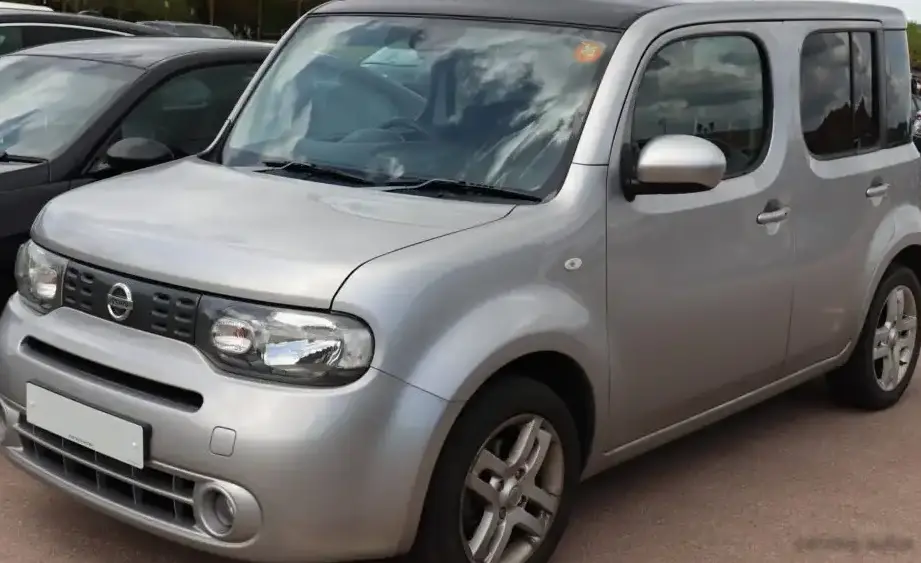
The Nissan Cube (Z12) 1.6, producing 110 horsepower with a Continuously Variable Transmission (CVT), was a unique offering in Nissan’s lineup, primarily marketed in Japan and Europe between January 2010 and March 2011. Positioned as an entry-level to mid-range trim within the Z12 Cube generation, it aimed to provide affordable and fuel-efficient transportation with a distinctive, asymmetrical design. The Z12 Cube represented Nissan’s attempt to capture a younger demographic seeking a vehicle that stood out from the conventional compact car segment. It was never officially sold in the United States.
Technical Specifications
| Brand | Nissan |
| Model | Cube |
| Generation | Cube (Z12) |
| Type (Engine) | 1.6 (110 Hp) CVT |
| Start of production | January, 2010 |
| End of production | March, 2011 |
| Powertrain Architecture | Internal Combustion engine |
| Body type | Station wagon (estate) |
| Seats | 5 |
| Doors | 5 |
| Fuel consumption (urban) | 8.8 l/100 km (26.7 US mpg) |
| Fuel consumption (extra urban) | 5.9 l/100 km (39.9 US mpg) |
| Fuel consumption (combined) | 7 l/100 km (33.6 US mpg) |
| CO2 emissions | 159 g/km |
| Fuel Type | Petrol (Gasoline) |
| Acceleration 0 – 100 km/h | 12.4 sec |
| Acceleration 0 – 62 mph | 12.4 sec |
| Acceleration 0 – 60 mph | 11.8 sec |
| Maximum speed | 170 km/h (105.63 mph) |
| Emission standard | Euro 5 |
| Weight-to-power ratio | 12 kg/Hp |
| Weight-to-torque ratio | 8.7 kg/Nm |
| Power | 110 Hp @ 6000 rpm |
| Torque | 153 Nm @ 4400 rpm (112.85 lb.-ft. @ 4400 rpm) |
| Engine layout | Front, Transverse |
| Engine Model/Code | HR16DE |
| Engine displacement | 1598 cm3 (97.52 cu. in.) |
| Number of cylinders | 4 |
| Engine configuration | Inline |
| Cylinder Bore | 78 mm (3.07 in.) |
| Piston Stroke | 83.6 mm (3.29 in.) |
| Compression ratio | 10.7:1 |
| Number of valves per cylinder | 4 |
| Fuel injection system | Multi-port manifold injection |
| Engine aspiration | Naturally aspirated engine |
| Valvetrain | DOHC |
| Engine oil capacity | 4.3 l (4.54 US qt | 3.78 UK qt) |
| Coolant capacity | 6.3 l (6.66 US qt | 5.54 UK qt) |
| Kerb Weight | 1325-1341 kg (2921.12 – 2956.4 lbs.) |
| Max. weight | 1730 kg (3814 lbs.) |
| Max load | 389-405 kg (857.6 – 892.87 lbs.) |
| Trunk (boot) space – minimum | 260 l (9.18 cu. ft.) |
| Trunk (boot) space – maximum | 1563 l (55.2 cu. ft.) |
| Fuel tank capacity | 52 l (13.74 US gal | 11.44 UK gal) |
| Max. roof load | 40 kg (88.18 lbs.) |
| Permitted trailer load with brakes (12%) | 750 kg (1653.47 lbs.) |
| Permitted trailer load without brakes | 510 kg (1124.36 lbs.) |
| Permitted towbar download | 30 kg (66.14 lbs.) |
| Length | 3980 mm (156.69 in.) |
| Width | 1695 mm (66.73 in.) |
| Height | 1670 mm (65.75 in.) |
| Wheelbase | 2530 mm (99.61 in.) |
| Front track | 1475 mm (58.07 in.) |
| Rear (Back) track | 1480 mm (58.27 in.) |
| Front overhang | 790 mm (31.1 in.) |
| Rear overhang | 660 mm (25.98 in.) |
| Minimum turning circle | 10.2 m (33.46 ft.) |
| Drivetrain | Front wheel drive |
| Gearbox | automatic transmission CVT |
| Front suspension | Independent, type McPherson with coil spring and anti-roll bar |
| Rear suspension | Transverse stabilizer, Torsion |
| Front brakes | Ventilated discs |
| Rear brakes | Disc |
| Assisting systems | ABS (Anti-lock braking system) |
| Steering type | Steering rack and pinion |
| Power steering | Hydraulic Steering |
| Tires size | 195/60 R15; 195/55 R16 |
| Wheel rims size | 6J x 15; 6J x 16 |
INTRODUCTION
The Nissan Cube Z12 1.6 CVT, launched in 2010, was a distinctive addition to Nissan’s global lineup. Built on the Nissan B platform, shared with models like the Renault Modus and Nissan Note, the Cube aimed for a youthful and style-conscious audience. The 1.6-liter engine and CVT combination represented a balance between affordability and usability, making it a popular choice in markets where smaller, fuel-efficient vehicles were favored. Its asymmetrical rear window and overall boxy shape were intentional design choices meant to differentiate it from more conventional hatchbacks.
Powertrain & Engine Architecture
The heart of the Cube 1.6 CVT is the HR16DE engine, a 1.6-liter inline-four cylinder gasoline engine. This engine utilizes multi-point fuel injection and a double overhead camshaft (DOHC) valvetrain. The HR16DE is known for its relatively simple design and reliability. The engine produces 110 horsepower at 6000 rpm and 153 Nm (112.85 lb-ft) of torque at 4400 rpm. Paired with this engine is a Continuously Variable Transmission (CVT), which prioritizes fuel efficiency over traditional stepped gear changes. Nissan’s CVT design aimed to provide smooth acceleration and optimized engine operation across a wide range of speeds. The CVT lacks fixed gears, instead using a belt and pulley system to provide an infinite number of gear ratios.
Driving Characteristics
The 1.6L engine and CVT pairing in the Cube delivers adequate, but not particularly exciting, performance. Acceleration from 0-60 mph takes approximately 11.8 seconds, and the top speed is around 105.63 mph. The CVT contributes to a smooth driving experience, but can sometimes feel ‘slushy’ or unresponsive during quick acceleration. Compared to other Cube variants, such as those equipped with a manual transmission, the CVT version feels less engaging. The CVT prioritizes fuel economy, and the engine often operates at a constant rpm during acceleration, which can create a droning sound. The Cube’s suspension is tuned for comfort, providing a relatively soft ride, but it doesn’t offer particularly sporty handling.
Equipment & Trim Levels
The 1.6 CVT Cube typically came with a reasonable level of standard equipment. Features included air conditioning, power windows, power door locks, and a basic audio system with CD player. Higher trim levels offered options such as alloy wheels, a more advanced audio system with Bluetooth connectivity, and a panoramic sunroof. Interior upholstery was typically cloth, with a focus on durability rather than luxury. The Cube’s interior design was characterized by its asymmetrical dashboard and a generally minimalist aesthetic. The rear seats offered decent legroom for passengers, and the rear cargo area was surprisingly spacious, especially with the rear seats folded down.
Chassis & Braking
The Cube 1.6 CVT utilizes a McPherson strut front suspension and a torsion beam rear suspension. This setup provides a comfortable ride but isn’t designed for aggressive handling. The front brakes are ventilated discs, while the rear brakes are solid discs. Anti-lock Braking System (ABS) was standard. The steering is a hydraulic rack and pinion system, offering reasonable precision but lacking the feel of more modern electric power steering systems. The Cube’s tires were typically 195/60 R15 or 195/55 R16, depending on the trim level.
Market Reception & Comparison
The Nissan Cube 1.6 CVT received mixed reviews from automotive critics. While its unique styling and spacious interior were praised, its lackluster performance and somewhat unrefined CVT were often criticized. Compared to other small hatchbacks available in Europe and Japan, the Cube offered a distinctive alternative, but its fuel economy wasn’t class-leading. The 1.6L engine was considered adequate for city driving, but struggled on highways or when carrying a full load of passengers. The CVT, while improving fuel efficiency, detracted from the overall driving experience for some drivers. More powerful Cube variants, though less fuel-efficient, were generally preferred by those seeking a more engaging driving experience.
Legacy
The Nissan Cube Z12, particularly the 1.6 CVT variant, has developed a cult following among those who appreciate its quirky design and practicality. The HR16DE engine is generally considered reliable, although regular maintenance is essential. The CVT, while generally durable, can be more expensive to repair or replace than a traditional automatic transmission. In the used car market, the Cube 1.6 CVT remains relatively affordable, making it an attractive option for budget-conscious buyers seeking a unique and spacious vehicle. Its distinctive styling ensures it continues to stand out on the road, and its relatively simple mechanicals make it a viable option for DIY mechanics.