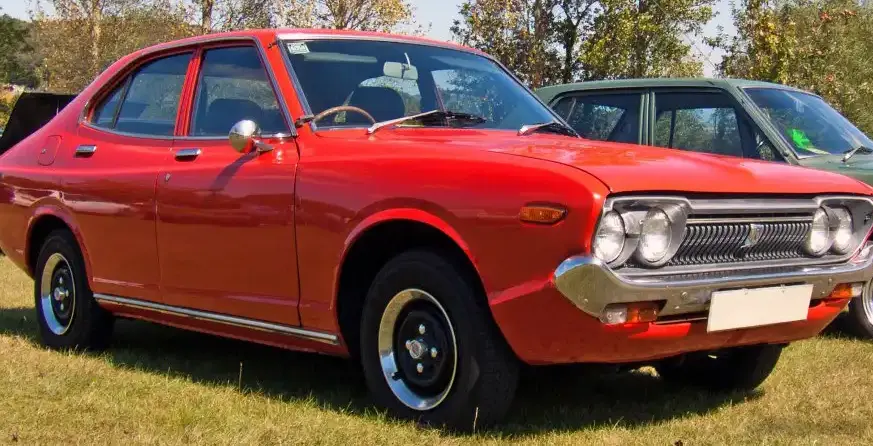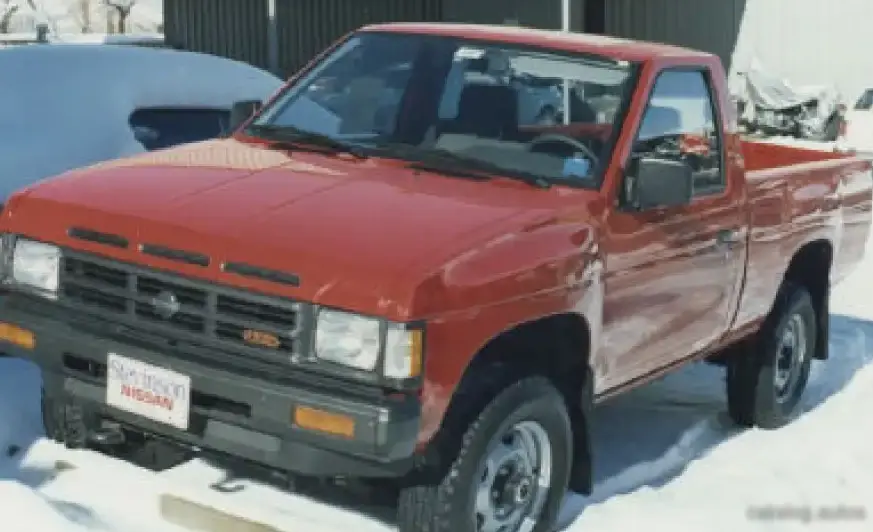
The Nissan Datsun D21 2.7D, producing 85 horsepower, was a work-oriented variant of the popular D21 compact pickup truck manufactured from 1989 to 1996. Positioned as a robust and economical option, it served as a key offering in markets where diesel power was favored for its fuel efficiency and torque. The D21, sold under both the Datsun and Nissan brands depending on the market, represented a significant step forward for Nissan in the North American pickup truck segment, offering a smaller, more manageable alternative to full-size domestic offerings. This particular 2.7D configuration aimed at buyers needing a dependable vehicle for hauling and light-duty work, prioritizing practicality over outright speed.
Technical Specifications
| Brand | Nissan |
| Model | Datsun |
| Generation | Datsun (D21) |
| Type (Engine) | 2.7D (85 Hp) |
| Start of production | 1989 |
| End of production | 1996 |
| Powertrain Architecture | Internal Combustion engine |
| Body type | Pick-up |
| Seats | 5 |
| Doors | 4 |
| Fuel Type | Diesel |
| Weight-to-power ratio | 18.6 kg/Hp, 53.8 Hp/tonne |
| Weight-to-torque ratio | 8.9 kg/Nm, 112 Nm/tonne |
| Power | 85 Hp @ 4300 rpm |
| Power per litre | 31.9 Hp/l |
| Torque | 177 Nm @ 2200 rpm (130.55 lb.-ft. @ 2200 rpm) |
| Engine layout | Front, Longitudinal |
| Engine Model/Code | TD27 |
| Engine displacement | 2663 cm3 (162.51 cu. in.) |
| Number of cylinders | 4 |
| Engine configuration | Inline |
| Cylinder Bore | 96 mm (3.78 in.) |
| Piston Stroke | 92 mm (3.62 in.) |
| Compression ratio | 21.9:1 |
| Number of valves per cylinder | 2 |
| Fuel injection system | Precombustion chamber injection |
| Engine aspiration | Naturally aspirated engine |
| Kerb Weight | 1580 kg (3483.3 lbs) |
| Fuel tank capacity | 60 l (15.85 US gal | 13.2 UK gal) |
| Length | 4690 mm (184.65 in.) |
| Width | 1690 mm (66.54 in.) |
| Height | 1725 mm (67.91 in.) |
| Wheelbase | 2950 mm (116.14 in.) |
| Front track | 1425 mm (56.1 in.) |
| Rear (Back) track | 1385 mm (54.53 in.) |
| Drive wheel | All wheel drive (4×4) |
| Number of gears and type of gearbox | 5 gears, manual transmission |
| Front brakes | Ventilated discs |
| Rear brakes | Drum |
Powertrain & Engine Architecture
The heart of the D21 2.7D was the TD27 engine, a 2.7-liter inline-four cylinder diesel. This engine utilized a precombustion chamber injection system, a common design for diesel engines of the era. This system involved injecting fuel into a small precombustion chamber within the cylinder head, where it would ignite and then ignite the main charge in the cylinder. The TD27 was known for its durability and relatively simple design, making it easier to maintain in field conditions. The engine produced 85 horsepower at 4300 rpm and 177 Nm (130.55 lb-ft) of torque at 2200 rpm. The five-speed manual transmission was the standard offering, providing a reasonable spread of gears for both on-road driving and off-road crawling. The longitudinal engine layout contributed to a balanced weight distribution, enhancing handling characteristics.
Driving Characteristics
The D21 2.7D wasn’t designed for speed. Acceleration was modest, and highway passing required careful planning. However, the engine’s torque output provided ample pulling power, making it well-suited for hauling loads or navigating challenging terrain. The manual transmission allowed for precise control, and the gear ratios were optimized for maximizing torque in lower gears. Compared to the gasoline-powered D21 variants, the 2.7D offered significantly better fuel economy, a major selling point for those using the truck for work. The ride quality, while not luxurious, was acceptable for a pickup truck of its class. The relatively simple suspension setup focused on durability and load-carrying capacity rather than comfort.
Equipment & Trim Levels
The D21 2.7D was typically offered in a base or mid-level trim. Standard equipment generally included a basic vinyl interior, a simple dashboard layout, and manual windows and locks. Air conditioning was often an optional extra, as were features like a cassette player and upgraded upholstery. The focus was on providing a functional and durable vehicle rather than a luxurious one. The interior was designed to withstand the rigors of daily use and was easily cleaned. The exterior typically featured black plastic bumpers and side moldings, emphasizing its utilitarian nature.
Chassis & Braking
The D21 chassis was a body-on-frame construction, providing a robust and durable platform. The front suspension utilized independent double wishbones with coil springs, while the rear suspension employed leaf springs. This setup provided a good balance between ride comfort and load-carrying capacity. The braking system consisted of ventilated discs on the front wheels and drum brakes on the rear. While adequate for most driving conditions, the braking performance wasn’t particularly strong compared to more modern vehicles. The 4×4 drivetrain, standard on the 2.7D, provided enhanced traction in off-road conditions and inclement weather.
Market Reception & Comparison
The D21 2.7D was generally well-received by buyers seeking a dependable and economical pickup truck. Critics praised its durability and fuel efficiency, but noted its lack of power and refinement compared to some of its competitors. Compared to the gasoline-powered D21 models, the 2.7D offered significantly better fuel economy but lacked the same level of performance. Against other diesel pickups of the time, such as the Toyota Hilux, the D21 offered a competitive price point and a reputation for reliability. The D21 2.7D appealed to a specific segment of the market – those who prioritized practicality and durability over speed and luxury.
Legacy
The Nissan Datsun D21 2.7D has earned a reputation as a remarkably durable and reliable vehicle. Many examples are still on the road today, a testament to the quality of its construction and the robustness of the TD27 engine. The TD27 engine, while not particularly powerful, is known for its longevity and relatively simple maintenance requirements. In the used car market, well-maintained D21 2.7D models are sought after by enthusiasts and those looking for a dependable work truck. The D21 played a significant role in establishing Nissan as a major player in the North American pickup truck market, paving the way for future generations of Nissan trucks.