
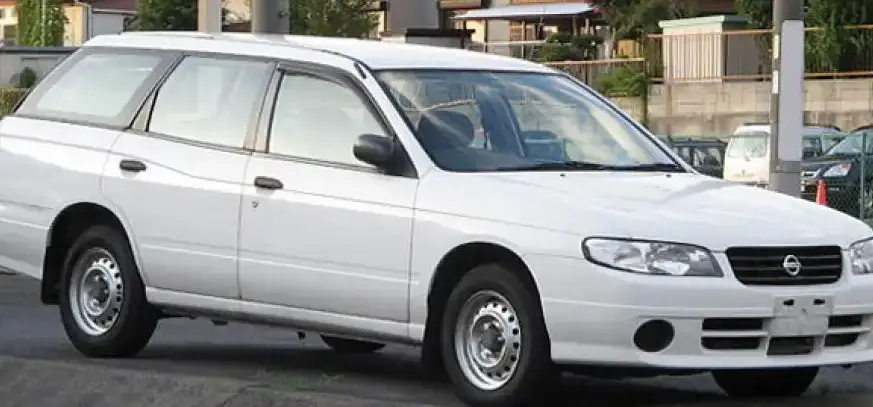
The Nissan Expert 1.8i 16V, produced between 1999 and 2005, represents a practical and affordable offering within the compact station wagon segment. Based on the Nissan Almera (known as the Pulsar in some markets), the Expert was primarily aimed at European buyers seeking a versatile vehicle for family and work purposes. This specific 1.8-liter, 16-valve variant with 125 horsepower occupied a mid-range position in the Expert lineup, offering a balance between performance, fuel economy, and price. It served as a step up from the base 1.4 and 1.6-liter engines, while remaining more accessible than the more powerful, though less common, 1.8-liter models with different tuning.
Technical Specifications
| Brand | Nissan |
| Model | Expert |
| Generation | Expert |
| Type (Engine) | 1.8i 16V (125 Hp) |
| Start of production | 1999 |
| End of production | 2005 |
| Powertrain Architecture | Internal Combustion engine |
| Body type | Station wagon (estate) |
| Seats | 5 |
| Doors | 5 |
| Fuel Type | Petrol (Gasoline) |
| Power | 125 Hp @ 5600 rpm |
| Power per litre | 70.7 Hp/l |
| Torque | 161 Nm @ 4400 rpm |
| Torque (lb-ft) | 118.75 lb.-ft. @ 4400 rpm |
| Engine layout | Front, Transverse |
| Engine displacement | 1769 cm3 |
| Engine displacement (cu. in.) | 107.95 cu. in. |
| Number of cylinders | 4 |
| Engine configuration | Inline |
| Cylinder Bore | 80 mm |
| Cylinder Bore (in.) | 3.15 in. |
| Piston Stroke | 88 mm |
| Piston Stroke (in.) | 3.46 in. |
| Compression ratio | 9.5:1 |
| Number of valves per cylinder | 4 |
| Fuel injection system | Multi-port manifold injection |
| Engine aspiration | Naturally aspirated engine |
| Valvetrain | DOHC |
| Drivetrain | Front wheel drive |
Powertrain & Engine Architecture
The heart of the Nissan Expert 1.8i 16V is the Nissan QR18DE engine, a 1.8-liter inline-four cylinder powerplant. This engine utilizes a double overhead camshaft (DOHC) valvetrain with four valves per cylinder, contributing to its relatively high output for its displacement. The QR18DE employs multi-point fuel injection, delivering fuel directly into the intake ports. This system, common for its time, provided a good balance between fuel efficiency and performance. The engine’s 9.5:1 compression ratio was a standard figure for naturally aspirated gasoline engines of this era. The QR engine family was designed for reliability and ease of maintenance, featuring a relatively simple construction. The 125 horsepower and 161 Nm (118.75 lb-ft) of torque were delivered to the front wheels through a four-speed automatic transmission. While not the most modern transmission, it was a robust and dependable unit, prioritizing smooth operation over outright performance.
Driving Characteristics
The 1.8i 16V automatic Expert offered a comfortable and predictable driving experience. Acceleration was adequate for everyday driving, though not particularly sporty. The four-speed automatic transmission, while smooth, lacked the responsiveness of a manual gearbox or a more modern automatic with additional gears. The gear ratios were tuned for fuel efficiency and ease of use, rather than maximizing performance. Compared to the 1.4 and 1.6-liter versions, the 1.8 offered noticeably more power, especially when fully loaded or tackling inclines. However, it didn’t possess the outright punch of some competitors’ engines. The automatic transmission did detract slightly from fuel economy compared to the manual options, but the convenience factor was a significant draw for many buyers. Steering was light and easy, making it well-suited for urban driving, while the suspension provided a reasonably comfortable ride, absorbing most road imperfections without excessive body roll.
Equipment & Trim Levels
The Nissan Expert 1.8i 16V typically came equipped with a reasonable level of standard features. These generally included power steering, central locking, electric front windows, and an AM/FM radio. Air conditioning was often standard, or available as a popular option. Interior upholstery was typically cloth, with a durable and practical design. Higher trim levels, if available in specific markets, might have added features such as alloy wheels, a more sophisticated audio system, and upgraded interior trim. Optional extras often included a sunroof, rear electric windows, and metallic paint. The dashboard layout was functional and straightforward, prioritizing usability over aesthetic flair. Safety features were relatively basic for the time, typically including driver and passenger airbags and seatbelts.
Chassis & Braking
The Nissan Expert utilized a conventional front-wheel-drive chassis with MacPherson strut suspension at the front and a torsion beam axle at the rear. This suspension setup provided a good compromise between ride comfort and handling. Braking was typically accomplished with disc brakes at the front and drum brakes at the rear. This configuration was common for vehicles in this price range during the late 1990s and early 2000s. Anti-lock Braking System (ABS) was often available as an option, enhancing braking performance and safety, particularly on slippery surfaces. Stabilizer bars were fitted to both the front and rear axles to reduce body roll during cornering. The chassis was designed to provide a stable and predictable driving experience, prioritizing practicality and comfort over sporty handling.
Market Reception & Comparison
The Nissan Expert 1.8i 16V was generally well-received by automotive critics as a practical and affordable station wagon. It was praised for its spacious interior, comfortable ride, and reliable engine. However, some critics noted that the automatic transmission felt somewhat dated and that the overall driving experience lacked excitement. Compared to rivals such as the Ford Focus Estate and the Opel/Vauxhall Astra Estate, the Expert offered a competitive level of equipment and value for money. Fuel economy was respectable, but not class-leading. The 1.8-liter engine offered a noticeable improvement in performance over the smaller-displacement engines in the Expert lineup, making it a popular choice for buyers who frequently carried passengers or cargo. The automatic transmission, while convenient, did result in slightly lower fuel economy compared to the manual versions.
Legacy
The Nissan QR18DE engine, found in the Expert 1.8i 16V, has proven to be a remarkably durable and reliable powerplant. With proper maintenance, these engines can easily exceed 200,000 kilometers (125,000 miles) without major issues. The four-speed automatic transmission is also generally considered to be reliable, although it may require servicing or rebuilding at higher mileages. Today, the Nissan Expert 1.8i 16V can be found on the used car market at very affordable prices. It remains a practical and economical choice for buyers seeking a spacious and reliable station wagon. While it may lack the modern features and performance of newer vehicles, its simplicity and durability continue to appeal to those looking for a no-frills, dependable mode of transportation. Parts availability is generally good, contributing to its continued viability as a used car.
