
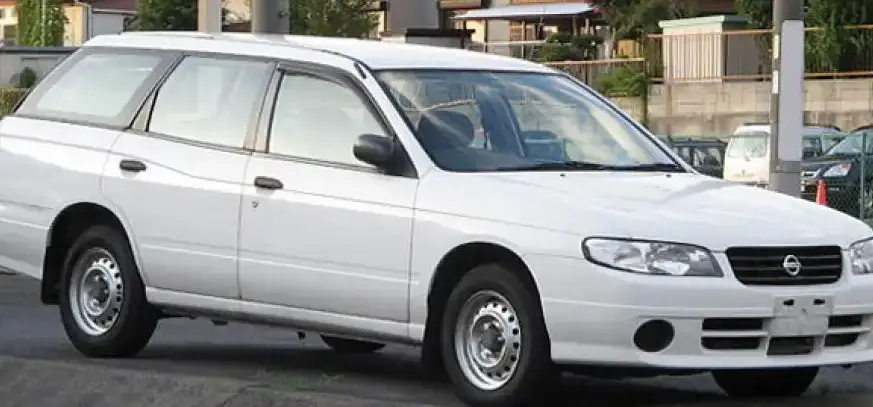
The Nissan Expert 2.2d, producing 79 horsepower, was a variant of the Nissan Expert compact station wagon produced between 1999 and 2005. Positioned as the entry-level diesel option within the Expert range, it catered to buyers prioritizing fuel economy and practicality over outright performance. The Expert itself was a rebadged version of the Renault Mégane Scenic and Estate, a result of the Renault-Nissan Alliance formed in 1999. This model played a significant role in Nissan’s European market presence, offering a budget-friendly and versatile vehicle in the competitive small family car segment.
Technical Specifications
| Brand | Nissan |
| Model | Expert |
| Generation | Expert |
| Type (Engine) | 2.2d (79 Hp) |
| Start of production | 1999 |
| End of production | 2005 |
| Powertrain Architecture | Internal Combustion engine |
| Body type | Station wagon (estate) |
| Seats | 5 |
| Doors | 5 |
| Fuel Type | Diesel |
| Power | 79 Hp |
| Power per litre | 35.9 Hp/l |
| Engine layout | Front, Transverse |
| Engine displacement | 2200 cm3 |
| Engine displacement (cu. in.) | 134.25 cu. in. |
| Number of cylinders | 4 |
| Engine configuration | Inline |
| Number of valves per cylinder | 2 |
| Fuel injection system | Precombustion chamber injection |
| Engine aspiration | Naturally aspirated engine |
| Valvetrain | OHC |
Powertrain & Engine Architecture
The Nissan Expert 2.2d was powered by a 2.2-liter inline-four cylinder diesel engine. This engine, often referred to by its internal code G8T, utilized a precombustion chamber injection system. This older technology, common in diesel engines of the era, involved injecting fuel into a small pre-chamber within the cylinder head, where it partially combusted before being ignited in the main combustion chamber. This design aided in smoother combustion and reduced engine noise compared to direct injection systems of the time, but generally resulted in lower power output and increased emissions. The engine featured an overhead camshaft (OHC) valvetrain operating two valves per cylinder. The 79 horsepower output was relatively modest, reflecting the limitations of the precombustion chamber technology and the focus on fuel efficiency. The engine was transversely mounted in the front of the vehicle, driving the front wheels.
Driving Characteristics
The 2.2d Expert offered a utilitarian driving experience. With only 79 horsepower and an estimated torque output of around 137 lb-ft, acceleration was slow, particularly when fully loaded. The engine was best suited for relaxed cruising and city driving. The automatic transmission, typically a four-speed unit, further dampened performance, with noticeable delays in downshifting and a tendency to hunt for gears on inclines. Compared to the higher-output diesel variants or the gasoline-powered Experts, the 2.2d felt significantly underpowered. However, the automatic transmission provided ease of use, appealing to drivers who prioritized convenience over sporty driving dynamics. The gear ratios were optimized for fuel economy rather than rapid acceleration, resulting in a relatively low engine speed at highway cruising speeds.
Equipment & Trim Levels
The 2.2d trim level of the Nissan Expert was generally considered the base model. Standard equipment typically included power steering, central locking, and basic instrumentation. Interior upholstery was usually a durable cloth material, and the dashboard featured a functional, if somewhat spartan, design. Air conditioning was often an optional extra, as were features like electric windows and a radio/cassette player. The overall interior ambiance was focused on practicality and durability rather than luxury. Higher trim levels of the Expert, such as those equipped with the more powerful diesel engines, offered upgrades like alloy wheels, upgraded interior trim, and more comprehensive audio systems.
Chassis & Braking
The Nissan Expert 2.2d utilized a conventional front-wheel-drive chassis with MacPherson strut suspension at the front and a torsion beam axle at the rear. This suspension setup provided a comfortable, if not particularly sporty, ride quality. The torsion beam rear suspension was a cost-effective solution commonly found in compact cars of this era. Braking was typically accomplished with disc brakes at the front and drum brakes at the rear. The braking system was adequate for the vehicle’s weight and performance, but lacked the stopping power of more advanced braking systems found on higher-end vehicles. Stabilizer bars were often included as standard equipment, helping to reduce body roll during cornering.
Market Reception & Comparison
The Nissan Expert 2.2d was generally well-received as a practical and affordable station wagon. Critics praised its fuel economy and spacious interior, but noted its lack of performance. Compared to other diesel-powered station wagons in its class, such as the Ford Focus Estate or the Peugeot 307 SW, the Expert 2.2d offered a competitive price point but lagged behind in terms of engine refinement and power output. The precombustion chamber diesel engine, while reliable, was less efficient and produced more emissions than newer direct injection diesel engines. Fuel economy was a key selling point, typically achieving around 45-50 mpg on the combined cycle. Reliability was generally good, although the automatic transmission could be prone to issues if not properly maintained.
Legacy
The Nissan Expert 2.2d, while not a performance icon, remains a relatively common sight on European roads today. The 2.2-liter diesel engine, despite its age, is known for its durability and relatively simple mechanical design, making it easier and less expensive to maintain than more complex modern engines. However, finding replacement parts can become increasingly challenging as the vehicle ages. In the used car market, the 2.2d Expert represents a budget-friendly option for those seeking a practical and spacious station wagon. Its low running costs and robust engine make it a popular choice for drivers who prioritize affordability and reliability over driving excitement. The model serves as a reminder of the early days of the Renault-Nissan Alliance and the company’s efforts to establish a stronger foothold in the European automotive market.
