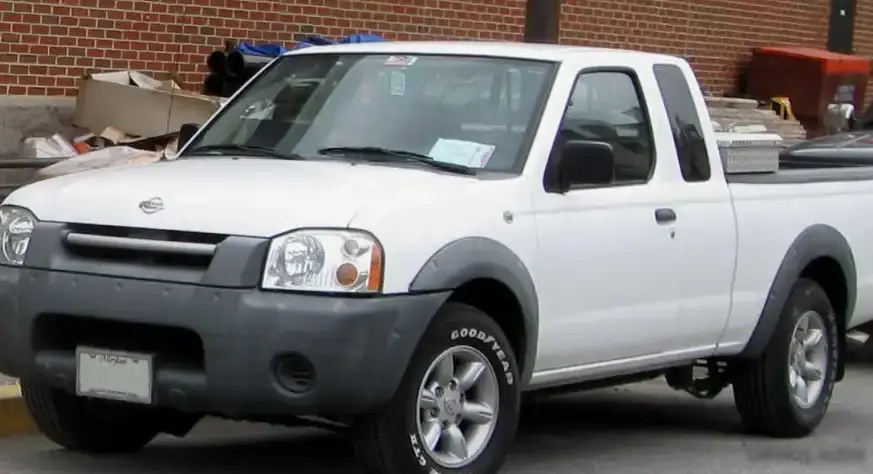
The Nissan Frontier I Crew Cab Long (D22), specifically the facelifted version produced from 2002 to 2004, represented a significant expansion of Nissan’s mid-size pickup truck offerings in North America. Introduced as a response to growing demand for crew cab configurations, this variant aimed to provide the practicality of a pickup with the added space and comfort of a four-door layout. The 3.3-liter, 170 horsepower, four-wheel-drive model occupied a middle ground in the Frontier lineup, offering a balance between capability and affordability. It was positioned as a versatile option for families and individuals needing both work-truck functionality and passenger space.
Technical Specifications
| Brand | Nissan |
| Model | Frontier |
| Generation | Frontier I Crew Cab Long (D22, facelift 2000) |
| Type (Engine) | 3.3 (170 Hp) 4×4 |
| Start of production | 2002 |
| End of production | 2004 |
| Powertrain Architecture | Internal Combustion engine |
| Body type | Pick-up |
| Seats | 4 |
| Doors | 4 |
| Fuel Type | Petrol (Gasoline) |
| Power | 170 Hp @ 4800 rpm |
| Power per litre | 51.9 Hp/l |
| Torque | 271 Nm @ 2800 rpm / 199.88 lb.-ft. @ 2800 rpm |
| Engine Model/Code | VG33E |
| Engine displacement | 3275 cm3 / 199.85 cu. in. |
| Number of cylinders | 6 |
| Engine configuration | V-engine |
| Cylinder Bore | 91.5 mm / 3.6 in. |
| Piston Stroke | 83 mm / 3.27 in. |
| Number of valves per cylinder | 2 |
| Engine aspiration | Naturally aspirated engine |
| Engine oil capacity | 3.3 l / 3.49 US qt | 2.9 UK qt |
| Coolant | 11 l / 11.62 US qt | 9.68 UK qt |
| Fuel tank capacity | 73.4 l / 19.39 US gal | 16.15 UK gal |
| Length | 5532 mm / 217.8 in. |
| Width | 1808 mm / 71.18 in. |
| Height | 1694 mm / 66.69 in. |
| Wheelbase | 3330 mm / 131.1 in. |
| Front track | 1525 mm / 60.04 in. |
| Rear (Back) track | 1507 mm / 59.33 in. |
| Drive wheel | All wheel drive (4×4) |
| Number of gears and type of gearbox | 5 gears, manual transmission |
| Front suspension | Double wishbone |
| Rear suspension | Leaf spring |
| Front brakes | Ventilated discs |
| Rear brakes | Drum |
| Assisting systems | ABS (Anti-lock braking system) |
| Tires size | 265/70 R15; 265/70 R16; 265/55 R17; 265/65 R17 |
| Wheel rims size | 7.0J x 15; 7.0J x 16; 7.0J x 17 |
Powertrain & Engine Architecture
The heart of the 2002-2004 Nissan Frontier Crew Cab Long 4×4 was the VG33E engine, a 3.3-liter V6. This engine, part of Nissan’s VG series, was known for its relative durability and smooth operation. It featured a cast iron block and aluminum cylinder heads, employing a single overhead camshaft (SOHC) design with two valves per cylinder. Fuel delivery was managed by a multi-point fuel injection system, providing adequate, though not exceptional, performance. The VG33E produced 170 horsepower at 4800 rpm and 271 Nm (199.88 lb-ft) of torque at 2800 rpm. This engine was paired with a five-speed manual transmission as standard, offering drivers a degree of control over gear selection. The 4×4 system utilized an electronically controlled transfer case, allowing for on-the-fly switching between 2WD, 4HI, and 4LO modes.
Driving Characteristics
The 170 hp VG33E, coupled with the five-speed manual transmission, provided adequate performance for everyday driving and light-duty hauling. Acceleration was not particularly brisk, but the engine delivered a usable amount of torque at lower rpm, making it suitable for towing smaller trailers or navigating off-road terrain. The manual transmission allowed for precise control, especially when tackling challenging conditions. Compared to the more powerful Supercharged 3.3L or the later 4.0L V6 options, this variant prioritized fuel efficiency and affordability over outright performance. The leaf spring rear suspension, while robust, could result in a somewhat firm ride when unladen, but it proved capable of handling significant payloads. The 4×4 system provided good traction in slippery conditions, making it a competent all-weather vehicle.
Equipment & Trim Levels
The Frontier Crew Cab Long 4×4 typically came standard with features such as air conditioning, power windows and locks, and an AM/FM stereo. The interior was generally functional and durable, with cloth upholstery and a straightforward dashboard layout. Higher trim levels, such as the SE, offered upgrades like alloy wheels, a premium sound system, and additional convenience features. Optional extras included a sunroof, leather upholstery, and a towing package. The Crew Cab configuration provided ample space for five passengers, making it a practical choice for families. The long bed offered a generous cargo capacity, further enhancing its versatility.
Chassis & Braking
The Frontier’s chassis was a traditional body-on-frame construction, providing a robust and durable platform. The front suspension utilized a double wishbone setup, offering a reasonable balance between ride comfort and handling. The rear suspension employed leaf springs, which were well-suited for carrying heavy loads. Braking duties were handled by ventilated discs at the front and drum brakes at the rear. Anti-lock brakes (ABS) were standard, enhancing safety by preventing wheel lockup during hard braking. The steering was a recirculating ball system, providing a direct and responsive feel.
Market Reception & Comparison
The Nissan Frontier Crew Cab Long was generally well-received by critics and consumers alike. It was praised for its spacious interior, comfortable ride, and capable 4×4 system. However, some reviewers noted that the 3.3-liter engine could feel underpowered when fully loaded or when climbing steep hills. Compared to the more powerful V6 options, the 170 hp variant offered better fuel economy, achieving around 16 mpg city and 20 mpg highway. Reliability was generally good, with the VG33E engine proving to be a durable and long-lasting powerplant. In terms of competition, the Frontier Crew Cab Long faced rivals such as the Toyota Tacoma Double Cab and the Ford Ranger SuperCab.
Legacy
The 2002-2004 Nissan Frontier Crew Cab Long 3.3L 4×4 holds a respectable position in the used car market today. The VG33E engine is known for its longevity, and well-maintained examples can still provide reliable service. While not as sought-after as the more powerful trims, the 170 hp variant remains a viable option for buyers seeking an affordable and capable mid-size pickup. Common issues include minor oil leaks and wear on suspension components, but these are generally inexpensive to repair. The Frontier’s reputation for durability and practicality has ensured its continued popularity among truck enthusiasts and those seeking a dependable work vehicle.