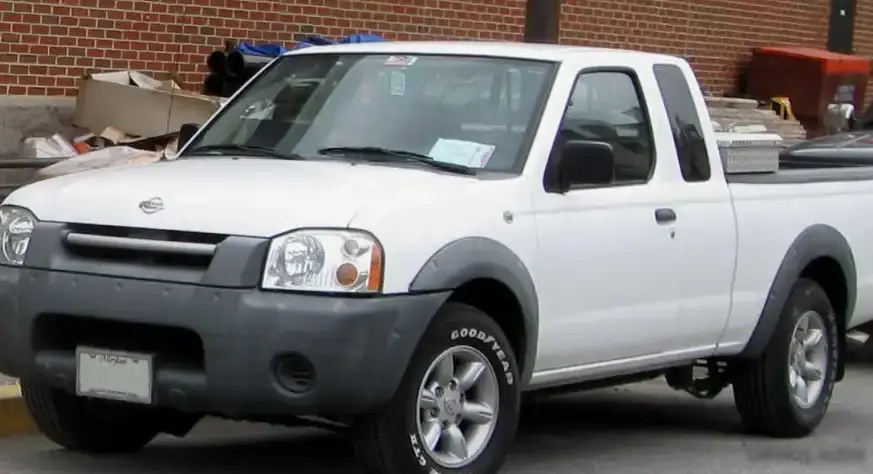
The Nissan Frontier Crew Cab Long (D22), specifically the facelifted version produced from 2002 to 2004, marked Nissan’s significant entry into the North American compact pickup truck market, catering to buyers seeking extended cab configurations. This variant, featuring the 3.3-liter VG33E V6 engine generating 170 horsepower and coupled with a four-speed automatic transmission and a 4×4 drivetrain, aimed to strike a balance between capability, comfort, and affordability. It occupied a mid-range position within the D22 Frontier lineup, positioned above the base 2.4-liter engine options but below the more potent supercharged versions introduced in later years. The Crew Cab Long configuration distinguished itself by providing substantially more rear passenger space compared to standard extended cab models, making it a more practical choice for families or work crews requiring passenger transport.
Technical Specifications
| Brand | Nissan |
| Model | Frontier |
| Generation | Frontier I Crew Cab Long (D22, facelift 2000) |
| Type (Engine) | 3.3 (170 Hp) 4×4 Automatic |
| Start of production | 2002 |
| End of production | 2004 |
| Powertrain Architecture | Internal Combustion engine |
| Body type | Pick-up |
| Seats | 4 |
| Doors | 4 |
| Fuel Type | Petrol (Gasoline) |
| Power | 170 Hp @ 4800 rpm |
| Power per litre | 51.9 Hp/l |
| Torque | 271 Nm @ 2800 rpm / 199.88 lb.-ft. @ 2800 rpm |
| Engine Model/Code | VG33E |
| Engine displacement | 3275 cm3 / 199.85 cu. in. |
| Number of cylinders | 6 |
| Engine configuration | V-engine |
| Cylinder Bore | 91.5 mm / 3.6 in. |
| Piston Stroke | 83 mm / 3.27 in. |
| Number of valves per cylinder | 2 |
| Engine aspiration | Naturally aspirated engine |
| Engine oil capacity | 3.3 l / 3.49 US qt | 2.9 UK qt |
| Coolant | 11 l / 11.62 US qt | 9.68 UK qt |
| Fuel tank capacity | 73.4 l / 19.39 US gal | 16.15 UK gal |
| Length | 5532 mm / 217.8 in. |
| Width | 1808 mm / 71.18 in. |
| Height | 1694 mm / 66.69 in. |
| Wheelbase | 3330 mm / 131.1 in. |
| Front track | 1525 mm / 60.04 in. |
| Rear (Back) track | 1507 mm / 59.33 in. |
| Drive wheel | All wheel drive (4×4) |
| Number of gears and type of gearbox | 4 gears, automatic transmission |
| Front suspension | Double wishbone |
| Rear suspension | Leaf spring |
| Front brakes | Ventilated discs |
| Rear brakes | Drum |
| Assisting systems | ABS (Anti-lock braking system) |
| Tires size | 265/70 R15; 255/65 R16; 265/55 R17 |
| Wheel rims size | 7.0J x 15; 7.0J x 16; 7.0J x 17 |
Powertrain & Engine Architecture
The core of this Frontier variant is the VG33E 3.3-liter V6 engine. This engine, belonging to Nissan’s VG series, is a naturally aspirated design featuring an iron block and aluminum cylinder heads. It employs a single overhead camshaft (SOHC) valvetrain with two valves per cylinder. Fuel delivery is managed by a multi-point fuel injection system, providing adequate, though not particularly advanced, performance for the vehicle’s intended purpose. The VG33E is recognized for its inherent simplicity and durability, although it lacks the sophistication found in more contemporary engine designs. The four-speed automatic transmission, a common component in Nissan trucks of that era, is electronically controlled and engineered for smooth, albeit not exceptionally rapid, gear changes. It’s a relatively conventional automatic transmission, prioritizing dependability over outright performance. The transmission’s gear ratios are optimized for everyday driving and towing applications, rather than aggressive acceleration.
Driving Characteristics
The 170 horsepower and 271 Nm (199.88 lb-ft) of torque generated by the VG33E/automatic combination resulted in a driving experience that was competent but not thrilling. Acceleration was sufficient for merging onto highways and overtaking slower vehicles, but it wasn’t a particularly quick truck. The automatic transmission, while smooth, contributed to a sensation of slightly dampened responsiveness when compared to the available five-speed manual transmission. The 4×4 system, activated via a rotary dial, provided enhanced traction in off-road conditions or adverse weather. The leaf spring rear suspension, while robust, resulted in a somewhat firm ride, particularly when the vehicle was unladen. In contrast to the supercharged Frontier models, this 3.3L automatic version offered a considerably more relaxed driving experience, prioritizing fuel efficiency and ease of operation over peak performance.
Equipment & Trim Levels
The 2002-2004 Nissan Frontier Crew Cab Long 3.3 4×4 Automatic typically came standard with features such as air conditioning, power windows and locks, and an AM/FM stereo. The Crew Cab configuration included rear seats, significantly increasing passenger capacity. Higher trim levels, often designated as “SE” or “LE,” added features like alloy wheels, upgraded interior upholstery, a premium sound system, and occasionally a sunroof. Optional extras included a tow package, cruise control, and a CD player. The interior generally featured durable, utilitarian materials, reflecting the truck’s work-oriented nature. The dashboard layout was straightforward and functional, emphasizing ease of use over aesthetic refinement.
Chassis & Braking
The D22 Frontier utilized a body-on-frame construction, providing a robust and durable chassis. The front suspension employed a double wishbone setup, offering a reasonable compromise between ride comfort and handling. The rear suspension, as previously mentioned, utilized leaf springs, which were well-suited for carrying loads but could result in a less refined ride quality. Braking was provided by ventilated discs at the front and drum brakes at the rear. Anti-lock brakes (ABS) were standard, enhancing safety during emergency braking maneuvers. The chassis was engineered to withstand the demands of both on-road driving and light off-road use.
Market Reception & Comparison
The Nissan Frontier, and specifically the Crew Cab Long variant, was generally well-received by both automotive critics and consumers. It offered a compelling combination of value, capability, and comfort. The 3.3-liter V6 automatic combination was praised for its smooth operation and adequate power, although some reviewers pointed out that it wasn’t as refined or powerful as some of its competitors, such as the Ford Ranger or Toyota Tacoma. Fuel economy was considered average for its class. Reliability was generally good, with the VG33E engine proving to be a durable and long-lasting powerplant. Compared to the higher-output supercharged Frontier models, this variant offered a lower purchase price and improved fuel economy, making it an attractive option for buyers who didn’t require maximum performance.
Legacy
The Nissan Frontier I (D22) continues to be a popular choice in the used car market, particularly for individuals seeking a dependable and affordable pickup truck. The VG33E engine, while not a technologically advanced design, is known for its longevity and relatively straightforward maintenance requirements. Parts availability is generally good, and the truck’s uncomplicated design makes it relatively easy to repair. While not as highly sought-after as the supercharged models, the 3.3-liter automatic Frontier offers a practical and reliable option for everyday use. Its enduring popularity is a testament to its solid engineering and overall value proposition. Today, well-maintained examples can still be found providing years of service, demonstrating the robustness of the D22 platform and the VG33E engine.