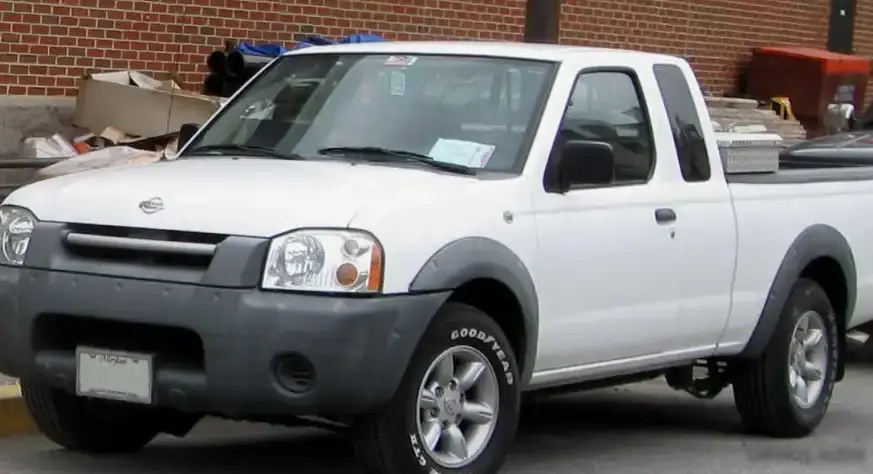
The Nissan Frontier I King Cab (D22) with the 3.3-liter V6 engine and four-wheel drive was a significant offering in Nissan’s mid-size pickup truck lineup from 1999 to 2000. Representing the first generation of the Frontier specifically for the North American market, the D22 aimed to provide a more compact and affordable alternative to full-size trucks like the Nissan Titan and the Ford F-150. This particular configuration, combining the VG33E V6 with a four-speed automatic transmission, was positioned as a versatile option for both work and recreational use, offering a balance between capability and convenience. It was a key model in establishing the Frontier’s reputation for reliability and value in the competitive American pickup truck market.
Technical Specifications
| Brand | Nissan |
| Model | Frontier |
| Generation | Frontier I King Cab (D22) |
| Type (Engine) | 3.3 V6 (170 Hp) 4WD |
| Start of production | 1999 |
| End of production | 2000 |
| Powertrain Architecture | Internal Combustion engine |
| Body type | Pick-up |
| Seats | 4 |
| Doors | 2 |
| Fuel consumption (urban) | 15.6 l/100 km (15.1 US mpg, 18.1 UK mpg, 6.4 km/l) |
| Fuel consumption (extra urban) | 12.3 l/100 km (19.1 US mpg, 23 UK mpg, 8.1 km/l) |
| Fuel Type | Petrol (Gasoline) |
| Power | 170 Hp @ 4800 rpm |
| Power per litre | 51.9 Hp/l |
| Torque | 271 Nm @ 2800 rpm (199.88 lb.-ft. @ 2800 rpm) |
| Engine Model/Code | VG33E |
| Engine displacement | 3275 cm3 (199.85 cu. in.) |
| Number of cylinders | 6 |
| Engine configuration | V-engine |
| Cylinder Bore | 91.5 mm (3.6 in.) |
| Piston Stroke | 83 mm (3.27 in.) |
| Number of valves per cylinder | 4 |
| Engine aspiration | Naturally aspirated engine |
| Engine oil capacity | 3.3 l (3.49 US qt, 2.9 UK qt) |
| Coolant capacity | 11 l (11.62 US qt, 9.68 UK qt) |
| Fuel tank capacity | 73 l (19.28 US gal, 16.06 UK gal) |
| Permitted trailer load with brakes (12%) | 2268 kg (5000.08 lbs.) |
| Permitted towbar download | 227 kg (500.45 lbs.) |
| Length | 4981 mm (196.1 in.) |
| Width | 1689 mm (66.5 in.) |
| Height | 1590 mm (62.6 in.) |
| Wheelbase | 2649 mm (104.29 in.) |
| Front track | 1395 mm (54.92 in.) |
| Rear track | 1389 mm (54.69 in.) |
| Ride height (ground clearance) | 175 mm (6.89 in.) |
| Drive wheel | All wheel drive (4×4) |
| Number of gears and type of gearbox | 4 gears, automatic transmission |
| Front suspension | Double wishbone |
| Rear suspension | Leaf spring |
| Tires size | 235/70 R15; 265/70 R15 |
| Wheel rims size | 7.0J x 15 |
Powertrain & Engine Architecture
The heart of this Frontier variant is the VG33E 3.3-liter V6 engine. This engine, a member of Nissan’s VG series, is a naturally aspirated, iron-block, aluminum-head design. It utilizes a single overhead camshaft (SOHC) valvetrain with two valves per cylinder. Fuel delivery is managed by a multi-point fuel injection system, providing adequate, though not cutting-edge, performance for the time. The VG33E is known for its durability and relatively simple design, making it easier to maintain compared to more complex engines. The four-speed automatic transmission, designated as the RE4R01A, was a common choice for Nissan trucks and SUVs of this era. It’s a robust unit, but its limited number of gears contributes to higher engine speeds at highway cruising, impacting fuel economy. The transmission features standard overdrive and selectable four-wheel drive with a low-range gear for off-road capability.
Driving Characteristics
The 170 horsepower and 199.88 lb-ft of torque produced by the VG33E/RE4R01A combination resulted in adequate, but not exhilarating, performance. Acceleration was reasonable for everyday driving, but passing maneuvers required planning. The automatic transmission, while convenient, lacked the responsiveness of a manual gearbox. The four-speed design meant wider gear ratios, and the engine often felt strained during quick acceleration. Compared to the five-speed manual transmission option, the automatic version sacrificed some performance and fuel efficiency. The 4WD system provided good traction in slippery conditions and allowed for moderate off-road excursions, but it wasn’t designed for serious rock crawling or extreme terrain.
Equipment & Trim Levels
The 1999-2000 Nissan Frontier I King Cab 3.3 V6 4WD typically came standard with features like air conditioning, power steering, and an AM/FM radio. The King Cab configuration offered a slightly extended cab with small rear seats, providing limited passenger space. Interior upholstery was typically cloth, and the dashboard featured a functional, if somewhat basic, design. Optional extras included a CD player, upgraded sound system, power windows and locks, and a sliding rear window. The trim level generally fell in the mid-range of the Frontier lineup, offering a step up from the base model but lacking the luxury features found in higher-end trims.
Chassis & Braking
The D22 Frontier utilized a body-on-frame construction, providing a robust and durable platform. The front suspension employed a double wishbone setup, while the rear suspension featured leaf springs. This configuration prioritized load-carrying capacity and durability over refined ride quality. Braking duties were handled by disc brakes in the front and drum brakes in the rear. While adequate for the vehicle’s weight and intended use, the rear drum brakes were a cost-saving measure and didn’t offer the same stopping power as disc brakes. Stabilizer bars were included to reduce body roll during cornering, but the overall handling was truck-like and not particularly sporty.
Market Reception & Comparison
The Nissan Frontier I King Cab 3.3 V6 4WD was generally well-received by critics as a capable and affordable mid-size pickup. It was praised for its reliability, durability, and value for money. However, the automatic transmission was sometimes criticized for its lack of responsiveness and the engine’s fuel economy wasn’t particularly impressive. Compared to other trims in the Frontier lineup, the 3.3 V6 automatic offered a good balance between performance and convenience. The smaller 2.4-liter four-cylinder engine provided better fuel economy but lacked the power for towing or hauling heavy loads. The higher-output V6 models offered more performance but came at a higher price point.
Legacy
The VG33E engine, when properly maintained, proved to be a remarkably durable powertrain. Many examples of the D22 Frontier with this engine configuration are still on the road today, a testament to its reliability. The four-speed automatic transmission, while not the most advanced, also proved to be relatively trouble-free. In the used car market, these Frontiers are often sought after by those looking for an affordable and dependable pickup truck. However, potential buyers should be aware of potential issues such as rust, particularly in areas with harsh winters, and the possibility of worn suspension components. Overall, the Nissan Frontier I King Cab 3.3 V6 4WD remains a solid and practical choice for those seeking a classic, dependable pickup truck.