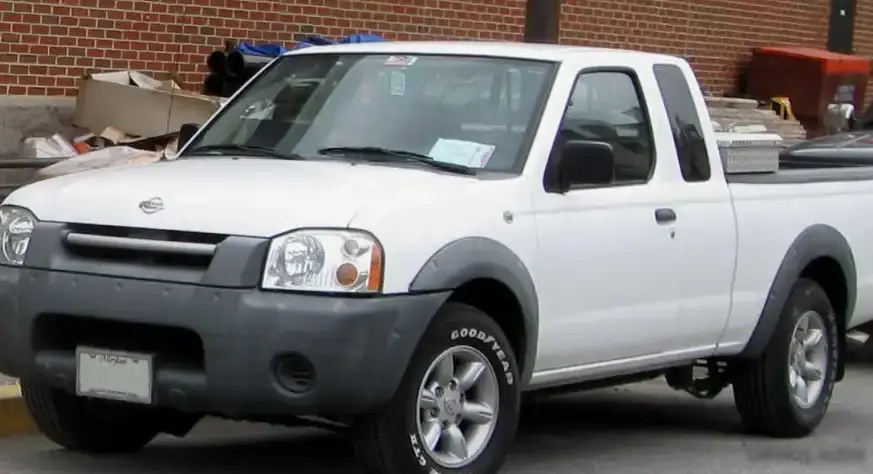
The Nissan Frontier I King Cab (D22) Desert Runner, specifically the 3.3 V6 4×4 Automatic variant produced from 2001 to 2004, represented a significant offering in the mid-size pickup truck segment within the North American market. This iteration of the D22 Frontier, a facelift of the original introduced in 1998, aimed to blend off-road capability with everyday usability, targeting buyers seeking a versatile and robust vehicle. The Desert Runner trim, in particular, emphasized a more aggressive aesthetic and enhanced suspension for improved performance on varied terrain. It sat as a step up from the base Frontier models, offering more power and features, but positioned below the more luxurious LE trim.
Technical Specifications
| Brand | Nissan |
| Model | Frontier |
| Generation | Frontier I King Cab (D22, facelift 2000) |
| Type (Engine) | Desert Runner 3.3 V6 (210 Hp) 4×4 Automatic |
| Start of production | 2001 |
| End of production | 2004 |
| Powertrain Architecture | Internal Combustion engine |
| Body type | Pick-up |
| Seats | 4 |
| Doors | 2 |
| Fuel Type | Petrol (Gasoline) |
| Power | 210 Hp @ 4800 rpm |
| Power per litre | 64.1 Hp/l |
| Torque | 334 Nm / 246.35 lb.-ft. |
| Engine Model/Code | VG33ER |
| Engine displacement | 3275 cm3 / 199.85 cu. in. |
| Number of cylinders | 6 |
| Engine configuration | V-engine |
| Cylinder Bore | 91.5 mm / 3.6 in. |
| Piston Stroke | 83 mm / 3.27 in. |
| Number of valves per cylinder | 4 |
| Engine aspiration | Supercharger, Intercooler |
| Valvetrain | SOHC |
| Engine oil capacity | 3.3 l / 3.49 US qt | 2.9 UK qt |
| Fuel tank capacity | 73.4 l / 19.39 US gal | 16.15 UK gal |
| Permitted trailer load with brakes (12%) | 1588 kg / 3500.94 lbs. |
| Permitted towbar download | 159 kg / 350.53 lbs. |
| Length | 4999 mm / 196.81 in. |
| Width | 1664-1808 mm / 65.51 – 71.18 in. |
| Height | 1694 mm / 66.69 in. |
| Wheelbase | 2950 mm / 116.14 in. |
| Front track | 1525 mm / 60.04 in. |
| Rear (Back) track | 1507 mm / 59.33 in. |
| Drive wheel | All wheel drive (4×4) |
| Number of gears and type of gearbox | 4 gears, automatic transmission |
| Front suspension | Double wishbone |
| Rear suspension | Leaf spring |
| Front brakes | Ventilated discs |
| Rear brakes | Drum |
| Tires size | 265/70 R15; 265/70 R16; 265/55 R17 |
| Wheel rims size | 7.0J x 15; 7.0J x 16; 8.0J x 17 |
Powertrain & Engine Architecture
The heart of the Desert Runner was the VG33ER 3.3-liter V6 engine. This engine, a member of Nissan’s VG series, was notable for its robust construction and relatively simple design. It featured a single overhead camshaft (SOHC) valvetrain with two valves per cylinder. The VG33ER was equipped with a supercharger and intercooler, a significant upgrade over the naturally aspirated versions of the 3.3L V6 found in lower Frontier trims. This forced induction system boosted power output to 210 horsepower and 246 lb-ft of torque. Fuel delivery was managed by a multi-port fuel injection system. The engine’s durability was a key selling point, though it wasn’t known for being particularly fuel-efficient. The automatic transmission paired with the VG33ER was a four-speed unit, designed for smooth operation and ease of use. While not offering the most advanced gear ratios, it was well-suited to the engine’s torque curve and the truck’s intended use.
Driving Characteristics
The 210 hp and 246 lb-ft of torque provided by the VG33ER and four-speed automatic resulted in adequate, though not exhilarating, performance. Acceleration was reasonable for a mid-size pickup, but the automatic transmission did rob some of the engine’s potential. Compared to the five-speed manual transmission available on other Frontier models, the automatic felt slightly less responsive. The supercharger provided a noticeable boost in low-end torque, making it capable for towing and hauling. The 4×4 system, selectable via a rotary dial, offered part-time four-wheel drive for improved traction in off-road conditions. The Desert Runner’s suspension, typically featuring heavier-duty shocks and springs, provided a more controlled ride compared to standard Frontier models, especially when carrying a load or navigating rough terrain.
Equipment & Trim Levels
The Desert Runner trim generally included features such as air conditioning, power windows and locks, and an upgraded audio system. The interior typically featured cloth upholstery, though leather was available as an option. The dashboard layout was functional and straightforward, prioritizing usability over luxury. Optional extras included a sunroof, upgraded sound system, and alloy wheels. The Desert Runner’s exterior styling was distinguished by unique badging, often a black finish on the wheels, and sometimes a specific body stripe. The King Cab configuration offered a small rear seat, providing limited passenger space but adding versatility for occasional use.
Chassis & Braking
The Frontier I King Cab utilized a body-on-frame construction, providing a robust and durable platform. The front suspension consisted of double wishbones, while the rear suspension employed leaf springs – a common setup for pickup trucks of this era. This configuration prioritized load-carrying capacity and durability over refined ride quality. Braking duties were handled by ventilated discs at the front and drum brakes at the rear. While adequate for most driving situations, the rear drum brakes were a point of criticism compared to the all-disc setups found on some competitors. The Desert Runner trim often featured a slightly thicker stabilizer bar compared to base models, contributing to improved handling and reduced body roll.
Market Reception & Comparison
The Nissan Frontier, and particularly the Desert Runner variant, was generally well-received by automotive critics. It was praised for its ruggedness, reliability, and value for money. However, the automatic transmission was sometimes criticized for its lack of responsiveness compared to the manual option. Fuel economy was also a concern, particularly given the supercharged engine. Compared to competitors like the Ford Ranger and Chevrolet S-10, the Frontier offered a more modern design and a more powerful engine option. The Toyota Tacoma, however, remained the benchmark in the mid-size pickup segment, known for its exceptional reliability and resale value.
Legacy
The VG33ER engine, while not without its flaws, proved to be a relatively durable and long-lasting powertrain. Properly maintained examples of the 2001-2004 Frontier Desert Runner continue to be found on the used car market today. The automatic transmission, while not the most sophisticated, generally held up well over time. Common maintenance issues include oil leaks, sensor failures, and wear on suspension components. The Desert Runner’s popularity has contributed to a relatively stable resale value, particularly for well-maintained examples. It remains a popular choice for those seeking a capable and affordable mid-size pickup truck with a touch of off-road flair.