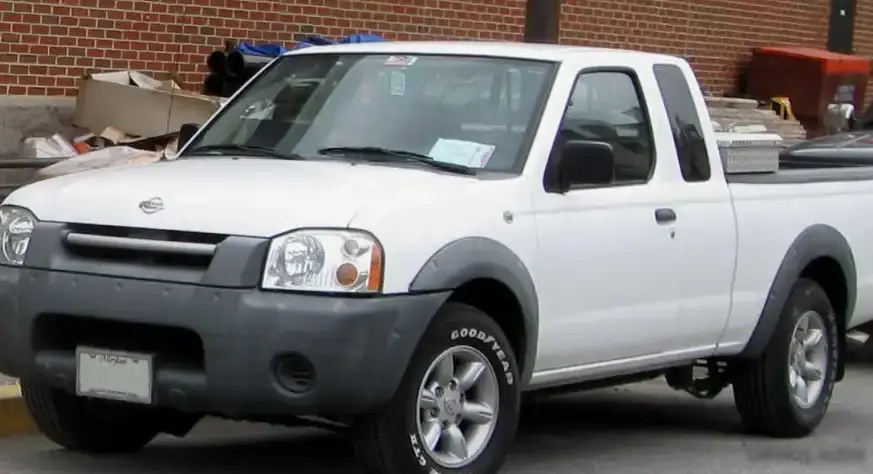
The Nissan Frontier II King Cab, specifically the facelifted version introduced in 2009 (D40 chassis code), represented a significant update to Nissan’s mid-size pickup truck offering. Produced through 2020 in many international markets, this generation Frontier aimed to balance rugged capability with improved comfort and refinement. The 2.5-liter (152 hp) variant, while not the most powerful option in the lineup, served as a popular choice for buyers prioritizing fuel efficiency and everyday usability over outright towing capacity or off-road performance. This configuration occupied a mid-range position within the Frontier II King Cab portfolio, slotting below the larger displacement engines and offering a more accessible price point than the top-tier trims.
Technical Specifications
| Brand | Nissan |
| Model | Frontier |
| Generation | Frontier II King Cab (D40, facelift 2009) |
| Type (Engine) | 2.5 (152 Hp) |
| Start of production | 2009 |
| End of production | 2020 |
| Powertrain Architecture | Internal Combustion engine |
| Body type | Pick-up |
| Seats | 4 |
| Doors | 2 |
| Fuel consumption (urban) | 14.7 l/100 km (16 US mpg, 19.2 UK mpg, 6.8 km/l) |
| Fuel consumption (extra urban) | 11.7 l/100 km (20.1 US mpg, 24.1 UK mpg, 8.5 km/l) |
| Fuel Type | Petrol (Gasoline) |
| Weight-to-power ratio | 11.1 kg/Hp, 90.4 Hp/tonne |
| Weight-to-torque ratio | 7.3 kg/Nm, 137.3 Nm/tonne |
| Power | 152 Hp @ 5200 rpm |
| Power per litre | 61.1 Hp/l |
| Torque | 231 Nm @ 4400 rpm (170.38 lb.-ft. @ 4400 rpm) |
| Maximum engine speed | 6000 rpm |
| Engine layout | Front, Longitudinal |
| Engine Model/Code | QR25DE |
| Engine displacement | 2488 cm3 (151.83 cu. in.) |
| Number of cylinders | 4 |
| Engine configuration | Inline |
| Cylinder Bore | 89 mm (3.5 in.) |
| Piston Stroke | 100 mm (3.94 in.) |
| Compression ratio | 9.5:1 |
| Number of valves per cylinder | 4 |
| Fuel injection system | Multi-port manifold injection |
| Engine aspiration | Naturally aspirated engine |
| Valvetrain | DOHC |
| Engine oil capacity | 4.6 l (4.86 US qt | 4.05 UK qt) |
| Coolant capacity | 9.4 l (9.93 US qt | 8.27 UK qt) |
| Kerb Weight | 1682 kg (3708.18 lbs.) |
| Max. weight | 2127 kg (4689.23 lbs.) |
| Max load | 445 kg (981.06 lbs.) |
| Trunk (boot) space – minimum | 948 l (33.48 cu. ft.) |
| Fuel tank capacity | 80 l (21.13 US gal | 17.6 UK gal) |
| Permitted trailer load with brakes (12%) | 1588 kg (3500.94 lbs.) |
| Permitted towbar download | 159 kg (350.53 lbs.) |
| Length | 5220 mm (205.51 in.) |
| Width | 1850 mm (72.83 in.) |
| Height | 1770 mm (69.69 in.) |
| Wheelbase | 3200 mm (125.98 in.) |
| Front track | 1570 mm (61.81 in.) |
| Rear (Back) track | 1570 mm (61.81 in.) |
| Ride height (ground clearance) | 193 mm (7.6 in.) |
| Minimum turning circle (turning diameter) | 13.2 m (43.31 ft.) |
| Approach angle | 27.8° |
| Departure angle | 21.0° |
| Ramp-over (brakeover) angle | 18.0° |
| Drivetrain Architecture | Rear wheel drive |
| Drive wheel | Rear wheel drive |
| Number of gears and type of gearbox | 5 gears, manual transmission |
| Front suspension | Double wishbone |
| Rear suspension | Leaf spring |
| Front brakes | Ventilated discs |
| Rear brakes | Ventilated discs |
| Assisting systems | ABS (Anti-lock braking system) |
| Steering type | Steering rack and pinion |
| Tires size | 265/70 R16; 265/75 R16 |
| Wheel rims size | 7.0J x 16 |
Powertrain & Engine Architecture
The heart of this Frontier variant is the QR25DE, a 2.5-liter inline-four cylinder gasoline engine. This engine is a naturally aspirated design, meaning it doesn’t utilize a turbocharger or supercharger. It features multi-port fuel injection, delivering fuel directly into the intake ports, and a double overhead camshaft (DOHC) valvetrain for optimized engine breathing. The QR25DE is known for its relatively simple design and robust construction. The 5-speed manual transmission paired with this engine was a standard offering, providing a direct connection between the engine and the rear wheels. The transmission’s gear ratios were tuned for a balance of fuel economy and everyday drivability, rather than aggressive acceleration.
Driving Characteristics
The 152 horsepower and 231 Nm (170 lb-ft) of torque produced by the QR25DE engine in the Frontier II King Cab provided adequate, but not exhilarating, performance. Acceleration was modest, and overtaking required careful planning. Compared to the larger engine options (typically a 2.5L diesel or a larger gasoline V6 in some markets), this variant felt noticeably less powerful. However, the lower power output also translated to better fuel economy. The 5-speed manual transmission allowed for a reasonable degree of driver control, but the gear ratios weren’t particularly sporty. The focus was on providing a comfortable and predictable driving experience, suitable for daily commuting and light-duty hauling.
Equipment & Trim Levels
The 2.5-liter King Cab typically came with a base level of equipment, focusing on functionality rather than luxury. Standard features generally included air conditioning, power steering, and a basic audio system. Interior upholstery was typically vinyl or a durable cloth material. Higher trim levels, available as optional upgrades, could add features like alloy wheels, power windows and locks, a more advanced audio system, and upgraded interior trim. The King Cab configuration offered a small rear seating area, suitable for occasional passengers or extra cargo space.
Chassis & Braking
The Frontier II King Cab utilized a body-on-frame construction, providing a robust and durable platform for hauling and off-road use. The front suspension employed a double wishbone design, while the rear suspension utilized leaf springs – a common setup for pickup trucks designed for load-carrying capacity. Braking duties were handled by ventilated disc brakes on all four wheels, supplemented by an Anti-lock Braking System (ABS) for improved stopping power and control. The rear leaf spring suspension, while effective for load support, could contribute to a somewhat firmer ride quality compared to vehicles with more sophisticated independent rear suspension systems.
Market Reception & Comparison
The 2.5-liter Frontier II King Cab was generally well-received as a practical and affordable pickup truck option. Critics noted its fuel efficiency and reliability, but also pointed out its lack of outright power compared to competitors and higher-trim Frontier models. Compared to the diesel variants, the gasoline engine offered a quieter and smoother driving experience, but at the expense of fuel economy and low-end torque. Against other gasoline-powered mid-size trucks, the Frontier offered a competitive combination of price, features, and durability.
Legacy
The QR25DE engine, in general, has proven to be a relatively reliable powerplant, with many examples exceeding 200,000 miles with proper maintenance. The Frontier II King Cab, particularly the 2.5-liter variant, remains a popular choice in the used car market due to its affordability and reputation for durability. While not a performance leader, this configuration offers a practical and dependable option for buyers seeking a capable and economical pickup truck. Common maintenance items include regular oil changes, timing chain inspection (though generally robust), and monitoring of cooling system components. The simplicity of the engine design also makes it relatively easy and affordable to repair.