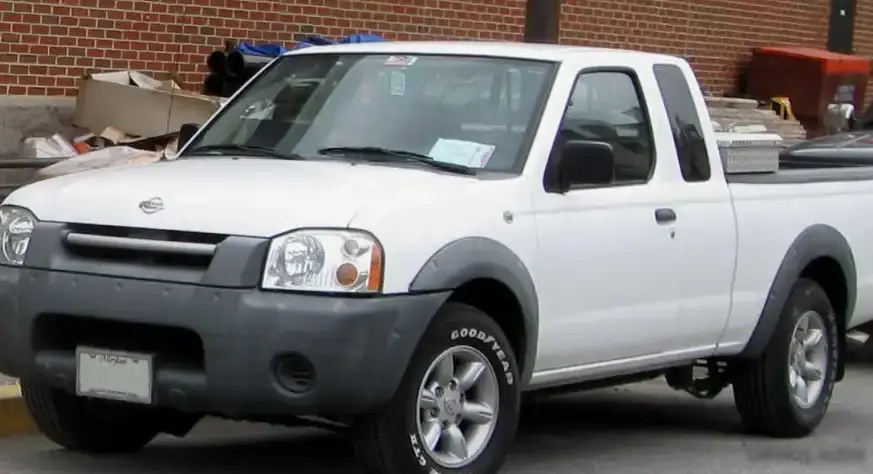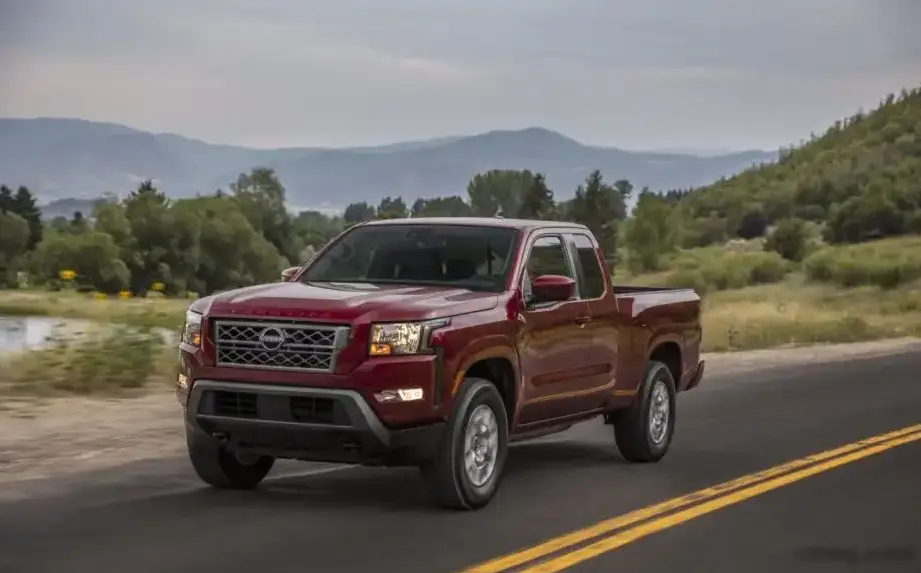
The Nissan Frontier III King Cab, specifically the 3.8 V6 4×2 Automatic variant, represents a significant update to Nissan’s mid-size pickup truck lineage. Introduced in February 2021 and continuing through the 2024 model year, this configuration occupied a sweet spot in the Frontier lineup, offering a balance of power, capability, and relative affordability. It was positioned as a step up from the base Frontier S models, appealing to buyers who desired the larger King Cab body style and the robust V6 engine without the added cost and complexity of a four-wheel-drive system. This generation, designated D03, marked a substantial redesign after a long period with minimal changes to the previous generation.
Technical Specifications
| Brand | Nissan |
| Model | Frontier |
| Generation | Frontier III King Cab |
| Type (Engine) | 3.8 V6 (310 Hp) 4×2 Automatic |
| Start of production | February, 2021 |
| End of production | August, 2024 |
| Powertrain Architecture | Internal Combustion engine |
| Body type | Pick-up |
| Seats | 4 |
| Doors | 4 |
| Fuel consumption (urban) | 13.1 l/100 km (18 US mpg, 21.6 UK mpg, 7.6 km/l) |
| Fuel consumption (extra urban) | 9.8 l/100 km (24 US mpg, 28.8 UK mpg, 10.2 km/l) |
| Fuel consumption (combined) | 11.8 l/100 km (19.9 US mpg, 23.9 UK mpg, 8.5 km/l) |
| Fuel Type | Petrol (Gasoline) |
| Emission standard | Tier 2-Bin5/LEV2-LEV |
| Weight-to-power ratio | 6.4 kg/Hp, 157.4 Hp/tonne |
| Weight-to-torque ratio | 5.2 kg/Nm, 193.4 Nm/tonne |
| Power | 310 Hp @ 6400 rpm |
| Power per litre | 81.6 Hp/l |
| Torque | 381 Nm @ 4400 rpm (281.01 lb.-ft. @ 4400 rpm) |
| Maximum engine speed | 6600 rpm |
| Engine layout | Front, Longitudinal |
| Engine Model/Code | VQ38DD |
| Engine displacement | 3799 cm3 (231.83 cu. in.) |
| Number of cylinders | 6 |
| Engine configuration | V-engine |
| Cylinder Bore | 95.5 mm (3.76 in.) |
| Piston Stroke | 88.4 mm (3.48 in.) |
| Compression ratio | 11:1 |
| Number of valves per cylinder | 4 |
| Fuel injection system | Direct injection |
| Engine aspiration | Naturally aspirated engine |
| Valvetrain | DOHC |
| Engine oil capacity | 5 l (5.28 US qt | 4.4 UK qt) |
| Coolant | 12 l (12.68 US qt | 10.56 UK qt) |
| Kerb Weight | 1970 kg (4343.11 lbs.) |
| Max. weight | 2727 kg (6012.01 lbs.) |
| Max load | 757 kg (1668.9 lbs.) |
| Fuel tank capacity | 79 l (20.87 US gal | 17.38 UK gal) |
| Permitted trailer load with brakes (12%) | 3048 kg (6719.69 lbs.) |
| Permitted towbar download | 305 kg (672.41 lbs.) |
| Length | 5339 mm (210.2 in.) |
| Width | 1854 mm (72.99 in.) |
| Height | 1821 mm (71.69 in.) |
| Wheelbase | 3200 mm (125.98 in.) |
| Front track | 1570 mm (61.81 in.) |
| Rear track | 1570 mm (61.81 in.) |
| Ride height (ground clearance) | 239 mm (9.41 in.) |
| Minimum turning circle | 13 m (42.65 ft.) |
| Approach angle | 30.3° |
| Departure angle | 22.1° |
| Ramp-over angle | 19.9° |
| Drivetrain Architecture | Rear wheel drive |
| Number of gears | 9 |
| Gearbox type | Automatic transmission |
| Front suspension | Double wishbone, Transverse stabilizer |
| Rear suspension | Rigid axle suspension, Transverse stabilizer, Leaf spring |
| Front brakes | Ventilated discs, 282×18 mm |
| Rear brakes | Ventilated discs, 287×18 mm |
| Assisting systems | ABS (Anti-lock braking system) |
| Steering type | Steering rack and pinion |
| Power steering | Hydraulic Steering |
| Tires size | 265/70 R16; 265/70 R17 |
| Wheel rims size | 16; 17 |
INTRODUCTION
The Nissan Frontier III King Cab 3.8 V6 4×2 Automatic, launched in 2021, represented a long-awaited full redesign of Nissan’s popular mid-size pickup. The previous generation had remained largely unchanged for over a decade, and the D03 generation brought with it a more modern aesthetic, a significantly upgraded interior, and a new powertrain. The King Cab configuration, with its extended rear seating, offered a practical compromise between the standard cab and the full crew cab, appealing to owners who occasionally needed to carry passengers in the rear but didn’t require the space of a full-size rear seat on a regular basis. The 4×2 drivetrain made it a more affordable option than its four-wheel-drive counterparts, focusing on on-road comfort and efficiency.
Powertrain & Engine Architecture
At the heart of this Frontier variant lies Nissan’s 3.8-liter VQ38DD V6 engine. This engine, a member of Nissan’s highly-regarded VQ family, is a naturally aspirated, 24-valve DOHC powerplant featuring direct fuel injection. The VQ38DD produces 310 horsepower at 6400 rpm and 381 lb-ft of torque at 4400 rpm. The engine’s architecture emphasizes durability and smooth power delivery. Paired with the engine is a 9-speed automatic transmission, replacing the older 5-speed unit found in previous Frontier models. This new transmission contributes to improved fuel economy and more refined shifting characteristics. The transmission is electronically controlled, adapting to driving conditions and driver input for optimal performance.
Driving Characteristics
The 3.8L V6 and 9-speed automatic combination delivers a noticeable improvement in driving experience compared to earlier Frontier models. While not a performance-oriented pickup, the 310 hp engine provides ample power for everyday driving and towing. The 9-speed transmission allows for relatively quick acceleration and keeps the engine in its optimal power band. Compared to the manual transmission options, the automatic prioritizes convenience and ease of use, making it ideal for commuting and city driving. The rear-wheel-drive configuration contributes to a slightly lower curb weight and improved fuel economy compared to the 4×4 models, but sacrifices off-road capability. The gear ratios are tuned for a balance of acceleration and highway cruising, providing a comfortable and capable driving experience.
Equipment & Trim Levels
The Frontier III King Cab 3.8 V6 4×2 Automatic typically came standard with features such as a 9-inch touchscreen infotainment system with Apple CarPlay and Android Auto compatibility, Nissan Safety Shield 360 (a suite of driver-assistance technologies), and a rearview camera. Interior upholstery was typically cloth, with options for leather upgrades available on higher trim levels. Common optional extras included a premium audio system, heated front seats, and a power-adjustable driver’s seat. The King Cab configuration offered a usable rear seat, although legroom was limited compared to the Crew Cab models. The dashboard layout was redesigned for a more modern look, with improved ergonomics and materials.
Chassis & Braking
The Frontier III utilizes a fully boxed ladder frame chassis, providing a solid foundation for both on-road comfort and off-road durability. The front suspension consists of a double wishbone setup with a transverse stabilizer bar, while the rear suspension employs a rigid axle with leaf springs and a transverse stabilizer bar. This configuration balances ride comfort with load-carrying capacity. Braking duties are handled by ventilated disc brakes on all four wheels, providing adequate stopping power for the vehicle’s weight. An Anti-lock Braking System (ABS) is standard equipment.
Market Reception & Comparison
The 2021 Nissan Frontier redesign was generally well-received by automotive critics. The new engine and transmission were praised for their improved performance and refinement. The updated interior was also a significant improvement over the previous generation. Compared to competitors like the Toyota Tacoma and Ford Ranger, the Frontier offered a more affordable entry point and a more comfortable ride. However, some critics noted that the Frontier’s styling was less adventurous than some of its rivals. Fuel economy was average for the segment, and the rear seat in the King Cab configuration was somewhat cramped.
Legacy
The Nissan Frontier III King Cab 3.8 V6 4×2 Automatic has proven to be a reliable and capable pickup truck. The VQ38DD engine has a reputation for longevity, and the 9-speed automatic transmission has generally held up well in service. On the used car market, these Frontiers are becoming increasingly popular due to their combination of affordability, capability, and modern features. Maintenance costs are generally reasonable, and parts availability is good. The redesign significantly improved the Frontier’s appeal, making it a competitive option in the mid-size pickup segment.