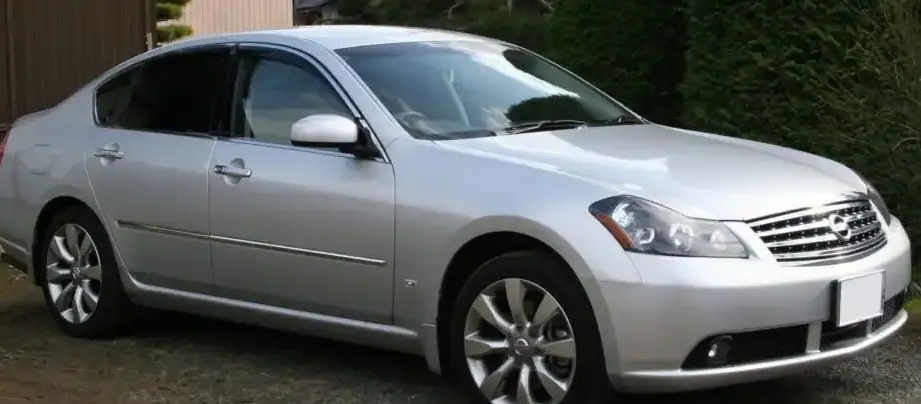
The Nissan Fuga, known as the Infiniti M in North American markets, represented Nissan’s entry into the premium, mid-size sedan segment. The first generation, designated the Y50, was produced from 2004 to 2006. Within the Y50 lineup, the 2.5L V6 variant, producing 210 horsepower, served as the entry-level engine option in Japan and select export markets. It aimed to provide a balance of luxury, performance, and affordability within the Fuga range, appealing to buyers seeking a comfortable and well-equipped sedan without the higher price tag of the 3.5L models.
Technical Specifications
| Brand | Nissan |
| Model | Fuga |
| Generation | Fuga I (Y50) |
| Type (Engine) | 2.5L V6 (210 Hp) |
| Start of production | 2004 |
| End of production | 2006 |
| Powertrain Architecture | Internal Combustion engine |
| Body type | Sedan |
| Seats | 5 |
| Doors | 4 |
| Fuel Type | Petrol (Gasoline) |
| Weight-to-power ratio | 7.8 kg/Hp, 128.8 Hp/tonne |
| Weight-to-torque ratio | 6.2 kg/Nm, 162.6 Nm/tonne |
| Power | 210 Hp @ 6000 rpm |
| Power per litre | 84.2 Hp/l |
| Torque | 265 Nm @ 4400 rpm, 195.45 lb.-ft. @ 4400 rpm |
| Engine layout | Front, Longitudinal |
| Engine displacement | 2495 cm3, 152.25 cu. in. |
| Number of cylinders | 6 |
| Engine configuration | V-engine |
| Number of valves per cylinder | 4 |
| Fuel injection system | Multi-port manifold injection |
| Engine aspiration | Naturally aspirated engine |
| Kerb Weight | 1630 kg, 3593.53 lbs |
| Fuel tank capacity | 80 l, 21.13 US gal | 17.6 UK gal |
| Length | 4830 mm, 190.16 in |
| Width | 1795 mm, 70.67 in |
| Height | 1510 mm, 59.45 in |
| Wheelbase | 2900 mm, 114.17 in |
| Front track | 1540 mm, 60.63 in |
| Rear (Back) track | 1555 mm, 61.22 in |
| Drivetrain Architecture | The Internal combustion engine (ICE) drives the rear wheels of the vehicle. |
| Drive wheel | Rear wheel drive |
| Number of gears and type of gearbox | 5 gears, automatic transmission |
| Front brakes | Ventilated discs |
| Rear brakes | Ventilated discs |
| Assisting systems | ABS (Anti-lock braking system) |
| Tires size | 225/55 R17 |
Powertrain & Engine Architecture
The Y50 Fuga 2.5L utilized Nissan’s VQ25DE engine, a 2.5-liter, naturally aspirated V6. This engine was part of the widely respected VQ engine family, known for its smoothness and reliability. The VQ25DE featured a cast iron block with aluminum cylinder heads, and a double overhead camshaft (DOHC) valvetrain with four valves per cylinder. Fuel delivery was managed by a multi-port fuel injection system. The engine produced 210 horsepower at 6000 rpm and 265 Nm (195.45 lb-ft) of torque at 4400 rpm. Paired exclusively with a 5-speed automatic transmission, the powertrain was designed for comfortable cruising rather than outright performance. The automatic transmission featured a conventional torque converter and electronically controlled shift points.
Driving Characteristics
The 2.5L Fuga offered a refined driving experience, prioritizing comfort over sporty handling. The 5-speed automatic transmission, while smooth, wasn’t particularly quick to shift, and the gear ratios were tuned for fuel efficiency and relaxed acceleration. Compared to the 3.5L V6 variants, the 2.5L model felt noticeably less powerful, especially during overtaking maneuvers or when climbing hills. However, the engine provided adequate power for everyday driving situations. The rear-wheel-drive configuration contributed to a balanced feel, but the relatively soft suspension setup meant that body roll was present during cornering. The automatic transmission, while convenient, diminished the driver engagement found in the manual transmission options available on other Fuga trims.
Equipment & Trim Levels
The 2.5L Fuga typically came equipped with a respectable level of standard features, reflecting its positioning as a premium sedan. Standard amenities included power-adjustable front seats, automatic climate control, a CD player with multiple speakers, and alloy wheels. Safety features such as ABS, and front and side airbags were also standard. Optional extras included a navigation system, leather upholstery, a sunroof, and upgraded audio systems. The interior typically featured woodgrain trim and a generally upscale ambiance. Trim levels varied depending on the market, but generally offered incremental upgrades in terms of interior materials and available features.
Chassis & Braking
The Y50 Fuga utilized a MacPherson strut front suspension and a multi-link rear suspension. The suspension was tuned for comfort, providing a smooth ride over most road surfaces. Braking duties were handled by ventilated disc brakes on all four wheels, providing adequate stopping power for the vehicle’s weight and performance. ABS (Anti-lock Braking System) was standard, enhancing braking stability in emergency situations. The 2.5L models generally featured slightly smaller tires (225/55 R17) compared to the higher-spec 3.5L variants, contributing to a slightly less aggressive appearance and potentially a softer ride.
Market Reception & Comparison
The 2.5L Fuga was generally well-received as a comfortable and stylish sedan, particularly in Japan. Critics praised its quiet cabin, smooth ride, and well-appointed interior. However, the engine’s performance was often cited as a weakness, especially when compared to the more powerful 3.5L models. Fuel economy was considered average for its class. Compared to competitors like the Toyota Aristo and Honda Inspire, the Fuga offered a more modern design and a more luxurious interior, but the 2.5L engine lacked the outright performance of some rivals. The 3.5L Fuga offered a significant performance upgrade, but at a higher price point, making the 2.5L a more accessible option for budget-conscious buyers.
Legacy
The Y50 Fuga 2.5L, while not the most powerful variant, has proven to be a relatively reliable vehicle. The VQ25DE engine is known for its durability, and with proper maintenance, can last for many years. The 5-speed automatic transmission is also generally reliable. In the used car market, the 2.5L Fuga represents a good value proposition for buyers seeking a comfortable and well-equipped sedan at an affordable price. However, potential buyers should be aware of the engine’s relatively modest power output and the potential for age-related maintenance issues. The Y50 Fuga laid the foundation for the subsequent generations of the Fuga/Infiniti M, establishing the model as a key player in the premium mid-size sedan segment.