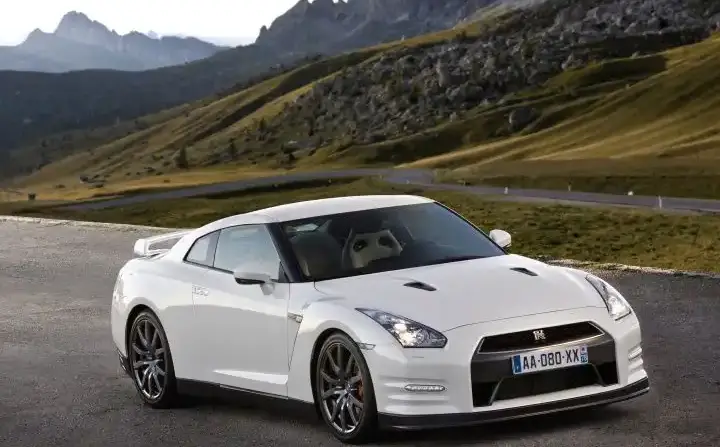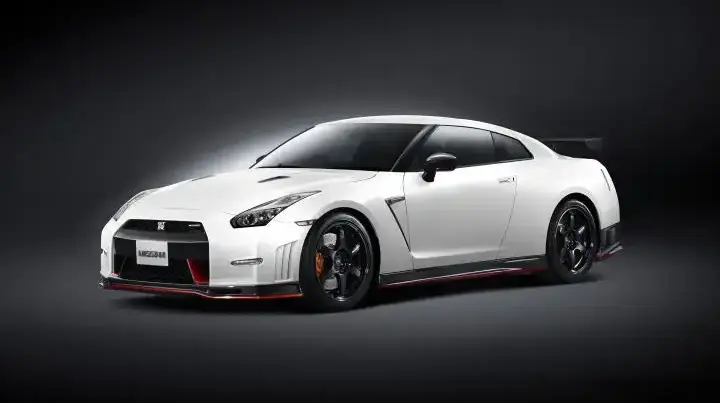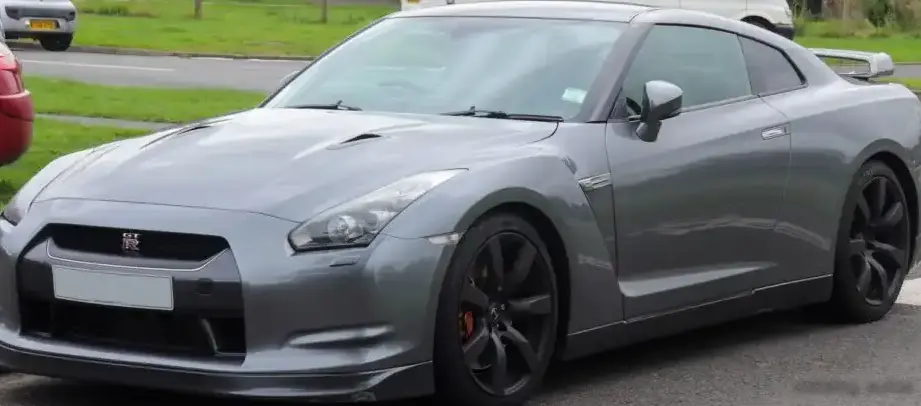
The Nissan GT-R (R35), specifically the 3.8-liter V6 485 horsepower all-wheel-drive Dual Clutch Transmission (DCT) variant, represents the initial launch configuration of Nissan’s flagship performance vehicle. Introduced in December 2007 and continuing through the 2010 model year, this version established the GT-R’s reputation as a technologically advanced and brutally quick grand tourer. It marked Nissan’s serious return to the high-performance sports car market, aiming to compete directly with established European marques like Porsche and Ferrari. The R35 GT-R was a significant departure from its predecessors, embracing modern engineering and electronics to deliver exceptional performance.
Technical Specifications
| Brand | Nissan |
| Model | GT-R |
| Generation | GT-R (R35) |
| Type (Engine) | 3.8 V6 (485 Hp) AWD DCT |
| Start of production | December, 2007 |
| End of production | 2010 |
| Powertrain Architecture | Internal Combustion engine |
| Body type | Coupe |
| Seats | 4 |
| Doors | 2 |
| Fuel consumption (economy) – urban (NEDC) | 18.3 l/100 km (12.9 US mpg, 15.4 UK mpg, 5.5 km/l) |
| Fuel consumption (economy) – extra urban (NEDC) | 9.1 l/100 km (25.8 US mpg, 31 UK mpg, 11 km/l) |
| Fuel consumption (economy) – combined (NEDC) | 12.4 l/100 km (19 US mpg, 22.8 UK mpg, 8.1 km/l) |
| CO2 emissions (NEDC) | 298 g/km |
| Fuel Type | Petrol (Gasoline) |
| Acceleration 0 – 100 km/h | 3.5 sec |
| Acceleration 0 – 62 mph | 3.5 sec |
| Acceleration 0 – 60 mph | 3.3 sec |
| Maximum speed | 310 km/h (192.63 mph) |
| Emission standard | Euro 5 |
| Weight-to-power ratio | 3.6 kg/Hp, 278.7 Hp/tonne |
| Weight-to-torque ratio | 3 kg/Nm, 337.9 Nm/tonne |
| Power | 485 Hp @ 6400 rpm |
| Power per litre | 127.7 Hp/l |
| Torque | 588 Nm @ 3200-5200 rpm (433.69 lb.-ft. @ 3200-5200 rpm) |
| Engine layout | Front, Longitudinal |
| Engine Model/Code | VR38DETT |
| Engine displacement | 3799 cm3 (231.83 cu. in.) |
| Number of cylinders | 6 |
| Engine configuration | V-engine |
| Cylinder Bore | 95.5 mm (3.76 in.) |
| Piston Stroke | 88.4 mm (3.48 in.) |
| Compression ratio | 9:1 |
| Number of valves per cylinder | 4 |
| Fuel injection system | Multi-port manifold injection |
| Engine aspiration | Twin-Turbo, Intercooler |
| Valvetrain | DOHC |
| Engine oil capacity | 5.5 l (5.81 US qt | 4.84 UK qt) |
| Coolant | 11 l (11.62 US qt | 9.68 UK qt) |
| Kerb Weight | 1740 kg (3836.04 lbs.) |
| Max. weight | 2200 kg (4850.17 lbs.) |
| Max load | 460 kg (1014.13 lbs.) |
| Trunk (boot) space – minimum | 315 l (11.12 cu. ft.) |
| Fuel tank capacity | 74 l (19.55 US gal | 16.28 UK gal) |
| Length | 4650 mm (183.07 in.) |
| Width | 1895 mm (74.61 in.) |
| Height | 1370 mm (53.94 in.) |
| Wheelbase | 2780 mm (109.45 in.) |
| Front track | 1590 mm (62.6 in.) |
| Rear (Back) track | 1600 mm (62.99 in.) |
| Ride height (ground clearance) | 105 mm (4.13 in.) |
| Drag coefficient (Cd) | 0.27 |
| Minimum turning circle (turning diameter) | 11.4 m (37.4 ft.) |
| Drivetrain Architecture | The Internal combustion engine (ICE) drives permanently the four wheels of the vehicle. |
| Drive wheel | All wheel drive (4×4) |
| Number of gears and type of gearbox | 6 gears, automatic transmission DCT |
| Front suspension | Double wishbone, Transverse stabilizer |
| Rear suspension | Independent multi-link suspension, Transverse stabilizer |
| Front brakes | Ventilated discs, 380 mm |
| Rear brakes | Ventilated discs, 380 mm |
| Assisting systems | ABS (Anti-lock braking system) |
| Steering type | Steering rack and pinion |
| Power steering | Hydraulic Steering |
| Tires size | Front wheel tires: 255/40 R20 Rear wheel tires: 285/35 R20 |
| Wheel rims size | Front wheel rims: 9.5J x 20 Rear wheel rims: 10.5J x 20 |
INTRODUCTION
The initial Nissan GT-R (R35) launched in 2007 was a watershed moment for the brand. It represented a significant investment in engineering and technology, aiming to deliver a world-class sports car experience. The 3.8-liter V6 engine, producing 485 horsepower and 433 lb-ft of torque, was paired exclusively with a six-speed dual-clutch transmission (DCT) and a sophisticated all-wheel-drive system. This combination allowed for blistering acceleration and exceptional handling. Positioned as the top-tier trim level at launch, it offered a no-compromise performance package, setting the standard for subsequent GT-R variants.
Powertrain & Engine Architecture
At the heart of the GT-R is the VR38DETT 3.8-liter V6 engine. This engine is hand-assembled and features a 90-degree V-angle for optimal balance. The “DETT” designation signifies dual turbochargers, which are positioned to reduce turbo lag and provide a broad torque curve. The engine utilizes a multi-port fuel injection system and a double overhead camshaft (DOHC) valvetrain. The DCT transmission, sourced from BorgWarner, provides incredibly fast and smooth gear changes, contributing significantly to the car’s acceleration capabilities. The transmission’s programming prioritizes performance, with quick upshifts and downshifts, and features paddle shifters for manual control. The all-wheel-drive system, dubbed ATTESA E-TS (Advanced Total Traction Engineering System by Nissan), actively distributes torque between the front and rear axles, optimizing grip and stability in all conditions.
Driving Characteristics
The 2008-2010 GT-R delivers a driving experience that is both exhilarating and surprisingly refined. The DCT transmission provides near-instantaneous shifts, and the all-wheel-drive system inspires confidence, even in challenging conditions. While the initial GT-R was known for its raw power and acceleration (0-60 mph in around 3.3 seconds), it wasn’t necessarily the most comfortable car for daily driving. The suspension, while effective at controlling body roll, can be firm, and the engine note, while aggressive, isn’t particularly melodious. Compared to later GT-R models with improved suspension tuning and sound insulation, the early versions feel more focused on outright performance than overall comfort. The gear ratios are optimized for acceleration, meaning the engine revs relatively high at highway speeds.
Equipment & Trim Levels
The initial GT-R trim was exceptionally well-equipped. Standard features included leather upholstery, heated front seats, a Bose premium audio system, navigation, and a suite of performance monitoring displays. Optional extras included carbon fiber interior trim, Recaro seats, and a variety of exterior customization options. The interior design, while functional, was not overly luxurious, reflecting the car’s performance-oriented focus. The dashboard layout is driver-centric, with all essential controls within easy reach.
Chassis & Braking
The GT-R’s chassis is a highly rigid platform, constructed with a combination of steel and aluminum. The suspension utilizes a double wishbone setup at the front and an independent multi-link setup at the rear, both with transverse stabilizers to minimize body roll. Braking duties are handled by ventilated discs at all four corners, measuring 380mm in diameter. The braking system is powerful and provides excellent stopping performance, aided by the ABS anti-lock braking system. The GT-R’s weight distribution is nearly perfect, contributing to its balanced handling characteristics.
Market Reception & Comparison
The initial GT-R was met with widespread critical acclaim. Reviewers praised its incredible performance, advanced technology, and value for money. It quickly gained a reputation as a “giant killer,” capable of challenging and often beating more expensive sports cars from established brands. Compared to other trims in the GT-R lineup (which would later include models with more power and refined suspension), the original 485 hp version represented the purest expression of the R35’s performance potential. Fuel economy, while not a priority for most GT-R buyers, was surprisingly reasonable for a car of its performance capabilities, averaging around 19 mpg in combined driving. Reliability has been generally good, although the complex engine and transmission require diligent maintenance.
Legacy
The 2008-2010 Nissan GT-R established the R35 as a legitimate contender in the high-performance sports car segment. The VR38DETT engine and DCT transmission proved to be robust and capable of handling significant power upgrades, making it a popular platform for aftermarket modifications. Today, these early GT-Rs are highly sought after by collectors and enthusiasts, representing the first generation of a modern icon. While maintenance costs can be higher than some other sports cars due to the complexity of the powertrain, the GT-R’s performance and technological advancements continue to impress, ensuring its place in automotive history.