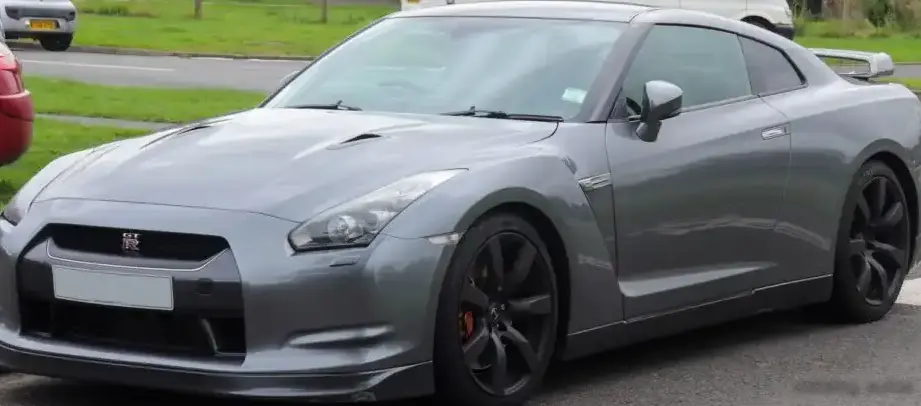
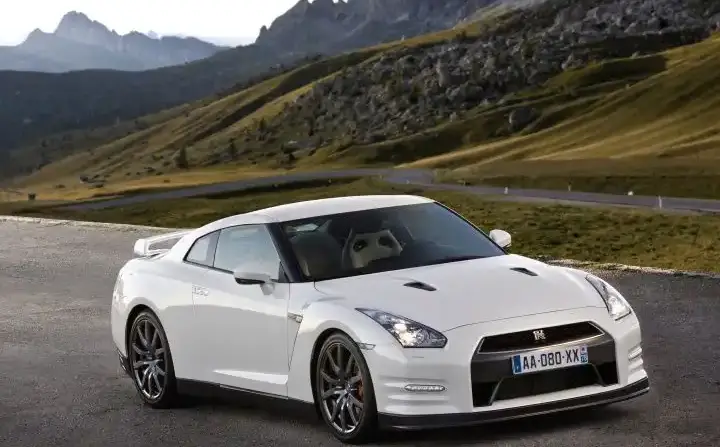
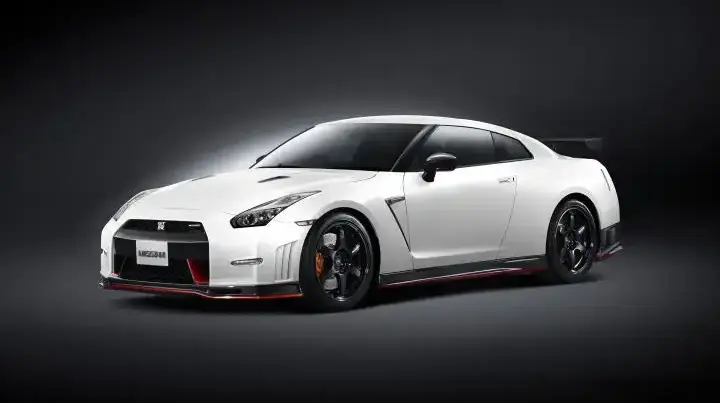
The Nissan GT-R, specifically the R35 model produced from 2016 to 2023 following a significant facelift, represents a high-performance, all-wheel-drive coupe engineered to compete with established sports car icons. This iteration, powered by the 3.8-liter twin-turbocharged V6 engine producing 570 horsepower, solidified the GT-R’s reputation as a technologically advanced and brutally quick machine. The 2016 facelift brought revised styling, improved aerodynamics, and enhanced interior refinement, further elevating the GT-R’s position in the high-end sports car market. This variant consistently sat at the top of the GT-R lineup, representing the highest performance level available outside of limited-edition models like the NISMO.
Technical Specifications
| Brand | Nissan |
| Model | GT-R |
| Generation | GT-R (R35, facelift 2016) |
| Type (Engine) | 3.8 V6 (570 Hp) AWD DCT |
| Start of production | August, 2016 |
| End of production | 2023 |
| Powertrain Architecture | Internal Combustion engine |
| Body type | Coupe |
| Seats | 4 |
| Doors | 2 |
| Fuel consumption (economy) – urban (NEDC) | 17 l/100 km (13.8 US mpg, 16.6 UK mpg, 5.9 km/l) |
| Fuel consumption (economy) – extra urban (NEDC) | 8.8 l/100 km (26.7 US mpg, 32.1 UK mpg, 11.4 km/l) |
| Fuel consumption (economy) – combined (NEDC) | 11.8 l/100 km (19.9 US mpg, 23.9 UK mpg, 8.5 km/l) |
| CO2 emissions (NEDC) | 275 g/km |
| Fuel Type | Petrol (Gasoline) |
| Acceleration 0 – 100 km/h | 2.8 sec |
| Acceleration 0 – 62 mph | 2.8 sec |
| Acceleration 0 – 60 mph | 2.7 sec |
| Maximum speed | 315 km/h (195.73 mph) |
| Emission standard | Euro 6 |
| Weight-to-power ratio | 3.1 kg/Hp, 325.3 Hp/tonne |
| Weight-to-torque ratio | 2.8 kg/Nm, 363.6 Nm/tonne |
| Power | 570 Hp @ 6800 rpm |
| Power per litre | 150 Hp/l |
| Torque | 637 Nm @ 3300-5800 rpm (469.83 lb.-ft. @ 3300-5800 rpm) |
| Engine layout | Front, Longitudinal |
| Engine Model/Code | VR38DETT |
| Engine displacement | 3799 cm3 (231.83 cu. in.) |
| Number of cylinders | 6 |
| Engine configuration | V-engine |
| Cylinder Bore | 95.5 mm (3.76 in.) |
| Piston Stroke | 88.4 mm (3.48 in.) |
| Compression ratio | 9:1 |
| Number of valves per cylinder | 4 |
| Fuel injection system | Multi-port manifold injection |
| Engine aspiration | Twin-Turbo, Intercooler |
| Valvetrain | DOHC |
| Engine oil capacity | 5 l (5.28 US qt | 4.4 UK qt) |
| Coolant | 11.3 l (11.94 US qt | 9.94 UK qt) |
| Kerb Weight | 1752 kg (3862.5 lbs.) |
| Max. weight | 2200 kg (4850.17 lbs.) |
| Max load | 448 kg (987.67 lbs.) |
| Trunk (boot) space – minimum | 315 l (11.12 cu. ft.) |
| Fuel tank capacity | 74 l (19.55 US gal | 16.28 UK gal) |
| Length | 4710 mm (185.43 in.) |
| Width | 1895 mm (74.61 in.) |
| Height | 1370 mm (53.94 in.) |
| Wheelbase | 2780 mm (109.45 in.) |
| Front track | 1590 mm (62.6 in.) |
| Rear (Back) track | 1600 mm (62.99 in.) |
| Ride height (ground clearance) | 105 mm (4.13 in.) |
| Drag coefficient (Cd) | 0.26 |
| Minimum turning circle (turning diameter) | 12.1 m (39.7 ft.) |
| Drivetrain Architecture | The Internal combustion engine (ICE) drives permanently the four wheels of the vehicle. |
| Drive wheel | All wheel drive (4×4) |
| Number of gears and type of gearbox | 6 gears, automatic transmission DCT |
| Front suspension | Double wishbone, Transverse stabilizer |
| Rear suspension | Independent multi-link suspension, Transverse stabilizer |
| Front brakes | Ventilated discs |
| Rear brakes | Ventilated discs |
| Assisting systems | ABS (Anti-lock braking system) |
| Steering type | Steering rack and pinion |
| Power steering | Hydraulic Steering |
| Tires size | Front wheel tires: 255/40 R20 Rear wheel tires: 285/35 R20 |
| Wheel rims size | Front wheel rims: 9.5J x 20 Rear wheel rims: 10.5J x 20 |
INTRODUCTION
The 2016-2023 Nissan GT-R represents the culmination of years of development for Nissan’s flagship performance car. Built upon the R35 platform, first introduced in 2007, this facelifted version refined the already potent formula, focusing on enhancing both performance and luxury. The GT-R was never officially sold in large numbers in the US initially, but quickly gained a cult following due to its impressive performance capabilities and advanced technology. The 570 horsepower variant, equipped with the dual-clutch transmission (DCT), became the standard offering, solidifying the GT-R’s position as a serious contender against European sports car manufacturers like Porsche and Audi. It was designed to be a technologically advanced, all-weather performance machine, capable of delivering supercar-level performance with a degree of everyday usability.
Powertrain & Engine Architecture
At the heart of the GT-R is the VR38DETT 3.8-liter V6 engine. This engine is hand-assembled, a testament to Nissan’s commitment to quality and precision. The “DETT” designation signifies its dual-turbocharged configuration, utilizing two IHI turbochargers to deliver significant boost. The engine employs multi-port fuel injection and a double overhead camshaft (DOHC) valvetrain. The VR38DETT boasts a relatively low 9:1 compression ratio, a design choice intended to accommodate the high boost pressures generated by the turbochargers. The engine’s longitudinal mounting and front-midship layout contribute to a balanced weight distribution, enhancing handling characteristics. Paired with the engine is a six-speed dual-clutch transmission (DCT), providing incredibly fast and seamless gear changes. This DCT is specifically tuned for rapid shifts, crucial for maximizing acceleration and track performance. The transmission features paddle shifters, allowing for manual control when desired.
Driving Characteristics
The GT-R’s driving experience is defined by its relentless acceleration and exceptional grip. The 570 horsepower and 469.83 lb-ft of torque, combined with the all-wheel-drive system, result in a 0-60 mph time of around 2.7 seconds. The DCT contributes to this performance by delivering near-instantaneous gear changes, minimizing power interruption during acceleration. While the DCT is incredibly capable, some drivers find it less engaging than a traditional manual transmission. The all-wheel-drive system is sophisticated, actively distributing torque between the front and rear axles to optimize traction and stability. The GT-R feels planted and secure, even under hard acceleration or during aggressive cornering. Compared to lower-powered GT-R variants, the 570 hp model offers a significantly more visceral and exhilarating driving experience. The power delivery is strong throughout the rev range, making it a formidable performer on both the road and the track.
Equipment & Trim Levels
The 2016-2023 GT-R came well-equipped as standard, reflecting its premium positioning. Standard features included leather upholstery, heated front seats, a touchscreen infotainment system with navigation, and a premium audio system. The interior design, while functional, was often criticized for feeling somewhat dated compared to its European rivals. Optional extras included Recaro sport seats, carbon fiber interior trim, and a variety of exterior customization options. The GT-R’s trim levels were relatively simple, with the 570 horsepower variant representing the core offering. Higher-spec models, such as the NISMO, offered even more aggressive styling, enhanced performance components, and a more luxurious interior.
Chassis & Braking
The GT-R’s chassis is a robust and lightweight structure, utilizing a combination of steel and aluminum. The suspension system consists of double wishbones at the front and an independent multi-link setup at the rear, both incorporating transverse stabilizers to reduce body roll. The suspension is tuned for a balance between comfort and performance, providing a relatively compliant ride on public roads while maintaining excellent control during spirited driving. Braking duties are handled by ventilated discs at all four corners, providing ample stopping power. The GT-R also features an advanced anti-lock braking system (ABS) and electronic stability control (ESC) to enhance safety and control.
Market Reception & Comparison
The 2016-2023 Nissan GT-R was generally well-received by automotive critics, who praised its exceptional performance, advanced technology, and all-weather capability. However, some criticisms were leveled at its interior design, which was considered less refined than those of its European competitors. Compared to other trims in the GT-R lineup, the 570 horsepower variant offered the most compelling combination of performance and value. It provided a significant step up in power and acceleration compared to earlier models, without the substantial price premium of the NISMO variant. Fuel economy, while not a primary concern for GT-R buyers, was relatively poor, averaging around 19.9 US mpg in combined driving.
Legacy
The Nissan GT-R R35, particularly the 2016-2023 facelifted version, has cemented its place as a modern automotive icon. Its innovative technology, blistering performance, and distinctive styling have earned it a dedicated following worldwide. The VR38DETT engine, while known for its complexity, has proven to be relatively reliable when properly maintained. On the used car market, the GT-R holds its value well, particularly well-maintained examples with low mileage. It remains a highly sought-after performance car, offering a unique and exhilarating driving experience that continues to captivate enthusiasts.