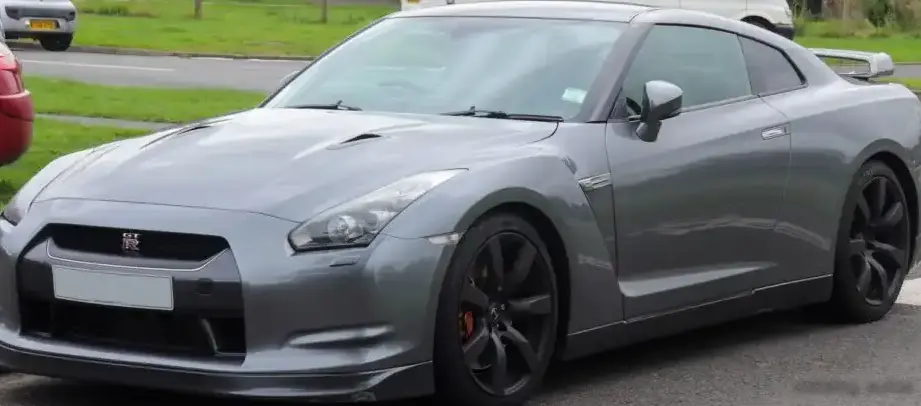
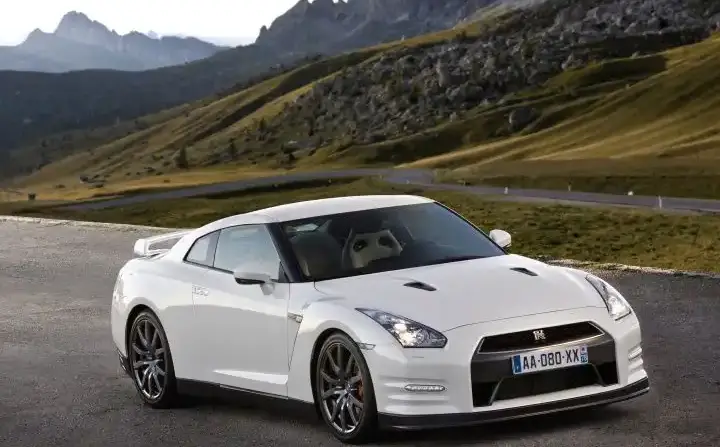
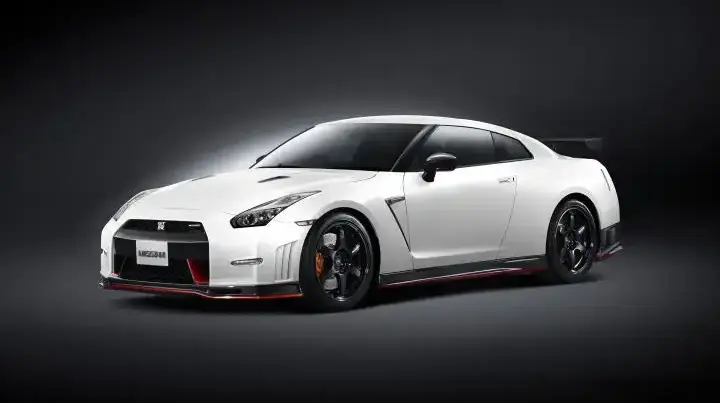
The Nissan GT-R, specifically the R35 generation facelift model produced from 2016 to 2022, represents a significant evolution of Nissan’s high-performance flagship. The Track Edition, powered by the 3.8-liter V6 engine producing 570 horsepower, occupies a performance-focused niche within the GT-R lineup, positioned above the standard Premium trim but below the even more extreme NISMO variant. Introduced in August 2016, this iteration of the GT-R aimed to deliver enhanced track capability while maintaining a degree of everyday usability. It quickly became a benchmark for Japanese performance engineering, challenging established sports car manufacturers globally.
Technical Specifications
| Brand | Nissan |
| Model | GT-R |
| Generation | GT-R (R35, facelift 2016) |
| Type | Track Edition 3.8 V6 (570 Hp) AWD DCT |
| Start of production | August, 2016 |
| End of production | 2022 |
| Powertrain Architecture | Internal Combustion engine |
| Body type | Coupe |
| Seats | 4 |
| Doors | 2 |
| Fuel consumption (urban) | 17 l/100 km (13.8 US mpg, 16.6 UK mpg, 5.9 km/l) |
| Fuel consumption (extra urban) | 8.8 l/100 km (26.7 US mpg, 32.1 UK mpg, 11.4 km/l) |
| Fuel consumption (combined) | 11.8 l/100 km (19.9 US mpg, 23.9 UK mpg, 8.5 km/l) |
| CO2 emissions | 275 g/km |
| Fuel Type | Petrol (Gasoline) |
| Acceleration 0 – 100 km/h | 2.8 sec |
| Acceleration 0 – 62 mph | 2.8 sec |
| Acceleration 0 – 60 mph | 2.7 sec |
| Maximum speed | 315 km/h (195.73 mph) |
| Emission standard | Euro 6 |
| Weight-to-power ratio | 3.1 kg/Hp, 326.6 Hp/tonne |
| Weight-to-torque ratio | 2.7 kg/Nm, 365 Nm/tonne |
| Power | 570 Hp @ 6800 rpm |
| Power per litre | 150 Hp/l |
| Torque | 637 Nm @ 3300-5800 rpm (469.83 lb.-ft. @ 3300-5800 rpm) |
| Engine layout | Front, Longitudinal |
| Engine Model/Code | VR38DETT |
| Engine displacement | 3799 cm3 (231.83 cu. in.) |
| Number of cylinders | 6 |
| Engine configuration | V-engine |
| Cylinder Bore | 95.5 mm (3.76 in.) |
| Piston Stroke | 88.4 mm (3.48 in.) |
| Compression ratio | 9:1 |
| Number of valves per cylinder | 4 |
| Fuel injection system | Multi-port manifold injection |
| Engine aspiration | BiTurbo, Intercooler |
| Engine oil capacity | 5 l (5.28 US qt | 4.4 UK qt) |
| Coolant | 11.3 l (11.94 US qt | 9.94 UK qt) |
| Kerb Weight | 1745 kg (3847.07 lbs.) |
| Max. weight | 2200 kg (4850.17 lbs.) |
| Max load | 455 kg (1003.1 lbs.) |
| Trunk (boot) space (minimum) | 315 l (11.12 cu. ft.) |
| Fuel tank capacity | 74 l (19.55 US gal | 16.28 UK gal) |
| Length | 4710 mm (185.43 in.) |
| Width | 1895 mm (74.61 in.) |
| Height | 1370 mm (53.94 in.) |
| Wheelbase | 2780 mm (109.45 in.) |
| Front track | 1590 mm (62.6 in.) |
| Rear track | 1600 mm (62.99 in.) |
| Ride height (ground clearance) | 105 mm (4.13 in.) |
| Drag coefficient (Cd) | 0.26 |
| Minimum turning circle | 12.1 m (39.7 ft.) |
| Drive wheel | All wheel drive (4×4) |
| Number of gears and type of gearbox | 6 gears, automatic transmission |
| Front suspension | Double wishbone |
| Rear suspension | Independent multi-link suspension |
| Front brakes | Ventilated discs |
| Rear brakes | Ventilated discs |
| Assisting systems | ABS (Anti-lock braking system) |
| Steering type | Steering rack and pinion |
| Power steering | Electric Steering |
| Tires size | 255/40 ZRF20 87Y; 285/35 ZRF20 90Y |
| Wheel rims size | 10J x 20; 10.5J x 20 |
Powertrain & Engine Architecture
At the heart of the GT-R Track Edition lies the VR38DETT 3.8-liter twin-turbocharged V6 engine. This engine, hand-assembled in Yokohama, Japan, features a 90-degree V-angle for optimal balance. The “DETT” designation signifies dual turbochargers, which are IHI-manufactured units. The engine utilizes a multi-port fuel injection system, delivering precise fuel metering for efficient combustion. The 6800 rpm redline is indicative of the engine’s robust construction and high-revving capability. The transmission is a six-speed dual-clutch transmission (DCT), providing incredibly fast and seamless gear changes. This DCT is specifically tuned for quick response and durability, crucial for both track performance and spirited road driving.
Driving Characteristics
The GT-R Track Edition’s driving experience is defined by its phenomenal acceleration and tenacious grip. The DCT delivers lightning-fast shifts, contributing to the car’s 2.8-second 0-60 mph time. The all-wheel-drive system, known as ATTESA E-TS (Advanced Total Traction Engineering System), actively distributes torque between the front and rear axles, optimizing traction in all conditions. Compared to the standard GT-R, the Track Edition benefits from a more aggressive suspension setup and enhanced cooling, allowing for sustained high-speed performance. While the automatic transmission offers convenience, it doesn’t quite match the engagement of a manual gearbox, but its speed and efficiency are undeniable. The car feels planted and stable, even at extreme speeds, inspiring confidence in the driver.
Equipment & Trim Levels
The Track Edition builds upon the Premium trim level, adding several performance-oriented features. Standard equipment includes Recaro sport seats, carbon-fiber interior trim, and a unique suspension tuning. The exterior features a distinctive rear spoiler and lightweight wheels. Optional extras included a Bose premium audio system, navigation, and various customization options for interior and exterior finishes. The interior, while luxurious, prioritizes functionality and driver focus, with a straightforward layout and supportive seats.
Chassis & Braking
The GT-R’s chassis is a highly rigid monocoque construction, providing a solid foundation for the suspension and drivetrain. The Track Edition features a specially tuned suspension with stiffer springs and dampers, reducing body roll and improving handling precision. The braking system consists of ventilated discs at all four corners, providing ample stopping power. The ABS (Anti-lock Braking System) and electronic stability control systems further enhance safety and control. The car’s weight distribution is carefully balanced, contributing to its neutral handling characteristics.
Market Reception & Comparison
The Nissan GT-R Track Edition was generally well-received by automotive critics, praised for its exceptional performance and technological sophistication. It was often compared to rivals such as the Porsche 911 Turbo and Audi R8. While the GT-R offered comparable performance at a lower price point, some critics noted that its interior refinement and overall driving experience weren’t quite as polished as those of its European competitors. Fuel economy, at around 19.9 US mpg combined, was reasonable for a high-performance sports car, but CO2 emissions were relatively high. Reliability was generally good, although the complex engine and drivetrain required diligent maintenance.
Legacy
The Nissan GT-R Track Edition has cemented its place as a modern automotive icon. Its innovative technology, blistering performance, and distinctive styling have earned it a dedicated following. On the used car market, well-maintained examples of the Track Edition command a premium price. The VR38DETT engine, while complex, has proven to be remarkably durable when properly maintained. The GT-R’s legacy extends beyond its performance capabilities; it represents Nissan’s commitment to pushing the boundaries of automotive engineering and challenging the status quo.