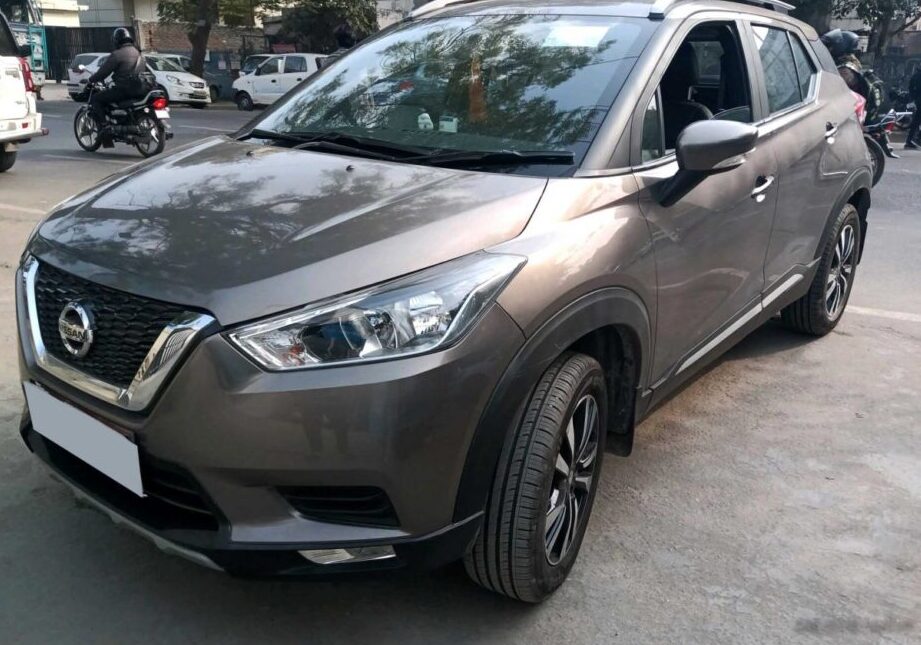
Technical Specifications
| Brand | Nissan |
| Model | Kicks |
| Generation | Kicks (D15) |
| Type (Engine) | 1.5i (106 Hp) |
| Start of production | 2019 |
| End of production | 2023 |
| Powertrain Architecture | Internal Combustion engine |
| Body type | SUV |
| Seats | 5 |
| Doors | 5 |
| Fuel consumption (combined) | 7 l/100 km (33.6 US mpg, 40.4 UK mpg, 14.3 km/l) |
| Fuel Type | Petrol (Gasoline) |
| Power | 106 Hp @ 5600 rpm |
| Power per litre | 70.8 Hp/l |
| Torque | 142 Nm @ 4000 rpm (104.73 lb.-ft. @ 4000 rpm) |
| Engine layout | Front, Transverse |
| Engine Model/Code | H4K |
| Engine displacement | 1498 cm3 (91.41 cu. in.) |
| Number of cylinders | 4 |
| Engine configuration | Inline |
| Number of valves per cylinder | 4 |
| Fuel injection system | Multi-port manifold injection |
| Engine aspiration | Naturally aspirated engine |
| Trunk (boot) space – minimum | 400 l (14.13 cu. ft.) |
| Fuel tank capacity | 50 l (13.21 US gal | 11 UK gal) |
| Length | 4384 mm (172.6 in.) |
| Width | 1813 mm (71.38 in.) |
| Height | 1651-1656 mm (65 – 65.2 in.) |
| Wheelbase | 2673 mm (105.24 in.) |
| Ride height (ground clearance) | 210 mm (8.27 in.) |
| Minimum turning circle | 10.4 m (34.12 ft.) |
| Drivetrain Architecture | Front wheel drive, Internal Combustion engine (ICE) |
| Number of gears and type of gearbox | 5 gears, manual transmission |
| Front suspension | Independent, type McPherson with coil spring and anti-roll bar |
| Rear suspension | Torsion |
| Front brakes | Disc |
| Rear brakes | Drum |
| Assisting systems | ABS (Anti-lock braking system) |
| Steering type | Steering rack and pinion |
| Power steering | Electric Steering |
| Tires size | 215/65 R16; 215/60 R17 |
| Wheel rims size | 16; 17 |
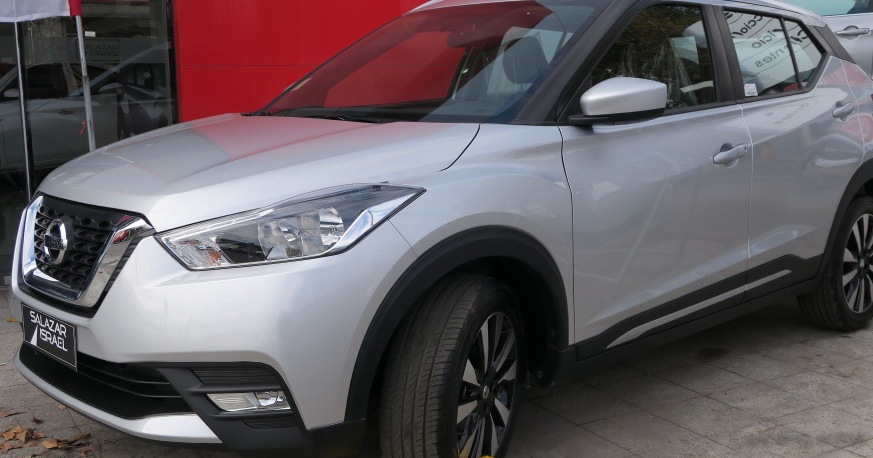
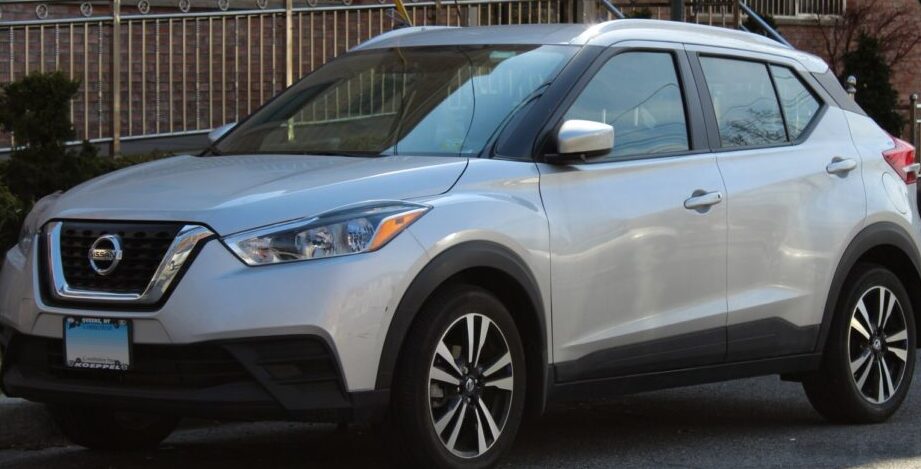
The Nissan Kicks (D15) 1.5i, producing 106 horsepower, was a subcompact SUV marketed by Nissan from 2019 to 2023. It served as the entry point into the Kicks lineup, designed to appeal to buyers prioritizing affordability and fuel efficiency in an urban environment. The D15 generation Kicks was a key part of Nissan’s strategy to gain a stronger foothold in the rapidly expanding subcompact SUV segment, particularly in North and South America, and select Asian markets. It represented a deliberate move towards providing a practical and economical option for first-time car buyers and those seeking a nimble city vehicle.
Powertrain & Engine Architecture
At the core of the Kicks 1.5i is the H4K engine, a 1.5-liter inline-four cylinder gasoline engine. This engine employs multi-port fuel injection and a naturally aspirated configuration, emphasizing fuel economy over peak performance. The H4K is recognized for its relatively uncomplicated design, which contributes to its overall reliability and ease of maintenance. It generates 106 horsepower at 5600 rpm and 142 Nm (104.73 lb-ft) of torque at 4000 rpm. The engine’s valvetrain incorporates dual overhead camshafts (DOHC) with four valves per cylinder, optimizing airflow and contributing to a respectable power output for its displacement. Power is delivered to the front wheels through a 5-speed manual transmission. This transmission choice was driven by cost considerations and simplicity, aligning with the Kicks’ value-focused positioning. The engine block is constructed from aluminum alloy to reduce weight, further aiding fuel efficiency.
Driving Characteristics
The 1.5i Kicks, equipped with the 5-speed manual transmission, delivers adequate, though not particularly sporty, performance. Acceleration is best described as measured, with a focus on smooth and predictable power delivery. The gear ratios are optimized for fuel economy, requiring the driver to utilize the engine’s rev range to access its maximum power. Compared to potential future turbocharged versions, the 1.5i feels noticeably less responsive during quick acceleration maneuvers. However, the Kicks’ relatively light weight helps to offset the engine’s modest power output. The manual transmission provides a more engaging driving experience than an automatic counterpart, granting drivers greater control over the engine’s RPMs. The clutch pedal is light and easy to modulate, making it accessible for both new and experienced drivers. Steering is light and precise, making it easy to navigate tight city streets.
Equipment & Trim Levels
The base Kicks 1.5i trim generally included standard features such as air conditioning, power windows and door locks, a basic audio system with Bluetooth connectivity, and steel wheels with wheel covers. Safety features were comprehensive for the segment, including ABS, stability control, and multiple airbags. Optional packages offered upgrades like alloy wheels, a touchscreen infotainment system with Apple CarPlay and Android Auto compatibility, a rearview camera, and automatic climate control. Interior upholstery was typically cloth, prioritizing durability and practicality over luxury. The dashboard design was functional and straightforward, emphasizing ease of use and intuitive controls. Higher trim levels added features like a leather-wrapped steering wheel and upgraded interior trim materials.
Chassis & Braking
The Kicks utilizes a front-wheel-drive chassis featuring an independent McPherson strut suspension in the front and a torsion beam suspension in the rear. This suspension setup is engineered to provide a comfortable ride quality, effectively absorbing bumps and minimizing body roll. The front brakes are disc brakes, providing adequate stopping power, while the rear brakes are drum brakes – a cost-saving measure common in this vehicle class. The steering system is electrically assisted, offering light and effortless steering feel, ideal for urban driving conditions. The Kicks’ relatively high ground clearance of 210 mm (8.27 inches) allows it to confidently navigate rough roads and uneven surfaces. The chassis was designed with a focus on minimizing weight to further enhance fuel efficiency and handling.
Market Reception & Comparison
The Nissan Kicks 1.5i was generally well-received by automotive critics as an affordable and practical subcompact SUV. Its fuel efficiency was a significant selling point, and its compact dimensions made it exceptionally easy to maneuver in congested urban environments. However, some reviewers noted its lack of outright power and the relatively basic nature of its interior appointments. Compared to other trims within the Kicks lineup, the 1.5i offered the most accessible price point but sacrificed performance and certain features. When benchmarked against competitors such as the Honda HR-V and Toyota C-HR, the Kicks 1.5i often distinguished itself through its lower price and superior fuel economy, although it generally lagged behind in terms of overall refinement and driving dynamics.
Legacy
The Nissan Kicks (D15) 1.5i has established a reputation as a reliable and durable vehicle in the used car market. The H4K engine is known for its longevity, and the relatively simple mechanical design minimizes the potential for costly repairs. While not a performance-oriented vehicle, the 1.5i Kicks remains a popular choice for budget-conscious buyers seeking a practical and fuel-efficient subcompact SUV. Its affordability and low running costs continue to make it an attractive option in the used car market, particularly for first-time car buyers or those seeking a dependable urban commuter. The Kicks’ enduring appeal lies in its ability to provide basic transportation without compromising on reliability or fuel economy.