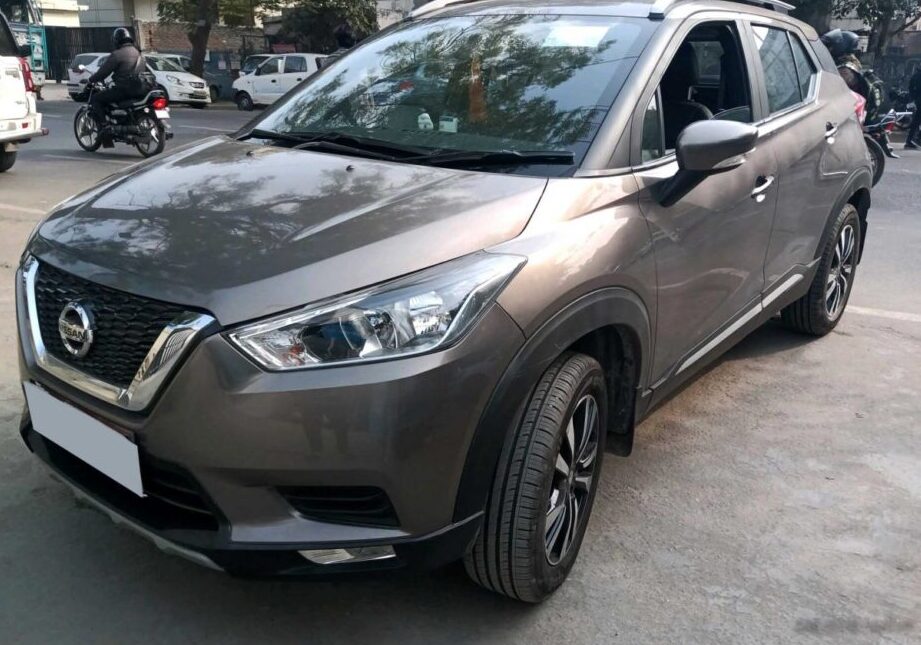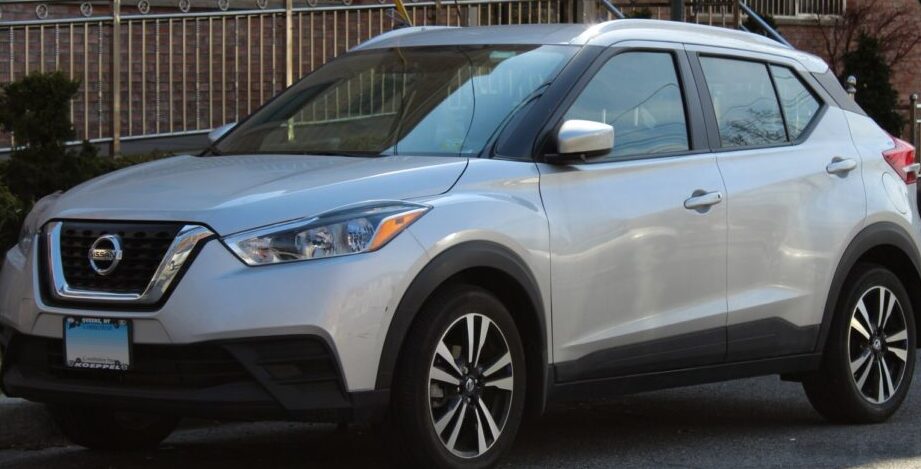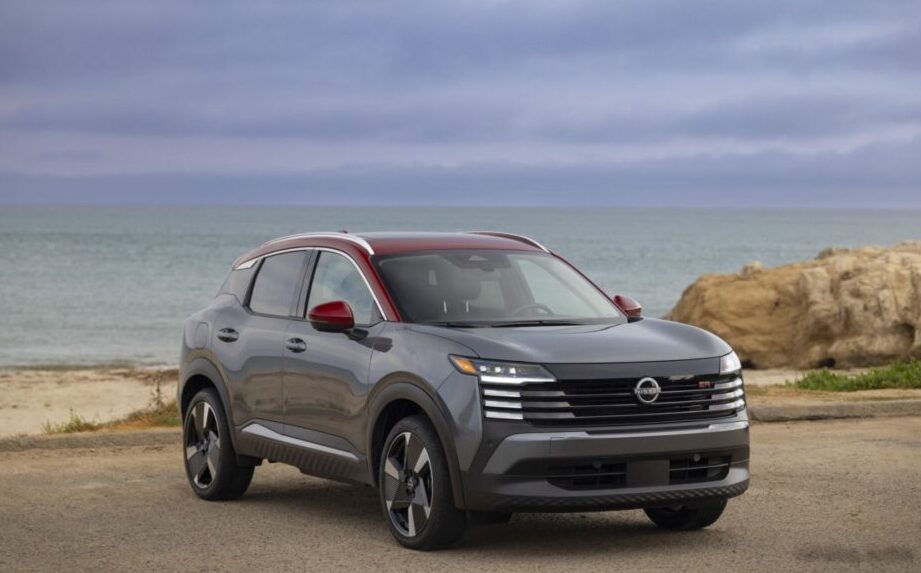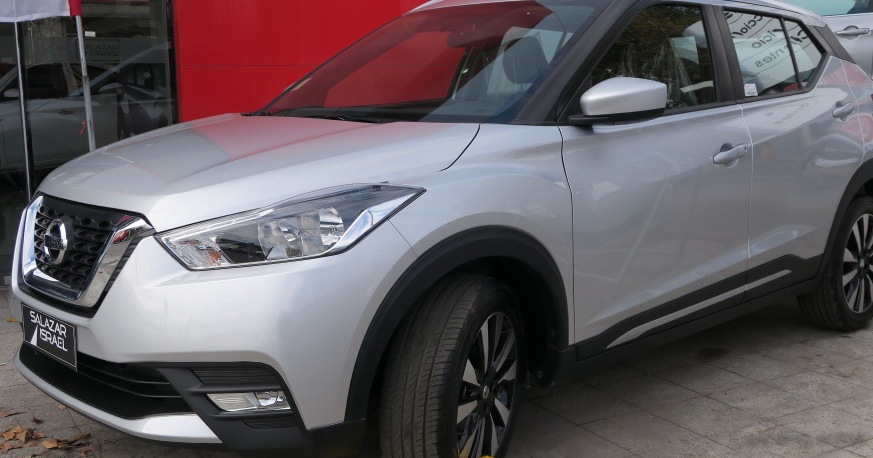
The Nissan Kicks (P15) 1.6, producing 120 horsepower with a Continuously Variable Transmission (CVT), was introduced in 2017 and remained in production through December 2020. Positioned as an entry-level subcompact SUV, the Kicks aimed to provide affordability and fuel efficiency within the burgeoning crossover market, particularly in regions like North and South America. It represented Nissan’s attempt to capture buyers seeking a practical, urban-focused vehicle with a modern aesthetic. The P15 Kicks was built on Nissan’s V-Platform, shared with other small Nissan models, and distinguished itself through its distinctive styling and focus on interior space for its class.
Technical Specifications
| Brand | Nissan |
| Model | Kicks |
| Generation | Kicks (P15) |
| Type (Engine) | 1.6 (120 Hp) CVT |
| Start of production | 2017 |
| End of production | December, 2020 |
| Powertrain Architecture | Internal Combustion engine |
| Body type | SUV |
| Seats | 5 |
| Doors | 5 |
| Fuel consumption (combined) | 6.1 l/100 km (38.6 US mpg, 46.3 UK mpg, 16.4 km/l) |
| CO2 emissions | 140 g/km |
| Fuel Type | Petrol (Gasoline) |
| Acceleration 0 – 100 km/h | 11.5 sec |
| Acceleration 0 – 62 mph | 11.5 sec |
| Acceleration 0 – 60 mph | 10.9 sec |
| Weight-to-power ratio | 9.3 kg/Hp, 107.5 Hp/tonne |
| Weight-to-torque ratio | 7.5 kg/Nm, 133.5 Nm/tonne |
| Power | 120 Hp |
| Power per litre | 75.1 Hp/l |
| Torque | 149 Nm (109.9 lb.-ft.) |
| Engine layout | Front, Transverse |
| Engine Model/Code | HR16DE |
| Engine displacement | 1598 cm3 (97.52 cu. in.) |
| Number of cylinders | 4 |
| Engine configuration | Inline |
| Cylinder Bore | 78 mm (3.07 in.) |
| Piston Stroke | 83.6 mm (3.29 in.) |
| Number of valves per cylinder | 4 |
| Fuel injection system | Multi-port manifold injection |
| Engine aspiration | Naturally aspirated engine |
| Engine oil capacity | 4.1 l (4.33 US qt | 3.61 UK qt) |
| Coolant | 6.95 l (7.34 US qt | 6.12 UK qt) |
| Kerb Weight | 1116-1135 kg (2460.36 – 2502.25 lbs.) |
| Trunk (boot) space – minimum | 432 l (15.26 cu. ft.) |
| Fuel tank capacity | 41 l (10.83 US gal | 9.02 UK gal) |
| Length | 4295 mm (169.09 in.) |
| Width | 1760 mm (69.29 in.) |
| Height | 1590 mm (62.6 in.) |
| Wheelbase | 2620 mm (103.15 in.) |
| Front track | 1520 mm (59.84 in.) |
| Rear (Back) track | 1535 mm (60.43 in.) |
| Ride height (ground clearance) | 200 mm (7.87 in.) |
| Drag coefficient (Cd) | 0.34 |
| Minimum turning circle (turning diameter) | 10.4 m (34.12 ft.) |
| Approach angle | 20.6° |
| Departure angle | 28.4° |
| Drivetrain Architecture | The Internal combustion engine (ICE) drives the front wheels of the vehicle. |
| Drive wheel | Front wheel drive |
| Number of gears and type of gearbox | automatic transmission CVT |
| Front suspension | Independent type McPherson |
| Rear suspension | Trailing arm, Coil spring, Elastic beam |
| Front brakes | Disc |
| Rear brakes | Drum |
| Assisting systems | ABS (Anti-lock braking system) |
| Steering type | Steering rack and pinion |
| Power steering | Electric Steering |
| Tires size | 205/60 R16; 205/55 R17 |
| Wheel rims size | 16; 17 |
INTRODUCTION
The Nissan Kicks (P15) 1.6 CVT, launched in 2017, was designed to appeal to a younger demographic and first-time SUV buyers. It slotted below the Rogue/X-Trail in Nissan’s lineup, offering a more affordable and fuel-efficient alternative. The Kicks was initially marketed heavily in South America and quickly gained traction in North America, where the demand for small crossovers was rapidly increasing. The P15 generation Kicks represented a departure from traditional Nissan SUV designs, adopting a more contemporary and energetic aesthetic. Production of this generation concluded in December 2020, making way for a redesigned second-generation model.
Powertrain & Engine Architecture
At the heart of the Kicks 1.6 CVT lies the HR16DE engine, a 1.6-liter inline-four cylinder gasoline engine. This engine is a member of Nissan’s HR series, known for its relatively simple design and focus on efficiency. The HR16DE utilizes multi-port fuel injection and features dual overhead camshafts (DOHC) with four valves per cylinder. The engine produces 120 horsepower and 149 Nm (109.9 lb-ft) of torque. The engine’s design prioritizes fuel economy over outright performance. Paired with the HR16DE is Nissan’s Xtronic CVT (Continuously Variable Transmission). This transmission lacks traditional gears, instead using a belt and pulley system to provide a seamless and continuously variable gear ratio. The CVT is tuned for fuel efficiency and smooth acceleration, but it can sometimes exhibit a “rubber band” feel during hard acceleration.
Driving Characteristics
The Kicks 1.6 CVT delivers adequate, though not exhilarating, performance. The 0-60 mph time of around 10.9 seconds reflects its focus on fuel economy rather than speed. The CVT transmission contributes to smooth acceleration, but the lack of distinct gear changes can feel somewhat disconnected. The engine’s torque peak is relatively low in the rev range, providing decent responsiveness in city driving. However, overtaking maneuvers on the highway require careful planning. The CVT’s programming prioritizes efficiency, meaning the engine often operates at lower RPMs, which can sometimes result in a sluggish response when requesting sudden bursts of power. Compared to potential higher-trim options (which weren’t offered on the P15 Kicks in many markets), the 1.6L CVT offered a more economical and accessible entry point into the Kicks lineup.
Equipment & Trim Levels
The Kicks 1.6 CVT typically came standard with features such as air conditioning, power windows and locks, a basic audio system with Bluetooth connectivity, and a rearview camera. Higher trim levels, such as the SV and SR, added features like alloy wheels, automatic climate control, a larger touchscreen display with Apple CarPlay and Android Auto compatibility, and advanced safety features like blind-spot monitoring and rear cross-traffic alert. Interior upholstery was typically cloth, with optional leather seats available on higher trims. Dashboard configuration was relatively simple and functional, with a focus on ease of use. Optional extras included a sunroof, upgraded audio systems, and various accessory packages.
Chassis & Braking
The Kicks 1.6 CVT utilizes a front-wheel-drive layout. The front suspension consists of an independent McPherson strut setup, while the rear suspension employs a torsion beam configuration. This setup prioritizes cost-effectiveness and space efficiency. The braking system features disc brakes on the front wheels and drum brakes on the rear wheels. ABS (Anti-lock Braking System) is standard. The Kicks’ relatively lightweight construction helps to compensate for the less sophisticated rear drum brakes. Stabilizer bars are included on both the front and rear axles to reduce body roll during cornering.
Market Reception & Comparison
The Nissan Kicks 1.6 CVT was generally well-received by critics for its affordability, fuel efficiency, and spacious interior. However, some reviewers criticized its lack of power and the somewhat unrefined driving experience. Compared to other subcompact SUVs like the Honda HR-V and Toyota C-HR, the Kicks offered a more competitive price point but lacked the same level of refinement and performance. Fuel economy was a key selling point, with the Kicks consistently achieving around 38.6 US mpg in combined driving. Reliability ratings were generally positive, with few major issues reported.
Legacy
The Nissan Kicks (P15) 1.6 CVT established a foothold for Nissan in the competitive subcompact SUV segment. The HR16DE engine and CVT transmission proved to be relatively reliable, and the Kicks remains a popular choice in the used car market. While not known for its performance, the P15 Kicks offered a practical and affordable transportation solution for budget-conscious buyers. Its success paved the way for the redesigned second-generation Kicks, which builds upon the strengths of the original while addressing some of its shortcomings.