
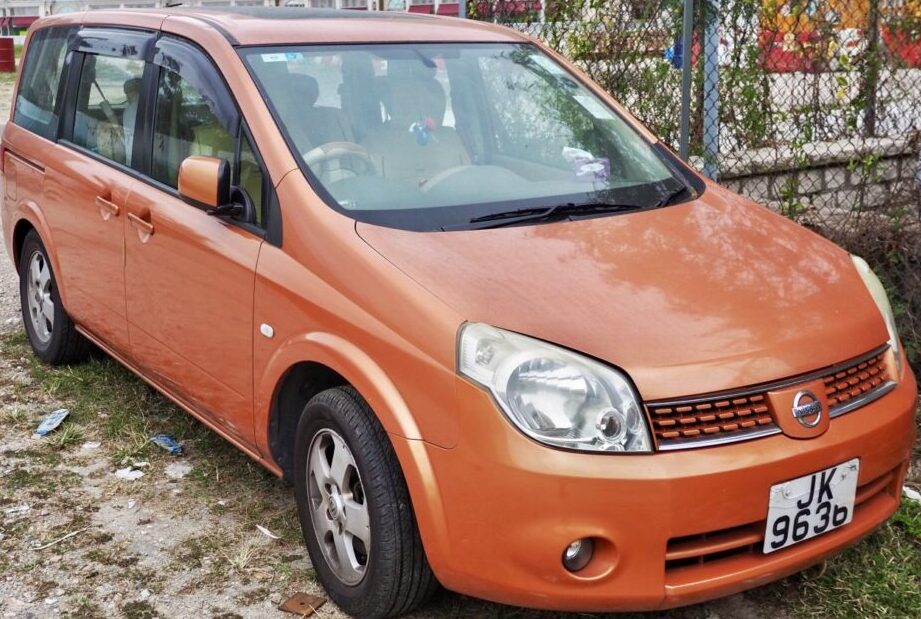
The Nissan Lafesta 2.0 (129 Hp) 4WD was a compact minivan produced by Nissan between December 2004 and 2007. Positioned as a versatile family vehicle, it was primarily marketed in Japan and select Asian markets. The Lafesta occupied a niche between smaller kei cars and larger, more expensive minivans, offering a balance of space, practicality, and affordability. This particular variant, equipped with the MR20DE 2.0-liter engine and a four-wheel-drive system, represented a mid-range offering within the Lafesta lineup, appealing to buyers seeking enhanced traction and a more refined driving experience compared to the base models.
Technical Specifications
| Brand | Nissan |
| Model | Lafesta |
| Generation | Lafesta |
| Type (Engine) | 2.0 (129 Hp) 4WD |
| Start of production | December, 2004 |
| End of production | 2007 |
| Powertrain Architecture | Internal Combustion engine |
| Body type | Minivan |
| Seats | 7 |
| Doors | 5 |
| Fuel consumption (combined) | 7 l/100 km (33.6 US mpg, 40.4 UK mpg, 14.3 km/l) |
| Fuel Type | Petrol (Gasoline) |
| Weight-to-power ratio | 11.6 kg/Hp, 86 Hp/tonne |
| Weight-to-torque ratio | 8 kg/Nm, 124.7 Nm/tonne |
| Power | 129 Hp @ 5200 rpm |
| Power per litre | 64.6 Hp/l |
| Torque | 187 Nm @ 4000 rpm (137.92 lb.-ft. @ 4000 rpm) |
| Engine layout | Front, Transverse |
| Engine Model/Code | MR20DE |
| Engine displacement | 1997 cm3 (121.86 cu. in.) |
| Number of cylinders | 4 |
| Engine configuration | Inline |
| Cylinder Bore | 84 mm (3.31 in.) |
| Piston Stroke | 90.1 mm (3.55 in.) |
| Compression ratio | 10:1 |
| Number of valves per cylinder | 4 |
| Fuel injection system | Multi-port manifold injection |
| Engine aspiration | Naturally aspirated engine |
| Valvetrain | DOHC |
| Kerb Weight | 1500 kg (3306.93 lbs.) |
| Fuel tank capacity | 55 l (14.53 US gal | 12.1 UK gal) |
| Length | 4495 mm (176.97 in.) |
| Width | 1695 mm (66.73 in.) |
| Height | 1615 mm (63.58 in.) |
| Wheelbase | 2700 mm (106.3 in.) |
| Front track | 1485 mm (58.46 in.) |
| Rear (Back) track | 1475 mm (58.07 in.) |
| Minimum turning circle | 10.2 m (33.46 ft.) |
| Drive wheel | All wheel drive (4×4) |
| Front brakes | Ventilated discs |
| Rear brakes | Drum |
| Assisting systems | ABS (Anti-lock braking system) |
| Tires size | 195/60R15 88H |
Powertrain & Engine Architecture
The heart of the Lafesta 2.0 4WD is the MR20DE engine, a 1.997-liter inline-four cylinder gasoline engine. This engine utilizes a dual overhead camshaft (DOHC) valvetrain with four valves per cylinder, contributing to its respectable power output for its displacement. The MR20DE employs multi-point fuel injection, delivering fuel directly into the intake ports. The engine’s design prioritized smooth operation and fuel efficiency over outright performance. The transmission paired with the MR20DE in this variant is a four-speed automatic. While not the most modern transmission by today’s standards, it was known for its reliability and provided adequate shifting performance for everyday driving. The four-wheel-drive system is a viscous coupling system, automatically engaging the rear wheels when slippage is detected at the front, enhancing stability in adverse weather conditions.
Driving Characteristics
The Lafesta 2.0 4WD offered a comfortable and predictable driving experience. With 129 horsepower and 187 Nm (137.92 lb-ft) of torque, acceleration was adequate for merging onto highways and navigating city streets, but it wasn’t particularly sporty. The four-speed automatic transmission, while smooth, lacked the responsiveness of more modern transmissions with a greater number of gears. The 4WD system provided enhanced grip, particularly on slippery surfaces, making it a suitable choice for regions with inclement weather. Compared to the base 1.6-liter models, the 2.0-liter engine offered a noticeable improvement in performance, especially when fully loaded with passengers and cargo. However, it didn’t match the more spirited driving experience of the later, sportier Nissan models.
Equipment & Trim Levels
The Lafesta 2.0 4WD typically came equipped with a range of standard features designed to enhance comfort and convenience. These included air conditioning, power windows, power door locks, and a basic audio system. Higher trim levels offered options such as alloy wheels, a more advanced audio system with CD player, and upgraded interior upholstery. The interior was designed with practicality in mind, featuring durable materials and a flexible seating configuration. The seven-seat layout provided ample space for families, with the third-row seats being foldable to maximize cargo capacity. Optional extras included a sunroof, navigation system, and woodgrain interior trim.
Chassis & Braking
The Lafesta’s chassis was designed to provide a comfortable ride and stable handling. The front suspension utilized MacPherson struts, while the rear suspension employed a torsion beam setup. This configuration offered a good balance between ride comfort and handling precision. The braking system featured ventilated discs on the front wheels and drum brakes on the rear wheels. Anti-lock Braking System (ABS) was standard, enhancing safety by preventing wheel lockup during hard braking. The tires were typically 195/60R15, providing a good compromise between comfort and grip.
Market Reception & Comparison
The Nissan Lafesta 2.0 4WD was generally well-received in its target markets. Critics praised its spacious interior, comfortable ride, and practical features. The 4WD system was seen as a valuable asset for buyers in regions with harsh winters or challenging road conditions. Compared to other minivans in its class, the Lafesta offered a competitive level of equipment and a reasonable price point. However, some reviewers noted that the engine lacked the refinement and power of some of its rivals. Fuel economy was considered average for its class, at around 7 liters per 100 kilometers (33.6 US mpg). Compared to the 1.6-liter versions, the 2.0-liter offered a significant performance boost, but at the cost of slightly reduced fuel efficiency.
Legacy
The Nissan Lafesta, while not a groundbreaking vehicle, established itself as a reliable and practical family minivan. The MR20DE engine, in particular, proved to be a durable and long-lasting powerplant. Today, used examples of the Lafesta 2.0 4WD are relatively common and can be found at affordable prices. The vehicle’s simplicity and robust construction contribute to its continued reliability. While it may not offer the latest technology or features, the Lafesta remains a viable option for buyers seeking a spacious, practical, and affordable minivan. Its 4WD system continues to be a desirable feature for those living in areas with challenging weather conditions, and the MR20DE engine is known for its relatively low maintenance costs.
