
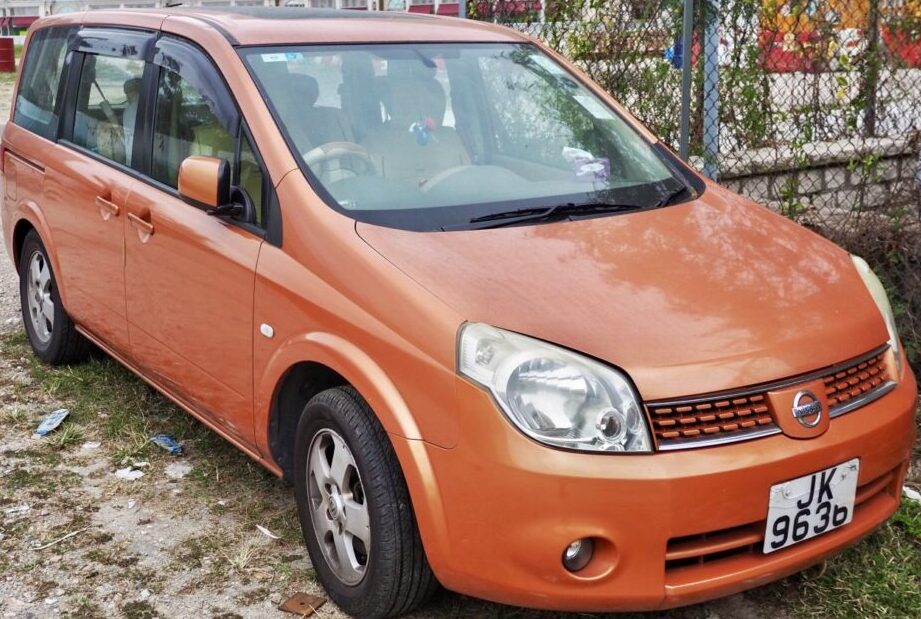
The Nissan Lafesta 2.0 2WD (137 Hp) was a front-wheel drive minivan produced by Nissan between December 2004 and 2007. Positioned as a practical and spacious family vehicle, the Lafesta aimed to compete in the increasingly popular compact minivan segment, particularly in markets like Japan and Australia. This specific 2.0-liter, two-wheel drive variant represented a mid-range offering within the Lafesta lineup, slotting between the more basic 1.6-liter models and potentially higher-specification variants depending on regional availability. It was built on Nissan’s ‘C’ platform, shared with other models of the era, and offered a seven-seat configuration as standard.
Technical Specifications
| Brand | Nissan |
| Model | Lafesta |
| Generation | Lafesta |
| Type (Engine) | 2.0 2WD (137 Hp) |
| Start of production | December, 2004 |
| End of production | 2007 |
| Powertrain Architecture | Internal Combustion engine |
| Body type | Minivan |
| Seats | 7 |
| Doors | 5 |
| Fuel consumption (combined) | 7 l/100 km (33.6 US mpg, 40.4 UK mpg, 14.3 km/l) |
| Fuel Type | Petrol (Gasoline) |
| Weight-to-power ratio | 10.9 kg/Hp, 91.3 Hp/tonne |
| Weight-to-torque ratio | 7.5 kg/Nm, 133.3 Nm/tonne |
| Power | 137 Hp @ 5200 rpm |
| Power per litre | 68.6 Hp/l |
| Torque | 200 Nm @ 4400 rpm (147.51 lb.-ft. @ 4400 rpm) |
| Engine layout | Front, Transverse |
| Engine Model/Code | MR20DE |
| Engine displacement | 1997 cm3 (121.86 cu. in.) |
| Number of cylinders | 4 |
| Engine configuration | Inline |
| Cylinder Bore | 84 mm (3.31 in.) |
| Piston Stroke | 90.1 mm (3.55 in.) |
| Compression ratio | 10:1 |
| Number of valves per cylinder | 4 |
| Fuel injection system | Multi-port manifold injection |
| Engine aspiration | Naturally aspirated engine |
| Valvetrain | DOHC |
| Kerb Weight | 1500 kg (3306.93 lbs.) |
| Fuel tank capacity | 55 l (14.53 US gal | 12.1 UK gal) |
| Length | 4495 mm (176.97 in.) |
| Width | 1695 mm (66.73 in.) |
| Height | 1615 mm (63.58 in.) |
| Wheelbase | 2700 mm (106.3 in.) |
| Front track | 1485 mm (58.46 in.) |
| Rear (Back) track | 1475 mm (58.07 in.) |
| Minimum turning circle | 10.2 m (33.46 ft.) |
| Drivetrain Architecture | The Internal combustion engine (ICE) drives the front wheels of the vehicle. |
| Drive wheel | Front wheel drive |
| Front brakes | Ventilated discs |
| Rear brakes | Drum |
| Assisting systems | ABS (Anti-lock braking system) |
| Tires size | 195/60R15 88H |
Powertrain & Engine Architecture
The heart of the Lafesta 2.0 2WD was the MR20DE engine, a 1.997-liter inline-four cylinder gasoline engine. This engine was a member of Nissan’s MR series, known for its relatively simple and robust design. The MR20DE featured a dual overhead camshaft (DOHC) valvetrain with four valves per cylinder, contributing to its respectable power output for its displacement. Fuel delivery was handled by a multi-port fuel injection system, providing precise fuel metering for efficient combustion. The engine’s 137 horsepower peak was achieved at 5200 rpm, while its 200 Nm (147.51 lb-ft) of torque was available at 4400 rpm. This engine was paired with a four-speed automatic transmission, chosen for its ease of use and suitability for family-oriented drivers. The transmission was tuned for smooth shifts and adequate acceleration, prioritizing comfort over outright performance. The four-speed automatic, while not particularly advanced by modern standards, was a common choice in this segment for its reliability and relatively low cost.
Driving Characteristics
The Lafesta 2.0 2WD, with its 137 hp and automatic transmission, offered a comfortable and predictable driving experience. Acceleration was adequate for everyday driving situations, but it wasn’t particularly sporty. The four-speed automatic transmission, while smooth, lacked the responsiveness of more modern transmissions with a greater number of gears. The gear ratios were optimized for fuel efficiency and smooth cruising rather than quick acceleration. Compared to a hypothetical manual transmission version, the automatic would have resulted in a slight decrease in fuel economy and a less engaging driving experience. The automatic transmission’s shift points were programmed to prioritize comfort and minimize harshness. Compared to other Lafesta trims, such as those with smaller engines, the 2.0-liter offered noticeably more power, making it better suited for carrying a full load of passengers and luggage. However, it didn’t possess the same level of performance as potentially higher-spec variants, if offered, with larger engines or sport-tuned suspensions. The steering was light and easy, making it well-suited for urban driving.
Equipment & Trim Levels
The standard equipment level for the Lafesta 2.0 2WD typically included features such as air conditioning, power windows, power door locks, and a basic audio system. Interior upholstery was generally cloth, with options for upgraded materials depending on the specific trim package. Dashboard configuration was functional and straightforward, prioritizing usability over aesthetic flair. The instrument cluster was clearly laid out and easy to read. Optional extras could include alloy wheels, a sunroof, and a more advanced audio system with CD player. Safety features typically included ABS (Anti-lock Braking System) as standard, with airbags available depending on the market and trim level. Higher trim levels might have included features like automatic climate control and rear parking sensors.
Chassis & Braking
The Lafesta 2.0 2WD utilized a conventional front-wheel drive chassis with independent suspension in the front – typically a MacPherson strut setup – and a torsion beam suspension in the rear. The front brakes were ventilated discs, providing adequate stopping power, while the rear brakes were drum brakes, a cost-saving measure common in this class of vehicle. The suspension was tuned for comfort, prioritizing a smooth ride over sharp handling. Stabilizer bars were present, helping to reduce body roll during cornering, but the overall handling characteristics were geared towards everyday usability rather than sporty performance. The relatively soft suspension settings contributed to a comfortable ride quality, even on uneven road surfaces.
Market Reception & Comparison
The Nissan Lafesta 2.0 2WD was generally well-received as a practical and spacious family vehicle. Critics praised its comfortable ride, generous interior space, and relatively fuel-efficient engine. However, some reviewers noted that the automatic transmission felt somewhat dated and that the overall driving experience lacked excitement. Compared to competitors like the Toyota Wish or Honda Freed, the Lafesta offered a competitive level of space and practicality, but may have lacked the same level of brand recognition or refinement. The Toyota Wish, for example, often had a slightly more premium feel and a more engaging driving experience. Fuel economy was considered reasonable for its class, averaging around 7 liters per 100 kilometers (33.6 US mpg). The Lafesta’s seven-seat configuration was a key selling point for families needing extra passenger capacity.
Legacy
The Nissan Lafesta, while not a groundbreaking vehicle, served as a solid and reliable family minivan for its time. The MR20DE engine proved to be a durable and relatively trouble-free unit, and the four-speed automatic transmission, while not the most advanced, was generally reliable. In the used car market, the Lafesta 2.0 2WD remains a relatively affordable option for those seeking a spacious and practical vehicle. Maintenance costs are generally reasonable, and parts availability is typically good. While it may not offer the latest technology or features, the Lafesta 2.0 2WD continues to provide a comfortable and dependable transportation solution for families. Its simple design and robust components contribute to its longevity, making it a viable option for budget-conscious buyers.
