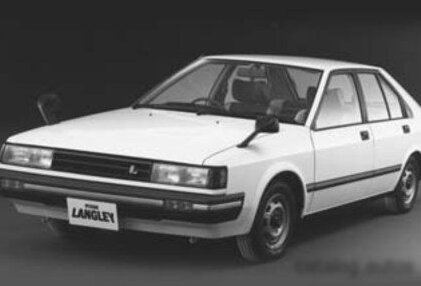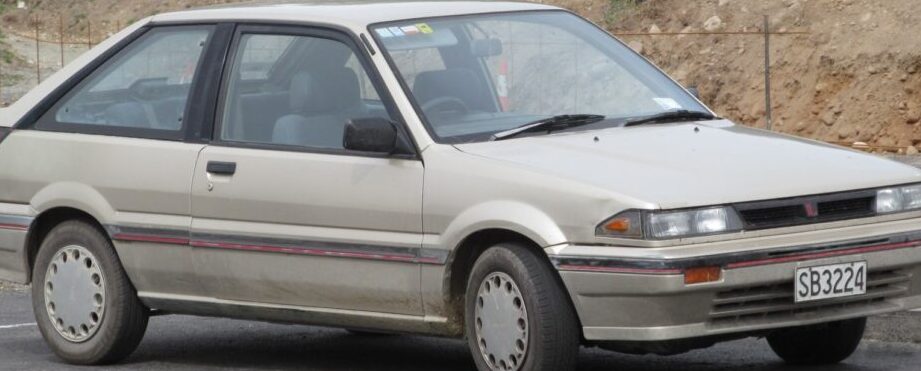
The Nissan Langley N13 1.5, produced between 1986 and 1990, represented a significant entry in Nissan’s compact hatchback offerings, primarily targeted at the Japanese domestic market (JDM). This variant, powered by a 1.5-liter gasoline engine producing 73 horsepower, served as the base model within the N13 Langley lineup. It was designed to provide affordable and practical transportation, emphasizing fuel efficiency and ease of use over outright performance. The N13 generation Langley was a rebadged and slightly modified version of the Nissan Liberta Villa, itself a derivative of the B11 Sunny, and played a role in Nissan’s strategy to offer diverse options within the burgeoning compact car segment.
Technical Specifications
| Brand | Nissan |
| Model | Langley |
| Generation | Langley N13 |
| Type (Engine) | 1.5 (73 Hp) |
| Start of production | 1986 |
| End of production | 1990 |
| Powertrain Architecture | Internal Combustion engine |
| Body type | Hatchback |
| Seats | 5 |
| Fuel Type | Petrol (Gasoline) |
| Weight-to-power ratio | 12.6 kg/Hp, 79.3 Hp/tonne |
| Power | 73 Hp @ 5600 rpm |
| Power per litre | 49.1 Hp/l |
| Engine displacement | 1487 cm3 |
| Engine displacement (cu. in.) | 90.74 cu. in. |
| Engine aspiration | Naturally aspirated engine |
| Kerb Weight | 920 kg |
| Kerb Weight (lbs) | 2028.25 lbs |
| Length | 4035 mm |
| Length (in.) | 158.86 in. |
| Width | 1655 mm |
| Width (in.) | 65.16 in. |
| Height | 1380 mm |
| Height (in.) | 54.33 in. |
| Wheelbase | 2430 mm |
| Wheelbase (in.) | 95.67 in. |
Powertrain & Engine Architecture
The Langley N13 1.5 utilized Nissan’s E15S engine, a 1.5-liter inline-four cylinder gasoline engine. This engine was a relatively simple design, featuring a single overhead camshaft (SOHC) valvetrain and two valves per cylinder. Fuel delivery was managed by a carburetor, a common feature for vehicles of this era and price point. The E15S engine was known for its reliability and ease of maintenance, rather than its high performance. The engine’s 73 horsepower output was achieved at 5600 rpm, and it produced approximately 88 lb-ft of torque. The transmission paired with this engine was typically a three-speed automatic, designed for smooth and comfortable operation. This automatic transmission was not known for its responsiveness or fuel efficiency compared to manual options, but it catered to drivers prioritizing convenience.
Driving Characteristics
The driving experience in the Langley N13 1.5 was characterized by its modest performance. Acceleration was adequate for city driving and highway merging, but it wasn’t particularly brisk. The three-speed automatic transmission contributed to a relatively relaxed driving style, with noticeable gear changes. The gear ratios were optimized for fuel economy rather than spirited driving. Compared to other Langley variants, such as those equipped with larger engines or manual transmissions, the 1.5-liter automatic model felt noticeably slower. The suspension was tuned for comfort, providing a reasonably smooth ride over typical road surfaces, but it didn’t offer particularly sporty handling. Steering was light and easy, making it maneuverable in urban environments.
Equipment & Trim Levels
As the base model, the Langley N13 1.5 typically came with a fairly basic level of equipment. Standard features generally included cloth upholstery, a simple dashboard layout with analog gauges, and manual windows and door locks. Air conditioning was often an optional extra, as were features like a radio/cassette player. The interior was designed with practicality in mind, offering sufficient space for five passengers and a reasonable amount of cargo capacity for a compact hatchback. Higher trim levels of the Langley N13 offered upgrades such as power windows, upgraded upholstery, and more sophisticated audio systems. The 1.5 model was often seen as a starting point for buyers who prioritized affordability and basic transportation.
Chassis & Braking
The Langley N13 featured a relatively conventional chassis design, with a MacPherson strut front suspension and a torsion beam rear suspension. This setup provided a good balance of ride comfort and handling for a vehicle in its class. Braking was typically accomplished with front disc brakes and rear drum brakes. The braking system was adequate for normal driving conditions, but it lacked the stopping power of more advanced systems found on higher-end vehicles. The relatively light weight of the Langley N13 (920 kg or 2028 lbs) helped to compensate for the limitations of the braking system. Stabilizer bars were often omitted on the base 1.5 model to further reduce cost.
Market Reception & Comparison
The Nissan Langley N13 1.5 was generally well-received as an affordable and reliable compact car. Critics noted its fuel efficiency and ease of use, but also pointed out its lack of performance. Compared to other vehicles in its class, such as the Toyota Corolla and Honda Civic, the Langley N13 offered a competitive price point and a comfortable ride. However, it often lagged behind in terms of performance and features. Within the Langley lineup, the 1.5-liter automatic model was positioned as the entry-level option, appealing to buyers who prioritized affordability and convenience over driving excitement. Fuel economy was a key selling point, averaging around 35-40 mpg in real-world driving conditions.
Legacy
The Nissan Langley N13 1.5, while not a particularly groundbreaking vehicle, holds a place in automotive history as a representative of the affordable and practical compact cars of the late 1980s. The E15S engine proved to be remarkably durable, and many examples of the Langley N13 1.5 are still on the road today. In the used car market, these vehicles are often sought after by enthusiasts looking for a simple, reliable, and inexpensive mode of transportation. Maintenance costs are generally low, and parts availability is still reasonable. While not a collector’s item, the Langley N13 1.5 remains a testament to Nissan’s commitment to providing affordable and dependable vehicles to the masses. Its simplicity and reliability have contributed to its enduring appeal among budget-conscious drivers and classic car enthusiasts alike.