
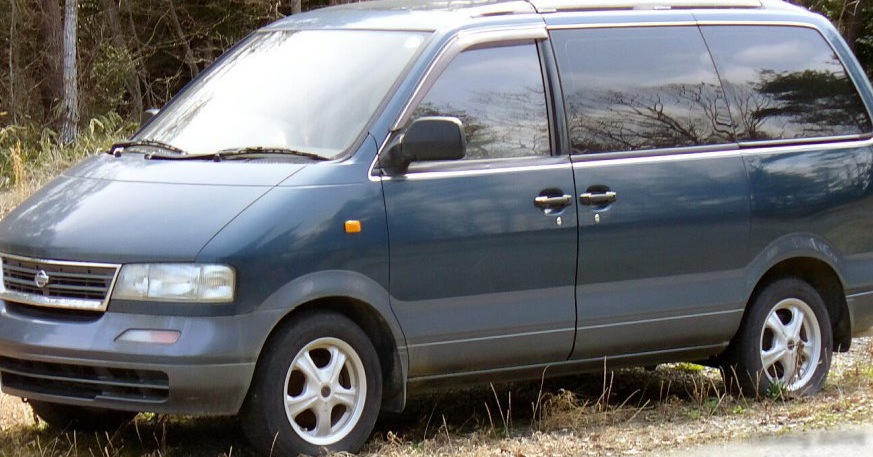
The Nissan Largo (W30), specifically the 2.0 TDi variant with 100 horsepower and an automatic transmission, was a significant model within Nissan’s lineup from 1990 to 2000. Positioned as a spacious and practical family vehicle, the W30 Largo catered to a growing demand for multi-purpose vehicles, particularly in markets like Japan, Australia, and parts of Europe. This iteration of the Largo, utilizing a diesel engine and automatic gearbox, aimed to provide a comfortable and economical transportation option for larger families. It represented a key offering in the increasingly competitive minivan segment.
Technical Specifications
| Brand | Nissan |
| Model | Largo |
| Generation | Largo (W30) |
| Type (Engine) | 2.0 TDi (100 Hp) Automatic |
| Start of production | 1990 |
| End of production | 2000 |
| Powertrain Architecture | Internal Combustion engine |
| Body type | Minivan |
| Seats | 7 |
| Doors | 5 |
| Fuel consumption (urban) | 11.7 l/100 km (20.1 US mpg) |
| Fuel consumption (extra urban) | 6.67 l/100 km (35.3 US mpg) |
| Fuel Type | Diesel |
| Weight-to-power ratio | 16.2 kg/Hp |
| Weight-to-torque ratio | 9.2 kg/Nm |
| Power | 100 Hp @ 4400 rpm |
| Power per litre | 50.7 Hp/l |
| Torque | 177 Nm @ 2400 rpm (130.55 lb.-ft. @ 2400 rpm) |
| Engine layout | Front, Transverse |
| Engine displacement | 1974 cm3 (120.46 cu. in.) |
| Number of cylinders | 4 |
| Engine configuration | Inline |
| Cylinder Bore | 84.5 mm (3.33 in.) |
| Piston Stroke | 88 mm (3.46 in.) |
| Compression ratio | 22.2:1 |
| Number of valves per cylinder | 4 |
| Fuel injection system | Precombustion chamber injection |
| Engine aspiration | Turbocharger |
| Valvetrain | OHC |
| Kerb Weight | 1620 kg (3571.49 lbs.) |
| Max. weight | 2380 kg (5247 lbs.) |
| Max load | 760 kg (1675.51 lbs.) |
| Fuel tank capacity | 60 l (15.85 US gal) |
| Length | 4610 mm (181.5 in.) |
| Width | 1745 mm (68.7 in.) |
| Height | 1905 mm (75 in.) |
| Wheelbase | 2735 mm (107.68 in.) |
| Front track | 1485 mm (58.46 in.) |
| Rear track | 1480 mm (58.27 in.) |
| Drivetrain Architecture | Front wheel drive |
| Number of gears | 4 |
| Gearbox type | Automatic transmission |
| Front suspension | Coil spring |
| Rear suspension | Coil spring |
| Front brakes | Disc |
| Rear brakes | Disc |
| Assisting systems | ABS (Anti-lock braking system) |
| Steering type | Steering rack and pinion |
| Power steering | Hydraulic |
| Tires size | 195/70 R14 |
| Wheel rims size | 14 |
Powertrain & Engine Architecture
The heart of the Largo 2.0 TDi was Nissan’s 1974cc inline-four cylinder diesel engine. This engine, often identified by specific internal codes depending on the market, utilized a precombustion chamber injection system. This system, common in diesel engines of the era, involved injecting fuel into a small pre-chamber within the cylinder head, which then ignited the main combustion chamber. The engine was turbocharged, enhancing power output and improving driveability. The overhead camshaft (OHC) valvetrain controlled four valves per cylinder, optimizing gas flow. The four-speed automatic transmission was chosen for its convenience and ease of use, catering to the target demographic of family buyers. While not a performance-oriented setup, the combination aimed for a balance of adequate power and fuel efficiency.
Driving Characteristics
The 100 horsepower and 177 Nm (130.55 lb-ft) of torque delivered by the 2.0 TDi engine, coupled with the four-speed automatic transmission, resulted in a driving experience focused on practicality rather than sportiness. Acceleration was modest, but sufficient for everyday driving and highway cruising, even when fully loaded with passengers and cargo. The automatic transmission, while providing convenience, did exhibit some of the characteristics common to older automatic gearboxes – noticeable shifts and a slight delay in response. Compared to manual transmission versions of the Largo, or those equipped with more powerful gasoline engines, the 2.0 TDi Automatic offered a more relaxed and less engaging driving experience. However, its fuel economy was a significant advantage.
Equipment & Trim Levels
The Largo 2.0 TDi Automatic typically came with a reasonable level of standard equipment, reflecting its positioning as a family vehicle. This included power steering, central locking, and an AM/FM radio. Higher trim levels offered features such as air conditioning, power windows, and upgraded interior upholstery. The interior was designed with practicality in mind, featuring durable materials and a flexible seating arrangement. The seven-seat configuration was a key selling point, allowing for the transportation of large families or groups. Optional extras often included alloy wheels and a sunroof.
Chassis & Braking
The W30 Largo utilized a relatively simple chassis design, featuring coil spring suspension at both the front and rear. This setup prioritized ride comfort over sporty handling. The front brakes were discs, providing adequate stopping power, while the rear brakes were also discs, a feature that was more common on higher-spec models. An Anti-lock Braking System (ABS) was often included as standard equipment, enhancing safety. The steering was a rack and pinion system with hydraulic assistance, providing relatively light and easy steering.
Market Reception & Comparison
The Nissan Largo 2.0 TDi Automatic received generally positive reviews for its spaciousness, practicality, and fuel efficiency. Critics noted that the diesel engine was relatively quiet for its type, and the automatic transmission made it easy to drive in urban environments. However, some reviewers pointed out the lack of performance compared to gasoline-powered rivals. Compared to other trims in the Largo lineup, the 2.0 TDi Automatic offered the best fuel economy but the slowest acceleration. It appealed to buyers who prioritized economy and practicality over driving excitement.
Legacy
The Nissan Largo W30, particularly the 2.0 TDi Automatic variant, has developed a reputation for reliability, especially the diesel engine itself. While finding parts can become increasingly challenging as the vehicle ages, the engine is known to be durable and capable of high mileage with proper maintenance. In the used car market, these Largos are often sought after by buyers looking for an affordable and spacious family vehicle. The combination of a diesel engine and automatic transmission, while not the most exciting, proved to be a practical and economical choice for many families during its production run, and the W30 Largo remains a recognizable and respected vehicle in many markets today.
