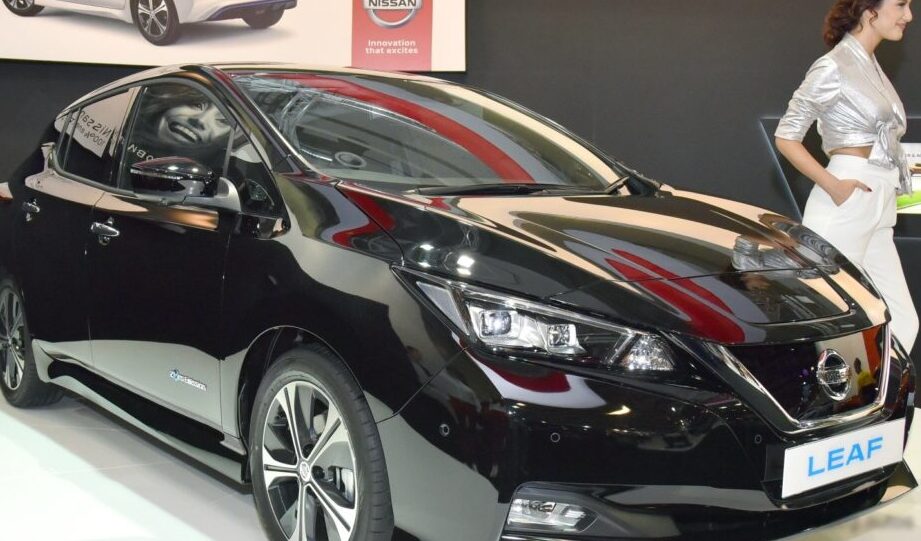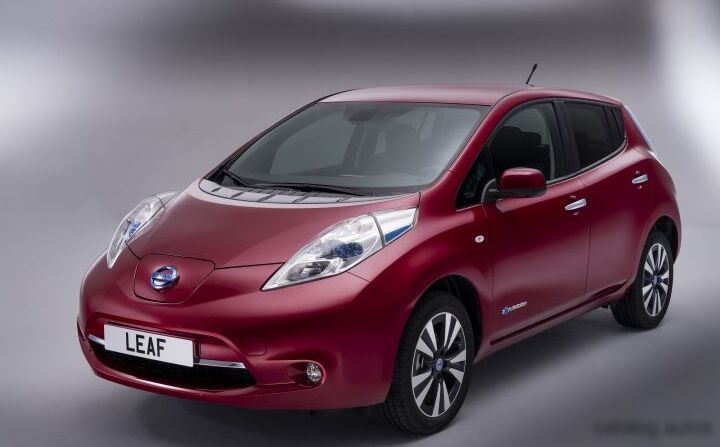
The Nissan Leaf, introduced in 2010, marked Nissan’s entry into the burgeoning electric vehicle (EV) market. The first generation, designated the ZE0, was produced from 2010 through 2017, undergoing several revisions during its lifespan. The 30 kWh variant, producing 109 horsepower, was introduced in October 2015 and remained in production until December 2017. This version represented a significant upgrade in range compared to the original Leaf, addressing a key criticism of the initial model and solidifying the Leaf’s position as a practical, everyday EV for the North American and European markets. It occupied a mid-range position within the first-generation Leaf lineup, offering a balance between affordability and extended driving range.
Technical Specifications
| Brand | Nissan |
| Model | Leaf |
| Generation | Leaf I (ZE0) |
| Type (Engine) | 30 kWh (109 Hp) |
| Start of production | October, 2015 |
| End of production | December, 2017 |
| Powertrain Architecture | BEV (Electric Vehicle) |
| Body type | Hatchback |
| Seats | 5 |
| Doors | 5 |
| Fuel Type | Electricity |
| Acceleration 0 – 100 km/h | 11.5 sec |
| Acceleration 0 – 62 mph | 11.5 sec |
| Acceleration 0 – 60 mph | 10.9 sec |
| Maximum speed | 144 km/h (89.48 mph) |
| Emission standard | ZEV |
| Weight-to-power ratio | 14 kg/Hp, 71.5 Hp/tonne |
| Weight-to-torque ratio | 6 kg/Nm, 166.6 Nm/tonne |
| Gross battery capacity | 30 kWh |
| Net (usable) battery capacity | 28 kWh |
| Battery voltage | 360 V |
| Battery technology | Lithium-ion (Li-Ion) |
| Battery weight | 314 kg (692.25 lbs) |
| Battery location | Below the floor |
| All-electric range (NEDC) | 250 km (155.34 mi) |
| Average Energy consumption (NEDC) | 15 kWh/100 km (24.14 kWh/100 mi) |
| MPGe | 140 |
| km/kWh | 6.7 |
| mi/kWh | 4.1 |
| Electric motor power | 109 Hp @ 3008-10000 rpm |
| Electric motor Torque | 254 Nm @ 0-3008 rpm (187.34 lb.-ft. @ 0-3008 rpm) |
| Electric motor model/code | EM57 |
| Maximum revolutions of the electric motor | 10500 rpm |
| Electric motor location | Front axle, Transverse |
| System power | 109 Hp @ 3008-10000 rpm |
| System torque | 254 Nm @ 0-3008 rpm (187.34 lb.-ft. @ 0-3008 rpm) |
| Kerb Weight | 1525 kg (3362.05 lbs) |
| Max. weight | 1970 kg (4343.11 lbs) |
| Max load | 445 kg (981.06 lbs) |
| Trunk (boot) space – minimum | 370 l (13.07 cu. ft.) |
| Trunk (boot) space – maximum | 720 l (25.43 cu. ft.) |
| Length | 4445 mm (175 in) |
| Width | 1770 mm (69.69 in) |
| Width including mirrors | 1967 mm (77.44 in) |
| Height | 1550 mm (61.02 in) |
| Wheelbase | 2700 mm (106.3 in) |
| Front track | 1540 mm (60.63 in) |
| Rear (Back) track | 1535 mm (60.43 in) |
| Front overhang | 960 mm (37.8 in) |
| Rear overhang | 785 mm (30.91 in) |
| Ride height (ground clearance) | 160 mm (6.3 in) |
| Drag coefficient (Cd) | 0.28 |
| Minimum turning circle (turning diameter) | 10.4 m (34.12 ft) |
| Drivetrain Architecture | One electric motor drives the front wheels |
| Drive wheel | Front wheel drive |
| Number of gears and type of gearbox | 1 gears, automatic transmission |
| Front suspension | Coil spring, Independent type McPherson, Transverse stabilizer |
| Rear suspension | Transverse stabilizer, Coil spring, Torsion |
| Front brakes | Ventilated discs |
| Rear brakes | Ventilated discs |
| Assisting systems | ABS (Anti-lock braking system) |
| Steering type | Steering rack and pinion |
| Power steering | Electric Steering |
| Tires size | 205/55 R16; 215/50 R17 |
| Wheel rims size | 6.5J x 16; 6.5J x 17 |
Powertrain & Engine Architecture
The Nissan Leaf 30 kWh is powered by a single electric motor, designated EM57, producing 109 horsepower and 254 Nm (187 lb-ft) of torque. The motor is transversely mounted at the front of the vehicle, driving the front wheels. The 30 kWh battery pack, utilizing lithium-ion chemistry, is located under the floor of the vehicle, contributing to a low center of gravity and improved handling. The battery operates at 360 volts. The Leaf employs a single-speed automatic transmission, typical of electric vehicles, providing seamless acceleration. The motor delivers its peak torque instantly, a characteristic of electric motors, providing brisk acceleration from a standstill. The power electronics manage the flow of energy between the battery, motor, and other vehicle systems.
Driving Characteristics
The 30 kWh Leaf offers a noticeable improvement in driving range compared to the earlier 24 kWh model. Real-world range typically falls between 80 and 120 miles, depending on driving conditions, climate control usage, and driving style. Acceleration is adequate for everyday driving, with a 0-60 mph time of around 10.9 seconds. The instant torque delivery provides a responsive feel, particularly in urban environments. The single-speed transmission simplifies the driving experience, while the regenerative braking system allows for one-pedal driving in many situations, increasing efficiency and reducing brake wear. Compared to the earlier Leaf, the 30 kWh version felt more confident on highway journeys due to the increased battery capacity. Compared to potential future higher-performance Leaf variants, this model prioritized efficiency and affordability over outright speed.
Equipment & Trim Levels
The 30 kWh Leaf was available in several trim levels, including S, SV, and SL. The base S trim included standard features such as air conditioning, a touchscreen infotainment system, Bluetooth connectivity, and a rearview camera. The SV trim added features like quick charging capability, NissanConnect with mobile app integration, and upgraded interior materials. The top-of-the-line SL trim included premium features such as leather upholstery, heated front seats, and a Bose audio system. Optional extras included a charging port light, and various accessory packages.
Chassis & Braking
The Leaf utilizes a McPherson strut front suspension and a torsion beam rear suspension. The suspension is tuned for comfort, providing a smooth ride quality. The front and rear brakes are ventilated discs, providing adequate stopping power. The Leaf is equipped with an Anti-lock Braking System (ABS) as standard. The steering is electric power-assisted, offering light and precise steering feel. The vehicle’s relatively low center of gravity, due to the battery pack’s placement, contributes to stable handling.
Market Reception & Comparison
The 30 kWh Leaf was generally well-received by critics, who praised its increased range and practicality. It was seen as a significant improvement over the original Leaf, making it a more viable option for a wider range of buyers. Compared to the 24 kWh Leaf, the 30 kWh version offered a substantial increase in range without a significant price increase. Compared to other EVs on the market at the time, such as the BMW i3 and the Tesla Model S, the Leaf offered a more affordable entry point into the EV market. Fuel economy, measured in MPGe, was rated at 140, making it highly efficient. Reliability was generally good, although some owners reported issues with battery degradation over time.
Legacy
The Nissan Leaf 30 kWh played a crucial role in popularizing electric vehicles and demonstrating their viability as everyday transportation. While battery technology has advanced significantly since its introduction, the 30 kWh Leaf remains a relatively affordable and practical EV option in the used car market. The powertrain, while not known for exceptional longevity, has proven reasonably durable for many owners. The Leaf’s legacy lies in its contribution to the growth of the EV market and its role in paving the way for future generations of electric vehicles.