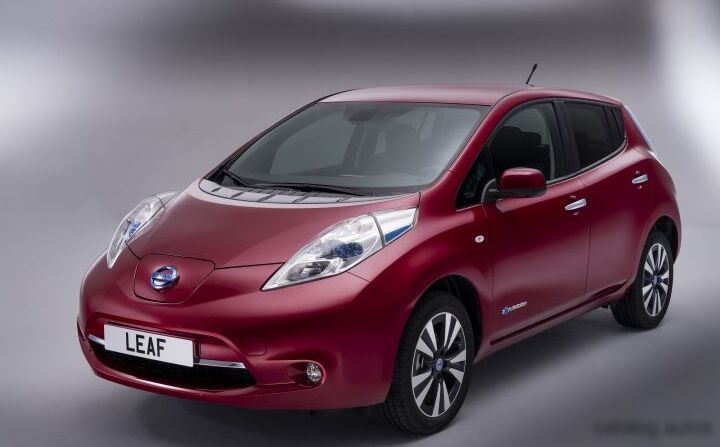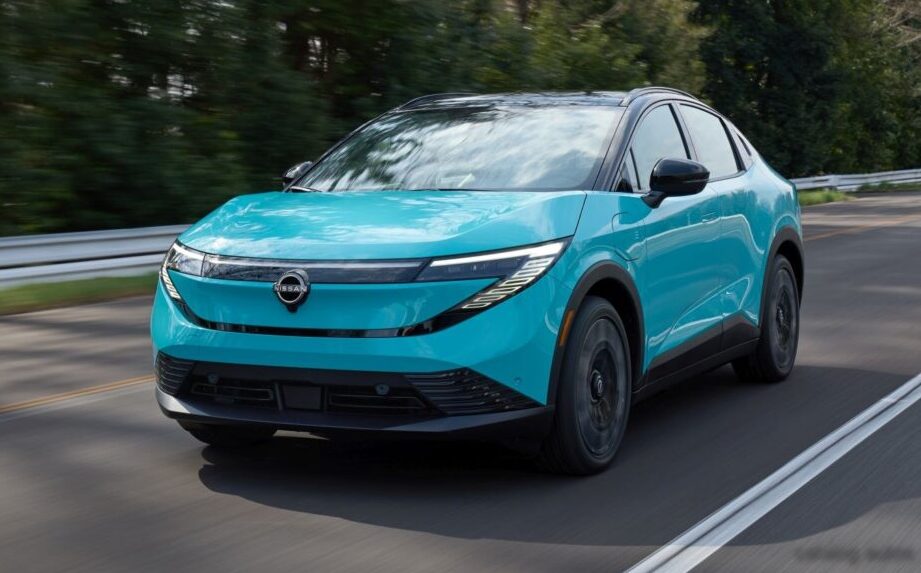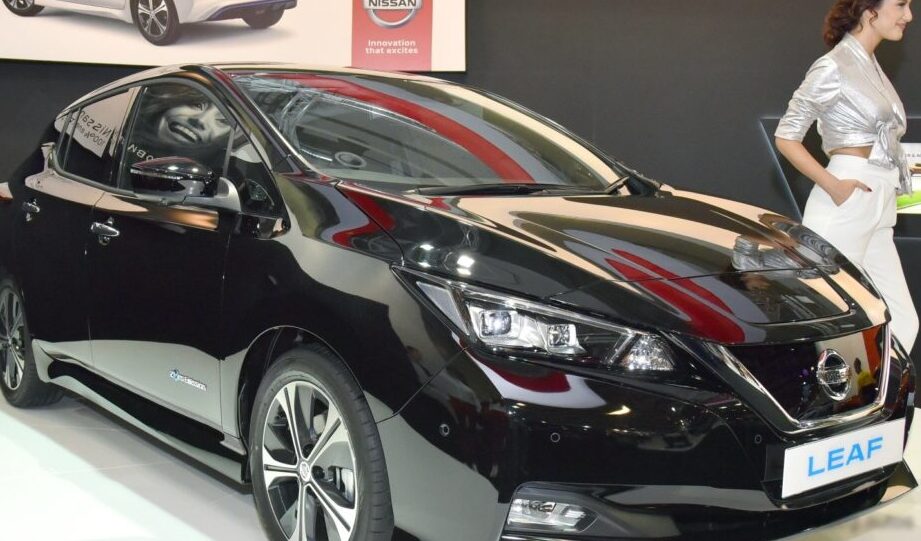
The Nissan Leaf II (ZE1) 40 kWh, producing 150 horsepower, represents a significant step in the evolution of affordable electric vehicles. Introduced in September 2017 and continuing in production through 2025, this variant occupied a crucial position in the second-generation Leaf lineup, offering a balance between range, performance, and price. It aimed to broaden the appeal of electric mobility to a wider audience, particularly in markets like the United States and Europe where the first-generation Leaf had already established a foothold. The ZE1 designation refers to the vehicle’s platform and generation, building upon the success of its predecessor while incorporating advancements in battery technology and vehicle design.
Technical Specifications
| Brand | Nissan |
| Model | Leaf |
| Generation | Leaf II (ZE1) |
| Type (Engine) | 40 kWh (150 Hp) |
| Start of production | September, 2017 |
| End of production | 2025 |
| Powertrain Architecture | BEV (Electric Vehicle) |
| Body type | Hatchback |
| Seats | 5 |
| Doors | 5 |
| Fuel Type | Electricity |
| Acceleration 0 – 100 km/h | 7.9 sec |
| Acceleration 0 – 62 mph | 7.9 sec |
| Acceleration 0 – 60 mph | 7.5 sec |
| Maximum speed | 144 km/h (89.48 mph) |
| Weight-to-power ratio | 10 kg/Hp, 99.7 Hp/tonne |
| Weight-to-torque ratio | 4.7 kg/Nm, 212.6 Nm/tonne |
| Gross battery capacity | 40 kWh |
| Net (usable) battery capacity | 36 kWh |
| Battery voltage | 350 V |
| Battery technology | Lithium-ion (Li-Ion) |
| Battery location | Below the floor |
| All-electric range (WLTP) | 270 km (167.77 mi) |
| All-electric range (NEDC) | 378 km (234.88 mi) |
| Average Energy consumption (WLTP) | 20.6 kWh/100 km (33.15 kWh/100 mi, 102 MPGe, 4.9 km/kWh, 3 mi/kWh) |
| Electric motor power | 150 Hp @ 3283-9795 rpm |
| Electric motor Torque | 320 Nm @ 0-3283 rpm (236.02 lb.-ft. @ 0-3283 rpm) |
| Electric motor model/code | EM57 |
| Electric motor location | Front axle, Transverse |
| System power | 150 Hp @ 3283-9795 rpm |
| System torque | 320 Nm @ 0-3283 rpm (236.02 lb.-ft. @ 0-3283 rpm) |
| Kerb Weight | 1505 kg (3317.96 lbs) |
| Max. weight | 1995 kg (4398.22 lbs) |
| Max load | 490 kg (1080.27 lbs) |
| Trunk (boot) space – minimum | 435 l (15.36 cu. ft) |
| Max. roof load | 35 kg (77.16 lbs) |
| Length | 4490 mm (176.77 in) |
| Width | 1788 mm (70.39 in) |
| Width including mirrors | 2030 mm (79.92 in) |
| Height | 1530 mm (60.24 in) |
| Wheelbase | 2700 mm (106.3 in) |
| Front track | 1530-1540 mm (60.24 – 60.63 in) |
| Rear (Back) track | 1545-1555 mm (60.83 – 61.22 in) |
| Front overhang | 1005 mm (39.57 in) |
| Rear overhang | 785 mm (30.91 in) |
| Ride height (ground clearance) | 155 mm (6.1 in) |
| Drag coefficient (Cd) | 0.28 |
| Minimum turning circle | 10.6 m (34.78 ft) |
| Drivetrain Architecture | One electric motor drives the front wheels |
| Drive wheel | Front wheel drive |
| Number of gears | 1 |
| Type of gearbox | automatic transmission |
| Front suspension | Independent type McPherson |
| Rear suspension | Torsion |
| Front brakes | Ventilated discs, 283×28 mm |
| Rear brakes | Ventilated discs, 292×16 mm |
| Assisting systems | ABS (Anti-lock braking system) |
| Steering type | Steering rack and pinion |
| Power steering | Electric Steering |
| Tires size | 205/55 R16; 215/50 R17 |
| Wheel rims size | 6.5J x 16; 7J x 17 |
Powertrain & Engine Architecture
The heart of the Leaf II 40 kWh is its EM57 electric motor, a synchronous AC induction motor delivering 150 horsepower and 236 lb-ft of torque. This motor is transversely mounted at the front axle, driving the front wheels. The 40 kWh battery pack, composed of lithium-ion cells, is positioned under the vehicle floor, contributing to a low center of gravity and improved handling. The battery utilizes a 350V architecture. The Leaf employs a single-speed automatic transmission, typical of electric vehicles, providing seamless acceleration. The power electronics manage the flow of energy between the battery, motor, and other vehicle systems. Nissan’s regenerative braking system captures kinetic energy during deceleration, converting it back into electricity to recharge the battery, enhancing efficiency.
Driving Characteristics
The 40 kWh Leaf offers a responsive and smooth driving experience. Acceleration from 0 to 60 mph takes approximately 7.5 seconds, making it competitive with many gasoline-powered compact cars. The instant torque delivery characteristic of electric motors provides brisk acceleration at lower speeds. While not as quick as the higher-output Leaf variants (like those with the larger 62 kWh battery), the 40 kWh model provides ample power for everyday driving situations. The single-speed transmission simplifies operation, and the regenerative braking system allows for one-pedal driving in many scenarios. The low center of gravity contributes to stable handling, although the suspension is tuned for comfort rather than sporty performance.
Equipment & Trim Levels
The 40 kWh Leaf typically came standard with features such as automatic climate control, a touchscreen infotainment system with Apple CarPlay and Android Auto compatibility, and a suite of safety technologies including automatic emergency braking and lane departure warning. Higher trim levels, such as the SL, added features like leather upholstery, heated front seats, and a Bose audio system. Optional extras included a quick charging port and various driver-assistance features. Interior upholstery was generally cloth on base models, with leather available on higher trims. Dashboard configurations were relatively consistent across the range, focusing on a clean and modern aesthetic.
Chassis & Braking
The Leaf II utilizes an independent McPherson strut suspension at the front and a torsion beam suspension at the rear. This setup provides a comfortable ride quality, suitable for daily commuting. The front brakes are ventilated discs measuring 283x28mm, while the rear brakes are also ventilated discs at 292x16mm. Anti-lock braking system (ABS) is standard. The steering system is an electric power-assisted rack and pinion, providing light and precise steering feel. Tire sizes varied depending on the trim level, with 205/55 R16 and 215/50 R17 being common options.
Market Reception & Comparison
The Nissan Leaf II 40 kWh was generally well-received by critics as an affordable and practical electric vehicle. It offered a competitive range and a comfortable driving experience. Compared to the larger 62 kWh Leaf, the 40 kWh model was more accessible in terms of price, making it an attractive option for budget-conscious buyers. However, the shorter range was a drawback for some. Compared to other EVs in its class, such as the Chevrolet Bolt, the Leaf offered a more spacious interior and a more refined driving experience. Fuel economy, measured in MPGe, was around 102 MPGe, making it significantly more efficient than gasoline-powered vehicles.
Legacy
The Nissan Leaf II 40 kWh played a vital role in popularizing electric vehicles and demonstrating their viability for mainstream consumers. The powertrain has proven to be relatively reliable, with many early models still on the road today. Battery degradation is a common concern with all EVs, and the 40 kWh Leaf is no exception, but proper battery management can mitigate this issue. On the used car market, the 40 kWh Leaf remains an affordable entry point into electric vehicle ownership, offering a practical and environmentally friendly transportation option. Its success paved the way for future generations of electric vehicles and helped to accelerate the transition to a more sustainable transportation system.