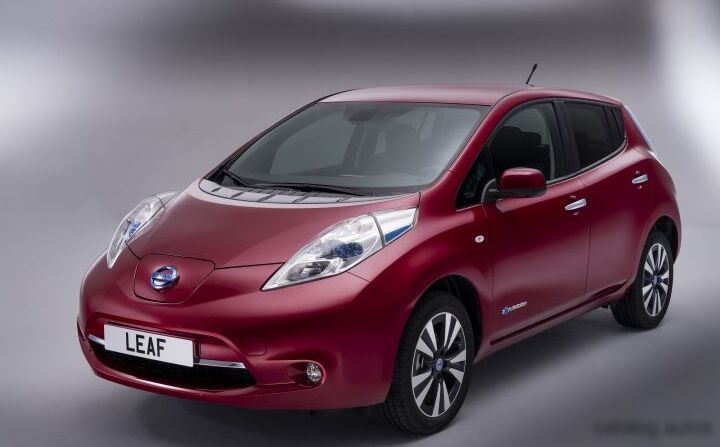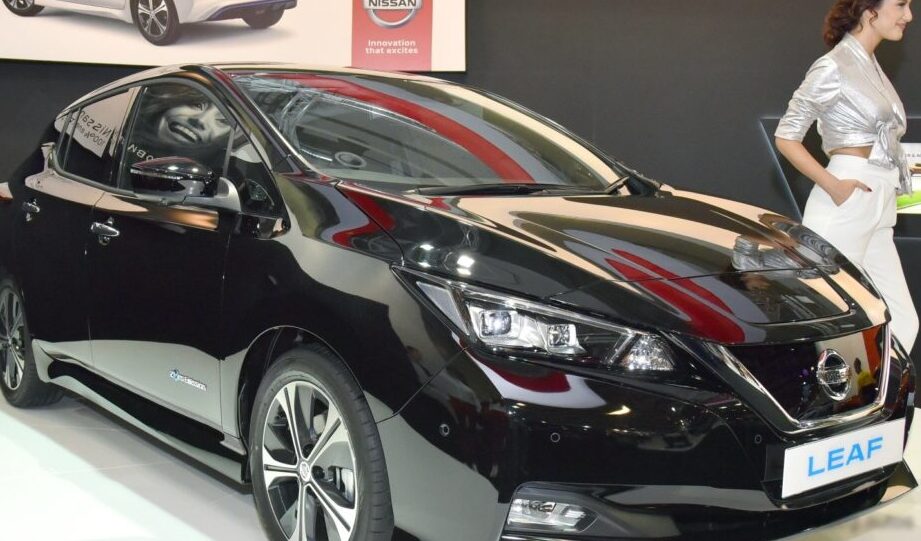
The Nissan Leaf II (ZE1) e+ 62 kWh, producing 217 horsepower, represents a significant evolution in Nissan’s electric vehicle offerings. Introduced in January 2019 and continuing through 2025, this variant occupied a mid-to-upper position within the second-generation Leaf lineup, offering extended range and increased performance compared to the base models. Built on Nissan’s versatile C-platform, the ZE1 Leaf aimed to address range anxiety – a key barrier to EV adoption – while maintaining the practicality of a five-door hatchback. This model was primarily targeted towards the North American and European markets, where demand for longer-range electric vehicles was growing.
Technical Specifications
| Brand | Nissan |
| Model | Leaf |
| Generation | Leaf II (ZE1) |
| Type (Engine) | e+ 62 kWh (217 Hp) |
| Start of production | January, 2019 |
| End of production | 2025 |
| Powertrain Architecture | BEV (Electric Vehicle) |
| Body type | Hatchback |
| Seats | 5 |
| Doors | 5 |
| Fuel Type | Electricity |
| Acceleration 0 – 100 km/h | 7.3 sec |
| Acceleration 0 – 62 mph | 7.3 sec |
| Acceleration 0 – 60 mph | 6.9 sec |
| Maximum speed | 157 km/h (97.56 mph) |
| Weight-to-power ratio | 8 kg/Hp, 125.4 Hp/tonne |
| Weight-to-torque ratio | 5.1 kg/Nm, 196.4 Nm/tonne |
| Gross battery capacity | 62 kWh |
| Net (usable) battery capacity | 56 kWh |
| Battery voltage | 350 V |
| Battery technology | Lithium-ion (Li-Ion) |
| Battery location | Below the floor |
| All-electric range (WLTP) | 385 km (239.23 mi) |
| Average Energy consumption (WLTP) | 20.6 kWh/100 km (33.15 kWh/100 mi, 102 MPGe, 4.9 km/kWh, 3 mi/kWh) |
| Electric motor power | 217 Hp @ 4600-5800 rpm |
| Electric motor Torque | 340 Nm @ 500-4000 rpm (250.77 lb.-ft. @ 500-4000 rpm) |
| Electric motor location | Front axle, Transverse |
| System power | 217 Hp @ 4600-5800 rpm |
| System torque | 340 Nm @ 500-4000 rpm (250.77 lb.-ft. @ 500-4000 rpm) |
| Kerb Weight | 1731 kg (3816.2 lbs) |
| Max. weight | 2140 kg (4717.89 lbs) |
| Max load | 409 kg (901.69 lbs) |
| Trunk (boot) space – minimum | 420 l (14.83 cu. ft) |
| Trunk (boot) space – maximum | 1161 l (41 cu. ft) |
| Max. roof load | 35 kg (77.16 lbs) |
| Length | 4490 mm (176.77 in) |
| Width | 1788 mm (70.39 in) |
| Width including mirrors | 2030 mm (79.92 in) |
| Height | 1540 mm (60.63 in) |
| Wheelbase | 2700 mm (106.3 in) |
| Front track | 1530 mm (60.24 in) |
| Rear (Back) track | 1545 mm (60.83 in) |
| Front overhang | 1005 mm (39.57 in) |
| Rear overhang | 785 mm (30.91 in) |
| Ride height (ground clearance) | 135 mm (5.31 in) |
| Minimum turning circle | 10.6 m (34.78 ft) |
| Drivetrain Architecture | One electric motor drives the front wheels |
| Drive wheel | Front wheel drive |
| Number of gears and type of gearbox | 1 gears, automatic transmission |
| Front suspension | Independent type McPherson |
| Rear suspension | Torsion |
| Front brakes | Ventilated discs, 283×28 mm |
| Rear brakes | Ventilated discs, 292×16 mm |
| Assisting systems | ABS (Anti-lock braking system) |
| Steering type | Steering rack and pinion |
| Power steering | Electric Steering |
| Tires size | 215/50 R17 |
| Wheel rims size | 6.5J x 17 |
Powertrain & Engine Architecture
The Nissan Leaf e+ utilizes a fully electric powertrain, centered around a permanent magnet synchronous motor driving the front wheels. The 62 kWh battery pack, composed of lithium-ion cells, is positioned under the vehicle floor to optimize weight distribution and lower the center of gravity. This battery provides a usable capacity of 56 kWh. The motor delivers 217 horsepower and 340 Nm (250.77 lb-ft) of torque, providing brisk acceleration. The single-speed automatic transmission is inherent to electric vehicle design, offering seamless power delivery. The e+ variant features an upgraded thermal management system for the battery, improving longevity and performance in varying climates. The onboard charger supports both AC and DC fast charging, allowing for convenient charging at home or public charging stations.
Driving Characteristics
The 217 hp e+ variant offers a noticeable performance improvement over the standard Leaf. Acceleration from 0 to 60 mph is achieved in approximately 6.9 seconds, making it competitive with many gasoline-powered compact cars. The instant torque characteristic of electric motors provides responsive acceleration in everyday driving situations. The single-speed transmission ensures smooth and linear power delivery. While the Leaf isn’t a sports car, the e+ provides ample power for highway merging and overtaking. The low center of gravity contributes to stable handling, and the regenerative braking system allows for one-pedal driving in many scenarios, enhancing efficiency and driver convenience.
Equipment & Trim Levels
The Leaf e+ typically came well-equipped, often including features like Nissan’s ProPILOT Assist (adaptive cruise control and lane keeping assist), automatic emergency braking, blind spot monitoring, and a 7-inch touchscreen infotainment system with Apple CarPlay and Android Auto compatibility. Higher trim levels added features such as a larger touchscreen, Bose audio system, leather upholstery, and heated front seats. Standard interior features included automatic climate control, keyless entry, and a rearview camera. Exterior features typically included alloy wheels, LED headlights, and heated mirrors.
Chassis & Braking
The Leaf e+ utilizes an independent McPherson strut suspension in the front and a torsion beam suspension in the rear. This setup provides a comfortable ride quality while maintaining reasonable handling characteristics. Ventilated disc brakes are used on all four wheels, providing adequate stopping power. The electronic braking system incorporates regenerative braking, which helps to recapture energy and extend the vehicle’s range. The electric power steering system offers light and precise steering feel.
Market Reception & Comparison
The Leaf e+ was generally well-received by automotive critics, who praised its increased range and improved performance compared to the standard Leaf. It was often compared to other long-range EVs like the Tesla Model 3 and the Hyundai Kona Electric. While the Leaf e+ offered a more affordable price point than the Model 3, it lacked the Tesla’s Supercharger network and advanced technology features. Compared to the Kona Electric, the Leaf e+ offered more interior space and a more comfortable ride. Fuel economy, expressed as MPGe (miles per gallon equivalent), was rated at 102 MPGe combined, making it highly efficient. Reliability reports were generally positive, with owners reporting few major issues.
Legacy
The Nissan Leaf e+ 62 kWh played a crucial role in expanding the appeal of electric vehicles to a wider audience. Its extended range helped to alleviate range anxiety, and its competitive price made it an attractive option for budget-conscious buyers. The Leaf’s proven reliability and practicality have made it a popular choice in the used car market. While newer EVs with even longer ranges and faster charging capabilities have emerged, the Leaf e+ remains a viable and affordable option for those seeking a practical and efficient electric vehicle.