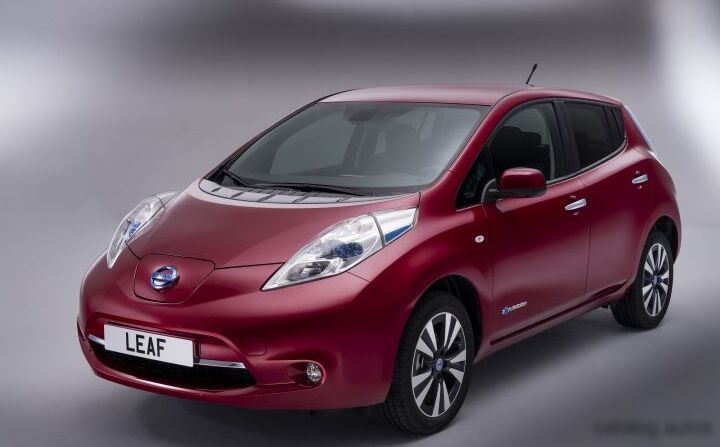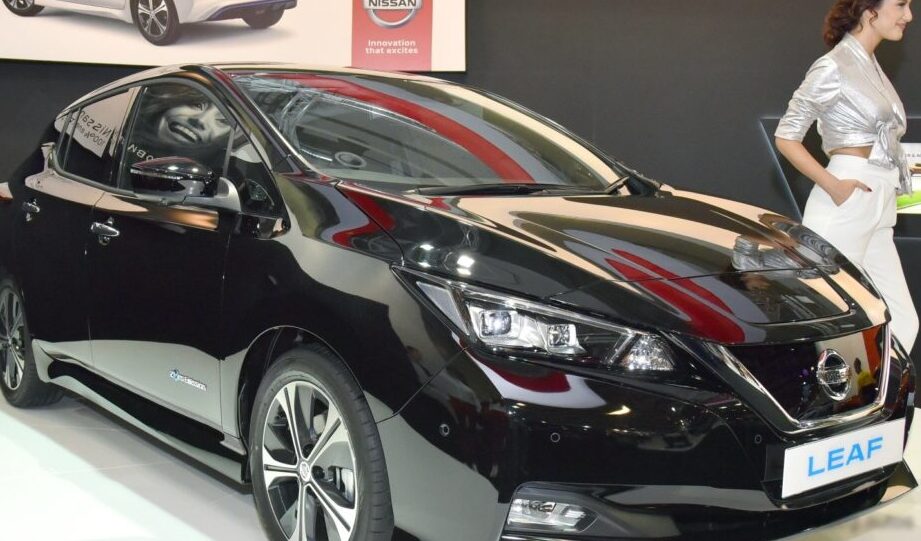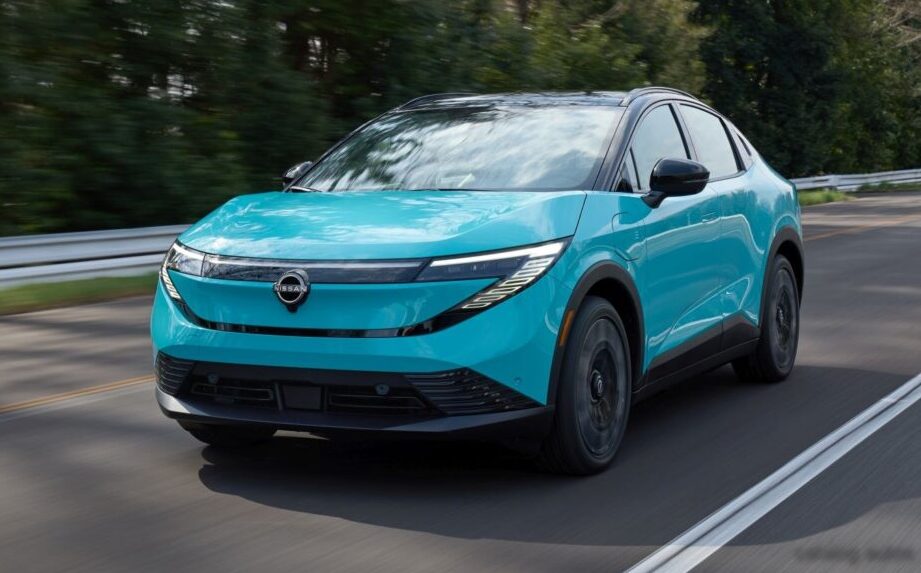
The Nissan Leaf III (ZE2) 75 kWh variant, producing 218 horsepower, represents a significant step forward in Nissan’s all-electric vehicle lineup. Introduced in June 2025, this model is part of the ZE2 generation, building upon the success of its predecessors while incorporating updated technology and a larger battery pack. Positioned as a mid-to-upper trim level within the Leaf III range, it aims to provide a balance of performance, range, and practicality for the growing electric vehicle market in North America and globally. The ZE2 generation represents a shift in design, moving towards a more conventional crossover aesthetic compared to the distinctive styling of earlier Leaf models, appealing to a broader customer base.
Technical Specifications
| Brand | Nissan |
| Model | Leaf |
| Generation | Leaf III (ZE2) |
| Type (Engine) | 75 kWh (218 Hp) |
| Start of production | June, 2025 |
| Powertrain Architecture | BEV (Electric Vehicle) |
| Body type | Coupe, Crossover |
| Seats | 5 |
| Doors | 5 |
| Fuel Type | Electricity |
| Maximum speed | 160 km/h (99.42 mph) |
| Weight-to-power ratio | 8.7 kg/Hp, 114.8 Hp/tonne |
| Weight-to-torque ratio | 5.4 kg/Nm, 186.4 Nm/tonne |
| Gross battery capacity | 75 kWh |
| Battery technology | Lithium-ion (Li-Ion) |
| Battery location | Below the floor |
| All-electric range (EPA) | 416.8-487.6 km (258.99 – 302.98 mi) |
| Average Energy consumption (EPA) | 17.3-20.3 kWh/100 km (27.84 – 32.67 kWh/100 mi) |
| MPGe | 121 – 103 |
| km/kWh | 5.8 – 4.9 |
| mi/kWh | 3.6 – 3.1 |
| Electric motor power | 218 Hp |
| Electric motor Torque | 354 Nm (261.1 lb.-ft.) |
| Electric motor location | Front axle, Transverse |
| Electric motor type | Synchronous |
| System power | 218 Hp |
| System torque | 354 Nm (261.1 lb.-ft.) |
| Kerb Weight | 1899-1982 kg (4186.58 – 4369.56 lbs.) |
| Trunk (boot) space – minimum | 566 l (19.99 cu. ft.) |
| Trunk (boot) space – maximum | 1572 l (55.51 cu. ft.) |
| Length | 4404 mm (173.39 in.) |
| Width | 1811 mm (71.3 in.) |
| Width including mirrors | 2098 mm (82.6 in.) |
| Height | 1557 mm (61.3 in.) |
| Wheelbase | 2690 mm (105.91 in.) |
| Front track | 1575 mm (62.01 in.) |
| Rear (Back) track | 1567 mm (61.69 in.) |
| Ride height (ground clearance) | 135 mm (5.31 in.) |
| Drag coefficient (Cd) | 0.26 |
| Minimum turning circle (turning diameter) | 10.8 m (35.43 ft.) |
| Approach angle | 18° |
| Departure angle | 23.7° |
| Drivetrain Architecture | One electric motor drives the front wheels. |
| Drive wheel | Front wheel drive |
| Number of gears and type of gearbox | 1 gears, automatic transmission |
| Front suspension | Independent type McPherson |
| Rear suspension | Independent multi-link suspension |
| Assisting systems | ABS (Anti-lock braking system) |
| Steering type | Steering rack and pinion |
| Power steering | Electric Steering |
| Tires size | 215/55 R18; 235/45 R19 |
| Wheel rims size | 18; 19 |
Powertrain & Engine Architecture
The Nissan Leaf III ZE2 75 kWh is powered by a single synchronous electric motor driving the front wheels. This motor delivers 218 horsepower and 354 Nm (261.1 lb.-ft.) of torque, providing brisk acceleration and ample power for everyday driving. The heart of the system is the 75 kWh lithium-ion battery pack, located under the vehicle floor to optimize weight distribution and lower the center of gravity. Nissan utilizes an advanced battery management system to maximize battery life and ensure consistent performance. The single-speed automatic transmission is a standard feature, providing seamless acceleration without the need for gear changes. The powertrain is designed for efficiency, with regenerative braking contributing to increased range by capturing energy during deceleration.
Driving Characteristics
The 75 kWh Leaf offers a noticeably more engaging driving experience compared to earlier Leaf models with smaller battery packs and lower power outputs. Acceleration is quick and responsive, making merging onto highways and overtaking other vehicles effortless. The single-speed transmission provides smooth, linear power delivery. While not a performance vehicle, the 218 hp motor provides sufficient power for most driving situations. The low center of gravity, thanks to the underfloor battery pack, contributes to stable handling and reduced body roll. The steering is light and precise, making it easy to maneuver in urban environments. Compared to potential higher-performance variants (if offered), this trim prioritizes range and efficiency over outright speed.
Equipment & Trim Levels
The 75 kWh Leaf typically comes standard with a comprehensive suite of features, including Nissan’s ProPILOT Assist driver-assistance system, which combines adaptive cruise control and lane-keeping assist. Interior features include a touchscreen infotainment system with Apple CarPlay and Android Auto compatibility, automatic climate control, and comfortable seating. Higher trim levels offer upgrades such as premium audio systems, leather upholstery, and a panoramic sunroof. Standard safety features include automatic emergency braking, blind-spot monitoring, and rear cross-traffic alert.
Chassis & Braking
The Leaf III utilizes an independent McPherson strut suspension in the front and an independent multi-link suspension in the rear, providing a comfortable and controlled ride. The suspension is tuned to balance ride comfort with handling stability. Braking duties are handled by disc brakes on all four wheels, with ABS and electronic brake-force distribution as standard features. The regenerative braking system further enhances braking performance and contributes to energy recovery. The vehicle’s relatively low weight, thanks to the efficient electric powertrain, aids in braking performance.
Market Reception & Comparison
The Nissan Leaf III 75 kWh has been generally well-received by automotive critics, praised for its increased range, improved performance, and updated styling. Compared to other electric crossovers in its class, such as the Chevrolet Bolt EUV and Hyundai Kona Electric, the Leaf offers a competitive range and a comfortable ride. However, some critics have noted that the Leaf’s interior design is not as modern or upscale as some of its rivals. Fuel economy, expressed as MPGe, is competitive within the EV segment, and the Leaf benefits from lower running costs compared to gasoline-powered vehicles.
Legacy
The Nissan Leaf has been a pioneer in the electric vehicle market, and the ZE2 generation continues that legacy. The 75 kWh variant represents a significant improvement in range and performance, making it a more practical and appealing option for a wider range of buyers. The long-term reliability of the Leaf’s powertrain is generally good, with many early Leaf owners reporting minimal issues. As the used EV market grows, the Leaf III 75 kWh is expected to hold its value well, offering a compelling combination of affordability, range, and practicality.