
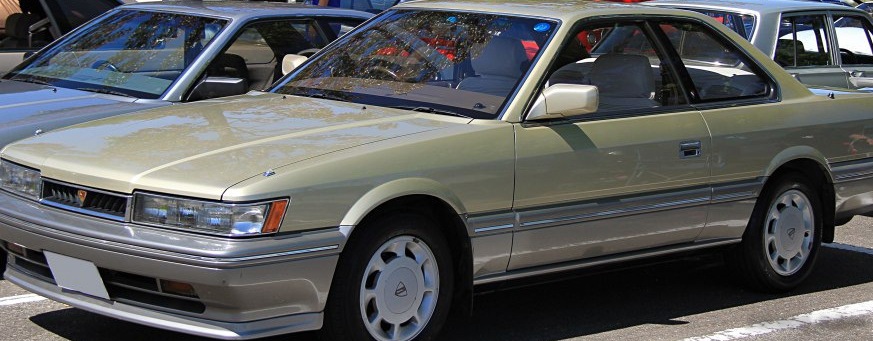
The Nissan Leopard (F31), specifically the 2.0 24V variant producing 210 horsepower, represents a unique chapter in Nissan’s history. Produced between 1986 and 1992, the F31 Leopard was envisioned as a personal luxury coupe, aimed at a more sophisticated buyer than those typically targeted by Nissan’s mainstream offerings. It occupied a niche position, blending sporty aesthetics with a comfortable, well-equipped interior. The Leopard was primarily marketed in Japan, but also saw limited export sales, particularly in Australia and Europe. This 2.0-liter, 24-valve engine configuration was a mid-range offering within the F31 lineup, positioned between the base 2.0-liter and the more potent 3.0-liter variants.
Technical Specifications
| Brand | Nissan |
| Model | Leopard |
| Generation | Leopard (F31) |
| Type (Engine) | 2.0 24V (210 Hp) |
| Start of production | 1986 |
| End of production | 1992 |
| Powertrain Architecture | Internal Combustion engine |
| Body type | Coupe |
| Seats | 5 |
| Doors | 2 |
| Fuel consumption (urban) | 17 l/100 km (13.8 US mpg, 16.6 UK mpg) |
| Fuel consumption (extra urban) | 11 l/100 km (21.4 US mpg, 25.7 UK mpg) |
| Fuel Type | Petrol (Gasoline) |
| Maximum speed | 230 km/h (142.92 mph) |
| Weight-to-power ratio | 6.9 kg/Hp, 145.8 Hp/tonne |
| Weight-to-torque ratio | 5.4 kg/Nm, 184 Nm/tonne |
| Power | 210 Hp @ 6800 rpm |
| Power per litre | 105.1 Hp/l |
| Torque | 265 Nm @ 3600 rpm (195.45 lb.-ft. @ 3600 rpm) |
| Engine layout | Front, Longitudinal |
| Engine displacement | 1998 cm3 (121.93 cu. in.) |
| Number of cylinders | 6 |
| Engine configuration | V-engine |
| Cylinder Bore | 78 mm (3.07 in.) |
| Piston Stroke | 69.7 mm (2.74 in.) |
| Compression ratio | 8.5:1 |
| Number of valves per cylinder | 4 |
| Fuel injection system | Multi-port manifold injection |
| Engine aspiration | Naturally aspirated engine |
| Valvetrain | DOHC |
| Kerb Weight | 1440 kg (3174.66 lbs.) |
| Fuel tank capacity | 65 l (17.17 US gal | 14.3 UK gal) |
| Length | 4695 mm (184.84 in.) |
| Width | 1690 mm (66.54 in.) |
| Height | 1370 mm (53.94 in.) |
| Wheelbase | 2615 mm (102.95 in.) |
| Front track | 1425 mm (56.1 in.) |
| Rear track | 1425 mm (56.1 in.) |
| Drivetrain Architecture | Rear wheel drive |
| Front suspension | Wishbone |
| Rear suspension | Coil spring |
| Front brakes | Ventilated discs |
| Rear brakes | Ventilated discs |
| Assisting systems | ABS (Anti-lock braking system) |
| Steering type | Steering rack and pinion |
| Power steering | Hydraulic Steering |
| Tires size | 215/60 R15 |
Powertrain & Engine Architecture
The heart of the F31 Leopard 2.0 24V is the Nissan CA20A engine. This 1998cc, naturally aspirated V6 engine is characterized by its dual overhead camshafts (DOHC) and four valves per cylinder, contributing to its relatively high output for its displacement. The CA20A utilizes multi-port fuel injection, a significant advancement for the era, ensuring precise fuel delivery and improved efficiency. The engine’s 8.5:1 compression ratio strikes a balance between performance and reliability. While not a high-revving engine, it delivers a respectable 210 horsepower at 6800 rpm and 265 Nm (195.45 lb-ft) of torque at 3600 rpm. The engine is longitudinally mounted, driving the rear wheels. The transmission paired with this engine was typically a four-speed automatic, although a five-speed manual was also available, albeit less common. The automatic transmission was chosen by many buyers for its ease of use and suitability for the car’s grand touring character.
Driving Characteristics
The 2.0-liter automatic Leopard offers a comfortable and refined driving experience. The four-speed automatic transmission, while not offering the most aggressive shift points, provides smooth and predictable gear changes. Acceleration is adequate, with the car reaching 60 mph in around 9-10 seconds. Compared to the manual transmission version, the automatic sacrifices some responsiveness, but gains in everyday usability. The 2.0-liter engine feels less strained than the 3.0-liter variant during highway cruising, and the automatic transmission helps to maintain a relaxed pace. The rear-wheel-drive layout provides a balanced feel, although the car’s weight (1440 kg / 3174.66 lbs) is noticeable in corners. It doesn’t possess the sharp handling characteristics of a dedicated sports car, but offers a composed and predictable ride.
Equipment & Trim Levels
The F31 Leopard 2.0 24V was generally well-equipped, reflecting its positioning as a luxury coupe. Standard features typically included power windows, power locks, air conditioning, and a high-quality sound system. The interior featured comfortable seating, often upholstered in velour or leather (depending on the trim level). Dashboard design was clean and functional, with a focus on ergonomics. Optional extras included a sunroof, upgraded audio systems, and more luxurious interior trim options. The Leopard aimed to provide a premium experience, competing with offerings from Toyota and Honda in the Japanese market.
Chassis & Braking
The F31 Leopard utilizes a traditional chassis layout with independent wishbone suspension at the front and a coil spring setup at the rear. This configuration provides a comfortable ride, absorbing bumps and imperfections in the road surface effectively. Braking duties are handled by ventilated discs on all four wheels, providing adequate stopping power. An Anti-lock Braking System (ABS) was standard, enhancing safety and control during emergency braking situations. The steering is rack and pinion, assisted by hydraulic power steering, offering a reasonable level of feedback and precision.
Market Reception & Comparison
The Nissan Leopard was generally well-received by critics in Japan, praised for its stylish design, comfortable interior, and refined driving experience. However, it wasn’t a massive sales success, partly due to its relatively high price and the emergence of more focused sports coupes. Compared to the 3.0-liter Leopard, the 2.0-liter version offered better fuel economy (17 l/100 km urban, 11 l/100 km extra urban) but less outright performance. The 2.0-liter automatic was often seen as the sweet spot for buyers prioritizing comfort and ease of use over all-out speed. It offered a more affordable entry point into the Leopard range without sacrificing too much of the car’s luxury appeal.
Legacy
The Nissan Leopard F31, particularly the 2.0 24V variant, has developed a cult following among enthusiasts. The CA20A engine is known for its reliability and durability, although regular maintenance is essential. Parts availability can be a challenge, particularly outside of Japan. Today, well-maintained examples of the F31 Leopard are becoming increasingly collectible, appreciated for their unique styling and representation of a bygone era of Japanese automotive design. The car’s blend of luxury, performance, and relative rarity ensures its continued appeal to enthusiasts seeking a distinctive and rewarding classic coupe.
