
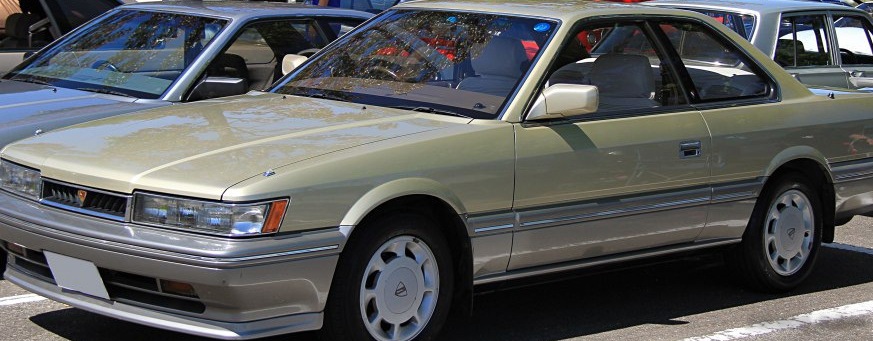
The Nissan Leopard (F31), specifically the 3.0 24V variant producing 255 horsepower, represents a unique chapter in Nissan’s history. Produced between 1988 and 1992, the F31 Leopard was a personal luxury coupe aimed at a discerning buyer, primarily in the Japanese domestic market (JDM). While not officially exported to the United States, the Leopard found its way into enthusiast circles through grey market imports. It occupied a niche position, offering a blend of performance, comfort, and advanced technology for its time, competing with rivals like the Toyota Soarer and Mazda Cosmo.
Technical Specifications
| Brand | Nissan |
| Model | Leopard |
| Generation | Leopard (F31) |
| Type (Engine) | 3.0 24V (255 Hp) |
| Start of production | 1988 |
| End of production | 1992 |
| Powertrain Architecture | Internal Combustion engine |
| Body type | Coupe |
| Seats | 5 |
| Doors | 2 |
| Fuel consumption (urban) | 20 l/100 km (11.8 US mpg) |
| Fuel consumption (extra urban) | 12 l/100 km (19.6 US mpg) |
| Fuel Type | Petrol (Gasoline) |
| Maximum speed | 230 km/h (142.92 mph) |
| Weight-to-power ratio | 5.7 kg/Hp |
| Weight-to-torque ratio | 4.3 kg/Nm |
| Power | 255 Hp @ 6000 rpm |
| Power per litre | 86.1 Hp/l |
| Torque | 343 Nm @ 3200 rpm (252.98 lb.-ft. @ 3200 rpm) |
| Engine layout | Front, Longitudinal |
| Engine displacement | 2960 cm3 (180.63 cu. in.) |
| Number of cylinders | 6 |
| Engine configuration | V-engine |
| Cylinder Bore | 87 mm (3.43 in.) |
| Piston Stroke | 83 mm (3.27 in.) |
| Compression ratio | 8.5:1 |
| Number of valves per cylinder | 4 |
| Fuel injection system | Multi-port manifold injection |
| Engine aspiration | Turbocharger |
| Valvetrain | DOHC |
| Kerb Weight | 1460 kg (3218.75 lbs.) |
| Fuel tank capacity | 65 l (17.17 US gal) |
| Length | 4695 mm (184.84 in.) |
| Width | 1690 mm (66.54 in.) |
| Height | 1370 mm (53.94 in.) |
| Wheelbase | 2615 mm (102.95 in.) |
| Front track | 1425 mm (56.1 in.) |
| Rear track | 1425 mm (56.1 in.) |
| Drivetrain Architecture | Rear wheel drive |
| Drive wheel | Rear wheel drive |
| Front suspension | Wishbone |
| Rear suspension | Coil spring |
| Front brakes | Ventilated discs |
| Rear brakes | Ventilated discs |
| Assisting systems | ABS (Anti-lock braking system) |
| Steering type | Steering rack and pinion |
| Power steering | Hydraulic Steering |
| Tires size | 215/60 R15 |
Powertrain & Engine Architecture
The heart of the F31 Leopard 3.0 24V is the VG30DETT, a 2.96-liter (180.63 cubic inches) V6 engine. This engine is notable for its twin-turbocharger setup, a relatively sophisticated feature for a production car of the late 1980s. The “DETT” designation stands for “Dual Exhaust Turbocharged Twin.” The engine utilizes a multi-port fuel injection system and a double overhead camshaft (DOHC) valvetrain, contributing to its high specific output. The VG30DETT produces 255 horsepower at 6000 rpm and 343 Nm (253 lb-ft) of torque at 3200 rpm. The engine is longitudinally mounted, driving the rear wheels. While a 4-speed automatic transmission was standard, a 5-speed manual transmission was also available, though less common.
Driving Characteristics
The 3.0 24V Leopard offered a refined and capable driving experience. The twin-turbocharged V6 delivered strong acceleration, with the turbochargers providing a noticeable boost in power. The automatic transmission, while smooth, wasn’t particularly sporty, prioritizing comfort over aggressive shifting. The rear-wheel-drive layout contributed to balanced handling, although the car’s weight (approximately 3219 lbs) was noticeable in corners. Compared to the naturally aspirated versions of the Leopard, the 3.0 24V offered a significant performance upgrade, making it the most desirable variant for driving enthusiasts. The manual transmission version, when found, provided a more engaging experience, allowing drivers to fully exploit the engine’s powerband.
Equipment & Trim Levels
The Leopard 3.0 24V was well-equipped for its time. Standard features typically included power windows, power locks, air conditioning, a premium sound system, and leather upholstery. The interior was designed with a focus on comfort and luxury, featuring woodgrain trim and supportive seats. Optional extras included a sunroof, upgraded audio systems, and electronically adjustable seats. The overall aesthetic aimed for a sophisticated and elegant feel, appealing to buyers seeking a comfortable and stylish grand tourer.
Chassis & Braking
The F31 Leopard utilized a traditional body-on-frame construction, contributing to its substantial weight. The suspension consisted of a wishbone setup at the front and a coil spring arrangement at the rear. Ventilated disc brakes were fitted on all four wheels, providing adequate stopping power. An Anti-lock Braking System (ABS) was included as standard, enhancing safety. The steering was a rack and pinion system with hydraulic power assistance, offering a responsive and precise feel.
Market Reception & Comparison
The Nissan Leopard 3.0 24V was generally well-received by automotive critics in Japan. It was praised for its powerful engine, comfortable ride, and luxurious interior. However, its weight and relatively high price point were sometimes cited as drawbacks. Compared to other models in the Leopard lineup, the 3.0 24V was the performance flagship, offering a significant advantage in terms of acceleration and overall driving experience. Fuel economy, as expected from a turbocharged V6, was not a strong point, with reported figures around 11.8 mpg in urban driving and 19.6 mpg on the highway.
Legacy
The Nissan Leopard F31, particularly the 3.0 24V variant, has gained a cult following among enthusiasts. The VG30DETT engine is known for its durability and potential for modification. While finding parts can be challenging due to the car’s limited production and lack of official US import, a dedicated community exists to support owners. Today, well-maintained examples of the Leopard 3.0 24V are sought after by collectors and enthusiasts who appreciate its unique blend of performance, luxury, and Japanese automotive engineering. The car represents a distinctive era in Nissan’s history, showcasing the company’s willingness to experiment with advanced technology and create a truly memorable grand touring experience.
