
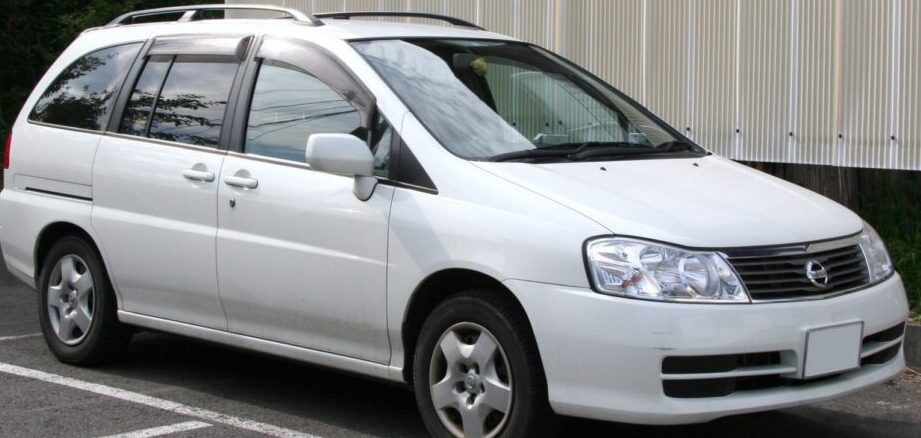
The Nissan Liberty (designated M12) was a compact minivan produced by Nissan from 1998 to 2002. Primarily marketed in Japan and select export markets, the Liberty aimed to provide a versatile and affordable seven-passenger vehicle in a segment increasingly dominated by larger, more expensive options. This article focuses specifically on the 2.0i 16V variant, producing 140 horsepower, and its position within the Liberty lineup.
Technical Specifications
| Brand | Nissan |
| Model | Liberty |
| Generation | Liberty (M12) |
| Type (Engine) | 2.0 i 16V (140 Hp) |
| Start of production | 1998 |
| End of production | September, 2002 |
| Powertrain Architecture | Internal Combustion engine |
| Body type | Minivan |
| Seats | 7 |
| Doors | 5 |
| Fuel consumption (urban) | 8.62 l/100 km (27.3 US mpg, 32.8 UK mpg, 11.6 km/l) |
| Fuel Type | Petrol (Gasoline) |
| Weight-to-power ratio | 10.6 kg/Hp (94 Hp/tonne) |
| Weight-to-torque ratio | 8.2 kg/Nm (121.5 Nm/tonne) |
| Power | 140 Hp @ 5800 rpm |
| Power per litre | 70.1 Hp/l |
| Torque | 181 Nm @ 4800 rpm (133.5 lb.-ft. @ 4800 rpm) |
| Engine layout | Front, Transverse |
| Engine displacement | 1998 cm3 (121.93 cu. in.) |
| Number of cylinders | 4 |
| Engine configuration | Inline |
| Cylinder Bore | 86 mm (3.39 in.) |
| Piston Stroke | 86 mm (3.39 in.) |
| Compression ratio | 10:1 |
| Number of valves per cylinder | 4 |
| Fuel injection system | Multi-port manifold injection |
| Engine aspiration | Naturally aspirated engine |
| Valvetrain | DOHC |
| Kerb Weight | 1490 kg (3284.89 lbs.) |
| Max. weight | 1875 kg (4133.67 lbs.) |
| Max load | 385 kg (848.78 lbs.) |
| Fuel tank capacity | 60 l (15.85 US gal | 13.2 UK gal) |
| Length | 4545 mm (178.94 in.) |
| Width | 1695 mm (66.73 in.) |
| Height | 1630 mm (64.17 in.) |
| Wheelbase | 2690 mm (105.91 in.) |
| Front track | 1470 mm (57.87 in.) |
| Rear track | 1470 mm (57.87 in.) |
| Drivetrain Architecture | The Internal combustion engine (ICE) drives the front wheels of the vehicle. |
| Drive wheel | Front wheel drive |
| Front suspension | Coil spring |
| Rear suspension | Coil spring |
| Front brakes | Ventilated discs |
| Rear brakes | Drum |
| Assisting systems | ABS (Anti-lock braking system) |
| Power steering | Hydraulic Steering |
| Tires size | 185/65 R15 |
Overview and Market Positioning
The Nissan Liberty, introduced in 1998, represented Nissan’s attempt to capture a segment of the market desiring a smaller, more fuel-efficient minivan than the larger options available at the time. It was primarily sold in Japan, where compact dimensions are highly valued due to urban road conditions and parking limitations. Export markets were limited, though the Liberty did see some sales in Australia and New Zealand. The 2.0i 16V variant occupied a middle ground within the Liberty range. It offered a balance between affordability and performance, sitting above the base 1.6-liter engine and below any potential higher-performance or luxury-oriented trims (which were not widely offered). This positioning aimed to attract families seeking a practical vehicle without the higher price tag of larger, more feature-rich minivans.
Engine and Transmission
The heart of the 2.0i 16V Liberty is its 1998cc inline-four cylinder engine. This naturally aspirated engine produced 140 horsepower at 5800 rpm and 181 Nm (133.5 lb-ft) of torque at 4800 rpm. The engine featured a double overhead camshaft (DOHC) valvetrain and multi-port fuel injection, technologies common for the era aimed at improving efficiency and power delivery. While not a particularly powerful engine by modern standards, it provided adequate performance for the Liberty’s intended purpose – transporting families and cargo. The transmission options typically included a four-speed automatic or a five-speed manual, with the automatic being the more common choice in most markets. The front-wheel-drive configuration was standard, contributing to the vehicle’s relatively simple mechanical layout and lower production costs.
Comparison with Other Liberty Variants
The Liberty was offered with other engine options, most notably a 1.6-liter engine. The 1.6-liter variant was positioned as the entry-level model, prioritizing fuel economy over outright performance. It was significantly less powerful than the 2.0i, making it suitable for primarily urban driving. While a more powerful engine was not offered, the 2.0i provided a noticeable improvement in acceleration and highway cruising ability compared to the 1.6. Drivers needing to frequently carry a full load of passengers or travel on highways would have found the 2.0i a more suitable choice. Unlike some competitors that offered all-wheel-drive options, the Liberty remained exclusively front-wheel drive across all variants. This simplified the drivetrain and contributed to its relatively affordable price point. There were no significant trim levels beyond the engine choices; the Liberty was generally offered with a fairly consistent level of equipment across the range, focusing on practicality and functionality rather than luxury features. This consistent trim level meant buyers primarily chose based on engine performance and fuel economy.
Suspension, Brakes, and Handling
The Nissan Liberty utilized a relatively simple suspension setup, featuring coil springs on all four wheels. This provided a comfortable ride quality, suitable for everyday driving. The front brakes were ventilated discs, offering better stopping power than the drum brakes used on the rear wheels. Anti-lock Braking System (ABS) was a standard safety feature, enhancing braking performance in adverse conditions. Steering was hydraulically assisted, providing a reasonable level of driver feedback. Handling was typical for a compact minivan – competent but not particularly sporty. The focus was on providing a stable and predictable driving experience rather than engaging cornering dynamics. The 185/65 R15 tires were chosen to balance ride comfort with reasonable grip, offering a compromise between handling and a smooth ride on typical road surfaces.
Interior and Practicality
The Liberty’s interior was designed with practicality in mind. The seven-seat configuration offered ample space for families, although third-row seating was best suited for children. The rear seats could be folded or removed to create more cargo space, providing flexibility for different passenger and cargo needs. The interior materials were durable and easy to clean, reflecting the vehicle’s intended use as a family hauler. Features such as power windows and air conditioning were generally standard. The dashboard layout was functional and straightforward, prioritizing ease of use over aesthetic appeal. The Liberty’s relatively compact exterior dimensions made it easier to maneuver and park in urban environments compared to larger minivans, a significant advantage in densely populated areas.
Legacy and Impact
The Nissan Liberty, while not a massive sales success globally, played a role in demonstrating the demand for smaller, more affordable minivans. It offered a viable alternative to larger, more expensive options, particularly in markets where space is at a premium. The 2.0i 16V variant represented a sweet spot in the lineup, providing a good balance of performance, fuel economy, and affordability. While the Liberty was discontinued in 2002, it remains a relatively common sight on the roads in Japan and other export markets, appreciated for its practicality and reliability. It didn’t introduce any groundbreaking technology, but it successfully packaged a functional and versatile vehicle into a compact and affordable package. The Liberty’s design philosophy – prioritizing practicality and affordability – influenced subsequent compact minivan designs from Nissan and other manufacturers.
