
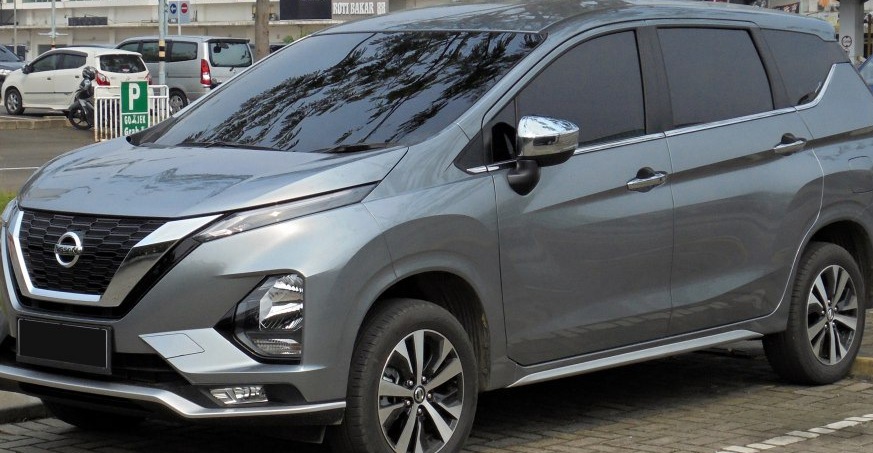
The Nissan Livina II 1.5i, producing 104 horsepower, represents an entry-level variant within the second generation of the Livina MPV, launched in February 2019. Designed primarily for the Southeast Asian market, the Livina II is a collaborative effort between Nissan and Mitsubishi, sharing its platform with the Mitsubishi Xpander. This particular 1.5i trim aimed to provide affordable, family-oriented transportation with a focus on practicality and fuel efficiency. It occupied the lower end of the Livina II lineup, offering a more accessible price point compared to higher-trim models with more features and, in some markets, more powerful engine options. The Livina II is a five-door, seven-seat MPV, intended to cater to the needs of growing families in regions where multi-passenger vehicles are highly valued.
Technical Specifications
| Brand | Nissan |
| Model | Livina |
| Generation | Livina II |
| Type (Engine) | 1.5i (104 Hp) |
| Start of production | February, 2019 |
| Powertrain Architecture | Internal Combustion engine |
| Body type | MPV |
| Seats | 7 |
| Doors | 5 |
| Fuel Type | Petrol (Gasoline) |
| Weight-to-power ratio | 11.7 kg/Hp, 85.2 Hp/tonne |
| Weight-to-torque ratio | 8.7 kg/Nm, 115.6 Nm/tonne |
| Power | 104 Hp @ 6000 rpm |
| Power per litre | 69.4 Hp/l |
| Torque | 141 Nm @ 4000 rpm (104 lb.-ft. @ 4000 rpm) |
| Engine layout | Front, Transverse |
| Engine displacement | 1499 cm3 (91.47 cu. in.) |
| Number of cylinders | 4 |
| Engine configuration | Inline |
| Cylinder Bore | 78 mm (3.07 in.) |
| Piston Stroke | 78.4 mm (3.09 in.) |
| Number of valves per cylinder | 4 |
| Fuel injection system | Multi-port manifold injection |
| Engine aspiration | Naturally aspirated engine |
| Valvetrain | DOHC, VTC |
| Kerb Weight | 1220-1240 kg (2689.64 – 2733.73 lbs.) |
| Fuel tank capacity | 52 l (13.74 US gal | 11.44 UK gal) |
| Length | 4510 mm (177.56 in.) |
| Width | 1750 mm (68.9 in.) |
| Height | 1695 mm (66.73 in.) |
| Wheelbase | 2775 mm (109.25 in.) |
| Ride height (ground clearance) | 200 mm (7.87 in.) |
| Minimum turning circle (turning diameter) | 11.0 m (36.09 ft.) |
| Drivetrain Architecture | The Internal combustion engine (ICE) drives the front wheels of the vehicle. |
| Drive wheel | Front wheel drive |
| Number of gears and type of gearbox | 5 gears, manual transmission |
| Front suspension | Independent, type McPherson with coil spring and anti-roll bar |
| Rear suspension | Torsion |
| Front brakes | Ventilated discs |
| Rear brakes | Drum |
| Assisting systems | ABS (Anti-lock braking system) |
| Steering type | Steering rack and pinion |
| Power steering | Electric Steering |
| Tires size | 185/65 R15 |
| Wheel rims size | 15 |
Powertrain & Engine Architecture
The Nissan Livina II 1.5i is powered by a 1.5-liter inline-four cylinder gasoline engine. This engine, designated as part of the HR15DE family, utilizes a naturally aspirated configuration and multi-point fuel injection. The engine features a Double Overhead Camshaft (DOHC) valvetrain with Variable Timing Control (VTC), optimizing valve timing for improved efficiency and power delivery across the rev range. The 1499cc displacement is achieved with a bore of 78mm and a stroke of 78.4mm. The engine is transversely mounted at the front of the vehicle, driving the front wheels. Paired with the engine is a five-speed manual transmission, chosen for its simplicity and cost-effectiveness in this entry-level trim. The transmission’s gear ratios are tuned for everyday drivability rather than outright performance, prioritizing fuel economy and smooth operation.
Driving Characteristics
The 104 horsepower and 141 Nm (104 lb-ft) of torque produced by the 1.5i engine translate to adequate, but not particularly brisk, performance. Acceleration is best described as leisurely, with a 0-60 mph time estimated to be around 12-14 seconds. The five-speed manual transmission allows for reasonable control over the engine’s power band, but the engine feels strained when pushed hard, especially when fully loaded with passengers and cargo. Compared to potential higher-trim versions with larger engines, the 1.5i prioritizes fuel efficiency over outright speed. The gear ratios are spaced to maximize fuel economy, resulting in a comfortable cruising experience at highway speeds, but requiring frequent downshifts for overtaking maneuvers. The front-wheel-drive configuration provides predictable handling, but lacks the all-weather capability of an all-wheel-drive system.
Equipment & Trim Levels
The 1.5i trim of the Livina II is typically the base model, offering a functional but relatively spartan equipment list. Standard features generally include air conditioning, power windows, and a basic audio system with radio and auxiliary input. Safety features typically include dual front airbags and ABS (Anti-lock Braking System). Interior upholstery is usually a durable cloth material. Optional extras, depending on the market, could include a touchscreen infotainment system, rear parking sensors, and alloy wheels. The dashboard layout is straightforward and functional, prioritizing ease of use over aesthetic flair. The focus is on providing essential features at an affordable price point.
Chassis & Braking
The Livina II utilizes a McPherson strut suspension setup at the front, providing a comfortable ride quality over uneven surfaces. The rear suspension employs a torsion beam axle, a cost-effective solution that offers adequate stability for everyday driving. Braking duties are handled by ventilated discs at the front and drum brakes at the rear. The drum brakes on the rear are a cost-saving measure common in entry-level trims. Electric power steering provides light and easy steering feel, making it convenient for maneuvering in urban environments. The 15-inch wheels are fitted with 185/65 R15 tires, balancing ride comfort with fuel efficiency.
Market Reception & Comparison
The Nissan Livina II 1.5i was generally well-received in its target markets as a practical and affordable family vehicle. Critics praised its spacious interior, comfortable ride, and fuel efficiency. However, the engine’s lack of power was a common criticism, particularly when compared to competitors offering larger engines or turbocharged options. Compared to other trims within the Livina II lineup, the 1.5i offered the most accessible price point, making it attractive to budget-conscious buyers. Its fuel economy was generally superior to that of higher-trim models with larger engines. Reliability reports suggest that the HR15DE engine is generally durable and reliable, but regular maintenance is crucial to ensure long-term performance.
Legacy
The Nissan Livina II 1.5i, while not a performance standout, has established itself as a reliable and practical choice in the used car market. Its simple mechanical design and readily available parts contribute to relatively low maintenance costs. The HR15DE engine is known for its durability, and with proper maintenance, can provide many years of service. As a used vehicle, the 1.5i represents a good value proposition for buyers seeking an affordable and spacious MPV for family transportation. Its enduring appeal lies in its practicality, fuel efficiency, and overall reliability, making it a popular choice for those prioritizing functionality over outright performance.
