
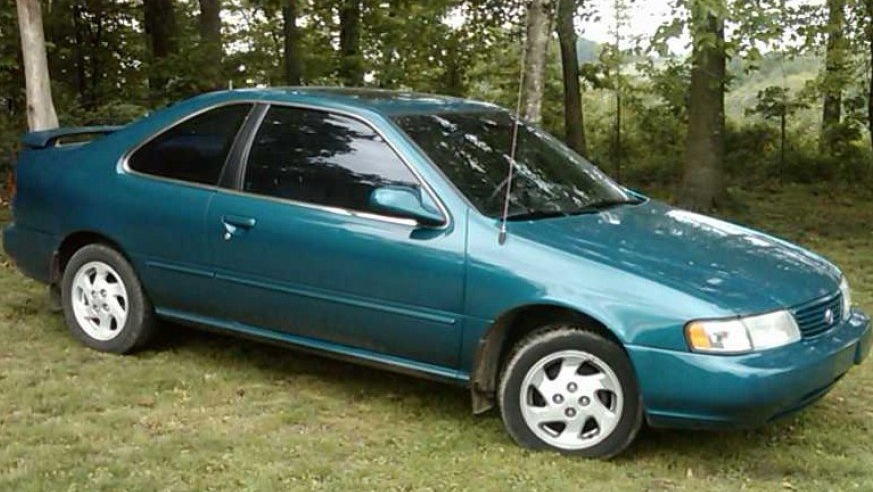
The Nissan Lucino, produced between 1994 and 1998, was a coupe marketed primarily in Japan and select export markets. It represented Nissan’s entry into the compact coupe segment, offering a stylish alternative to more established competitors. The Lucino was based on the Nissan Sentra (known as the Sunny in some markets) platform, sharing many mechanical components but distinguished by its two-door body style and more sporting aspirations. The 1.5 i 16V GG variant, producing 105 horsepower, occupied a middle ground in the Lucino lineup, offering a balance between affordability and performance. It was positioned below the more powerful 1.8L models and served as a popular choice for buyers seeking a fuel-efficient and reasonably equipped coupe.
Technical Specifications
| Brand | Nissan |
| Model | Lucino |
| Generation | Lucino |
| Type (Engine) | 1.5 i 16V GG (105 Hp) |
| Start of production | 1994 |
| End of production | 1998 |
| Powertrain Architecture | Internal Combustion engine |
| Body type | Coupe |
| Seats | 5 |
| Doors | 2 |
| Fuel consumption (combined) | 6.9 l/100 km (34.1 US mpg, 40.9 UK mpg, 14.5 km/l) |
| Fuel Type | Petrol (Gasoline) |
| Weight-to-power ratio | 12.1 kg/Hp, 82.4 Hp/tonne |
| Weight-to-torque ratio | 9.4 kg/Nm, 105.9 Nm/tonne |
| Power | 105 Hp @ 6000 rpm |
| Power per litre | 70.1 Hp/l |
| Torque | 135 Nm @ 4400 rpm (99.57 lb.-ft. @ 4400 rpm) |
| Engine layout | Front, Transverse |
| Engine displacement | 1497 cm3 (91.35 cu. in.) |
| Number of cylinders | 4 |
| Engine configuration | Inline |
| Cylinder Bore | 73.6 mm (2.9 in.) |
| Piston Stroke | 88 mm (3.46 in.) |
| Compression ratio | 9.9:1 |
| Number of valves per cylinder | 4 |
| Fuel injection system | Multi-port manifold injection |
| Engine aspiration | Naturally aspirated engine |
| Valvetrain | DOHC |
| Kerb Weight | 1275 kg (2810.89 lbs.) |
| Fuel tank capacity | 50 l (13.21 US gal | 11 UK gal) |
| Length | 4285 mm (168.7 in.) |
| Width | 1690 mm (66.54 in.) |
| Height | 1375 mm (54.13 in.) |
| Wheelbase | 2535 mm (99.8 in.) |
| Front track | 1480 mm (58.27 in.) |
| Rear track | 1445 mm (56.89 in.) |
| Minimum turning circle | 9.6 m (31.5 ft.) |
| Drivetrain Architecture | The Internal combustion engine (ICE) drives the front wheels of the vehicle. |
| Drive wheel | Front wheel drive |
| Number of gears and type of gearbox | 5 gears, manual transmission |
| Front suspension | Spring Strut |
| Rear suspension | Coil spring |
| Front brakes | Disc |
| Rear brakes | Drum |
| Assisting systems | ABS (Anti-lock braking system) |
| Steering type | Steering rack and pinion |
| Power steering | Hydraulic Steering |
| Tires size | 165/80 R13S |
Powertrain & Engine Architecture
The Lucino 1.5 i 16V GG was powered by Nissan’s GA15DE engine, a 1.5-liter inline-four cylinder engine. This engine featured a double overhead camshaft (DOHC) valvetrain with four valves per cylinder, contributing to its relatively high output for its displacement. The GA15DE utilized multi-port fuel injection, optimizing fuel delivery for improved efficiency and performance. The engine’s 9.9:1 compression ratio was a typical value for naturally aspirated engines of the era. The 105 horsepower peak was achieved at 6000 rpm, while the 135 Nm (99.57 lb-ft) of torque was available at 4400 rpm. The engine was transversely mounted in the front of the vehicle, driving the front wheels. The standard transmission for this variant was a five-speed manual gearbox, providing drivers with direct control over the engine’s power.
Driving Characteristics
The 1.5L engine, paired with the five-speed manual transmission, provided adequate performance for everyday driving. Acceleration was not particularly brisk, but the engine felt responsive within its operating range. The gear ratios were tuned for fuel efficiency and drivability, rather than outright speed. Compared to the 1.8L Lucino models, the 1.5L offered a more economical driving experience, but at the expense of some performance. The lighter engine weight contributed to slightly better handling balance, although the overall driving experience was geared towards comfort and ease of use rather than sporty dynamics. The manual transmission allowed for more driver engagement than an automatic would have, but the engine’s limited torque meant frequent downshifts were often necessary when overtaking or climbing hills.
Equipment & Trim Levels
The Lucino 1.5 i 16V GG typically came equipped with a reasonable level of standard features. These included power steering, a basic audio system, and cloth upholstery. Air conditioning was often included, but could sometimes be an optional extra depending on the specific market and trim package. The interior design was functional and straightforward, with a focus on practicality. Optional extras could include alloy wheels, upgraded audio systems, and power windows. The trim level of the 1.5L variant generally positioned it as the entry-level or mid-range offering in the Lucino lineup, making it an attractive option for budget-conscious buyers.
Chassis & Braking
The Lucino utilized a relatively simple chassis design, featuring a front strut suspension and a rear coil spring suspension. This setup provided a comfortable ride quality, although it wasn’t particularly sporty. The front brakes were disc brakes, offering adequate stopping power, while the rear brakes were drum brakes, a cost-saving measure common in vehicles of this class. Anti-lock braking system (ABS) was available, enhancing safety by preventing wheel lockup during hard braking. The steering system was a rack and pinion setup with hydraulic power assistance, providing light and easy steering feel.
Market Reception & Comparison
The Nissan Lucino 1.5 i 16V GG was generally well-received as an affordable and stylish coupe. Critics praised its fuel efficiency and comfortable ride, but noted its lack of outright performance compared to some competitors. Compared to the 1.8L Lucino models, the 1.5L offered better fuel economy but less power. It competed with other compact coupes such as the Honda Civic Coupe and the Toyota Corolla Coupe. The 1.5L variant was often seen as a sensible choice for buyers who prioritized fuel efficiency and affordability over performance.
Legacy
The Nissan Lucino, while not a groundbreaking vehicle, remains a fondly remembered coupe from the 1990s. The GA15DE engine proved to be a reliable and durable powerplant, and many Lucinos are still on the road today. The 1.5L variant, in particular, is known for its fuel efficiency and relatively low maintenance costs. In the used car market, the Lucino 1.5 i 16V GG represents an affordable and practical option for those seeking a classic coupe. Its simple mechanical design makes it relatively easy to maintain and repair, and its stylish appearance continues to appeal to enthusiasts.
