
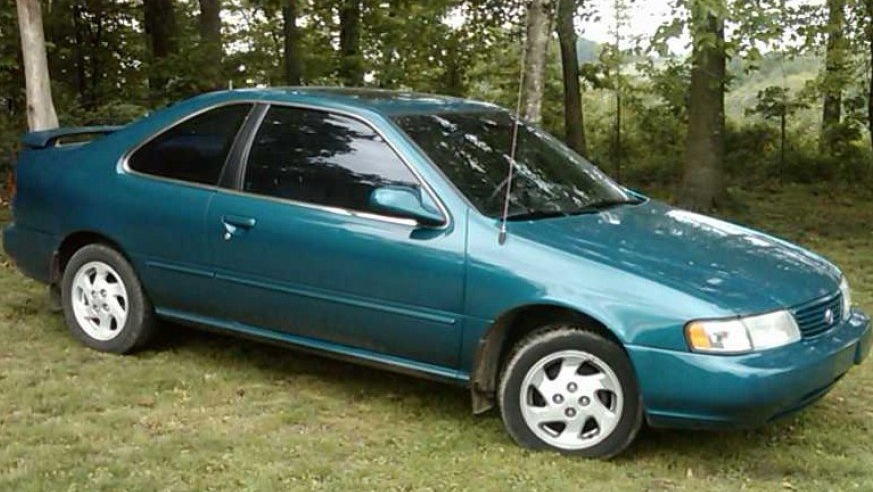
The Nissan Lucino, produced between 1994 and 1998, was a coupe marketed primarily in Japan and Australia. It represented Nissan’s entry into the compact coupe segment, offering a more stylish alternative to the contemporary Nissan Sentra (known as the Sunny in some markets). The Lucino was essentially a rebadged and slightly restyled version of the Nissan Pulsar, sharing its underpinnings and mechanical components. The 1.5 i 16V GG variant, equipped with a 105 horsepower engine and a four-speed automatic transmission, occupied the lower-mid range of the Lucino lineup, positioned as an accessible and fuel-efficient option for buyers prioritizing comfort and ease of use over outright performance. This model played a significant role in broadening Nissan’s appeal to a wider demographic.
Technical Specifications
| Brand | Nissan |
| Model | Lucino |
| Generation | Lucino |
| Type (Engine) | 1.5 i 16V GG (105 Hp) Automatic |
| Start of production | 1994 |
| End of production | 1998 |
| Powertrain Architecture | Internal Combustion engine |
| Body type | Coupe |
| Seats | 5 |
| Doors | 2 |
| Fuel consumption (combined) | 6.9 l/100 km (34.1 US mpg, 40.9 UK mpg, 14.5 km/l) |
| Fuel Type | Petrol (Gasoline) |
| Weight-to-power ratio | 12.1 kg/Hp, 82.4 Hp/tonne |
| Weight-to-torque ratio | 9.4 kg/Nm, 105.9 Nm/tonne |
| Power | 105 Hp @ 6000 rpm |
| Power per litre | 70.1 Hp/l |
| Torque | 135 Nm @ 4400 rpm (99.57 lb.-ft. @ 4400 rpm) |
| Engine layout | Front, Transverse |
| Engine displacement | 1497 cm3 (91.35 cu. in.) |
| Number of cylinders | 4 |
| Engine configuration | Inline |
| Cylinder Bore | 73.6 mm (2.9 in.) |
| Piston Stroke | 88 mm (3.46 in.) |
| Compression ratio | 9.9:1 |
| Number of valves per cylinder | 4 |
| Fuel injection system | Multi-port manifold injection |
| Engine aspiration | Naturally aspirated engine |
| Valvetrain | DOHC |
| Kerb Weight | 1275 kg (2810.89 lbs.) |
| Fuel tank capacity | 50 l (13.21 US gal | 11 UK gal) |
| Length | 4285 mm (168.7 in.) |
| Width | 1690 mm (66.54 in.) |
| Height | 1375 mm (54.13 in.) |
| Wheelbase | 2535 mm (99.8 in.) |
| Front track | 1480 mm (58.27 in.) |
| Rear track | 1445 mm (56.89 in.) |
| Minimum turning circle | 9.6 m (31.5 ft.) |
| Drivetrain Architecture | The Internal combustion engine (ICE) drives the front wheels of the vehicle. |
| Drive wheel | Front wheel drive |
| Number of gears | 4 |
| Gearbox type | automatic transmission |
| Front suspension | Spring Strut |
| Rear suspension | Coil spring |
| Front brakes | Disc |
| Rear brakes | Drum |
| Assisting systems | ABS (Anti-lock braking system) |
| Steering type | Steering rack and pinion |
| Power steering | Hydraulic Steering |
| Tires size | 165/80 R13 S |
| Wheel rims size | 13 |
Powertrain & Engine Architecture
The heart of the Lucino 1.5 i is the GA15DE engine, a 1.5-liter inline-four cylinder gasoline engine. This engine utilizes a multi-port fuel injection system, delivering fuel directly to each intake port for improved combustion efficiency. The engine features a double overhead camshaft (DOHC) valvetrain, operating 16 valves (four per cylinder) to optimize airflow and enhance performance. The GA15DE is a naturally aspirated engine, meaning it doesn’t rely on a turbocharger or supercharger for forced induction. The four-speed automatic transmission, typically a Jatco unit, was chosen for its smooth operation and ease of use, catering to drivers who preferred a less engaging driving experience. This transmission featured standard torque converter technology and electronically controlled shifts.
Driving Characteristics
The 105 horsepower output of the 1.5L engine, coupled with the four-speed automatic transmission, resulted in a driving experience focused on comfort and fuel economy rather than spirited acceleration. Acceleration from 0 to 60 mph was estimated to be around 11-12 seconds. The automatic transmission’s gear ratios were tuned for smooth transitions and maximizing fuel efficiency, but this came at the expense of responsiveness. Compared to the manual transmission versions of the Lucino, or those equipped with the larger 1.6 or 1.8-liter engines, the 1.5L automatic felt noticeably slower. However, the automatic transmission made it an ideal choice for city driving and commuting, offering a relaxed and convenient driving experience.
Equipment & Trim Levels
The 1.5 i 16V GG Automatic trim typically included features such as power steering, air conditioning, and an AM/FM radio. Interior upholstery was generally cloth, with a relatively simple dashboard layout. Optional extras included power windows, central locking, and upgraded audio systems. The trim level aimed to provide a balance between affordability and essential comfort features. The Lucino, in general, wasn’t known for lavish appointments, but it offered a functional and reasonably well-equipped interior for its price point.
Chassis & Braking
The Lucino utilized a front-wheel-drive layout with a MacPherson strut suspension in the front and a coil spring suspension in the rear. The front brakes were disc brakes, providing adequate stopping power, while the rear brakes were drum brakes, a cost-saving measure common in this class of vehicle. Anti-lock Braking System (ABS) was often included as standard equipment, enhancing safety by preventing wheel lockup during hard braking. The suspension tuning prioritized ride comfort over sporty handling, resulting in a relatively soft and forgiving ride quality.
Market Reception & Comparison
The Lucino 1.5 i 16V Automatic received mixed reviews. Critics generally praised its fuel efficiency and comfortable ride, but noted its lack of performance compared to other coupes in the market. It was often seen as a sensible and practical choice for buyers who didn’t prioritize driving excitement. Compared to the higher-spec Lucino models with larger engines, the 1.5L automatic offered significantly lower running costs but lacked the same level of performance. Its fuel economy of around 34 mpg was competitive for its time, making it an attractive option for budget-conscious buyers.
Legacy
The Nissan Lucino, while not a particularly iconic vehicle, holds a place in automotive history as a stylish and affordable coupe. The GA15DE engine, while not known for exceptional power, proved to be a reliable and durable unit. Today, well-maintained examples of the Lucino 1.5 i 16V Automatic are becoming increasingly rare, and are sought after by collectors and enthusiasts looking for a unique and affordable classic coupe. The powertrain, while aging, is generally considered to be relatively trouble-free, provided it has been regularly serviced. Its simplicity and readily available parts contribute to its continued viability as a classic car.
