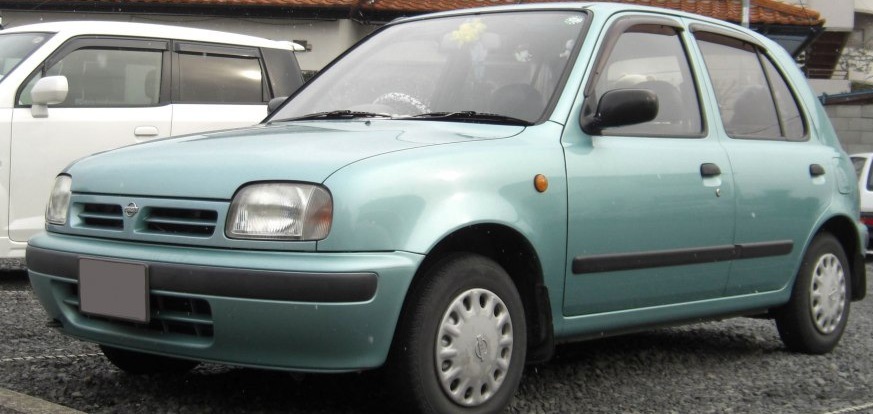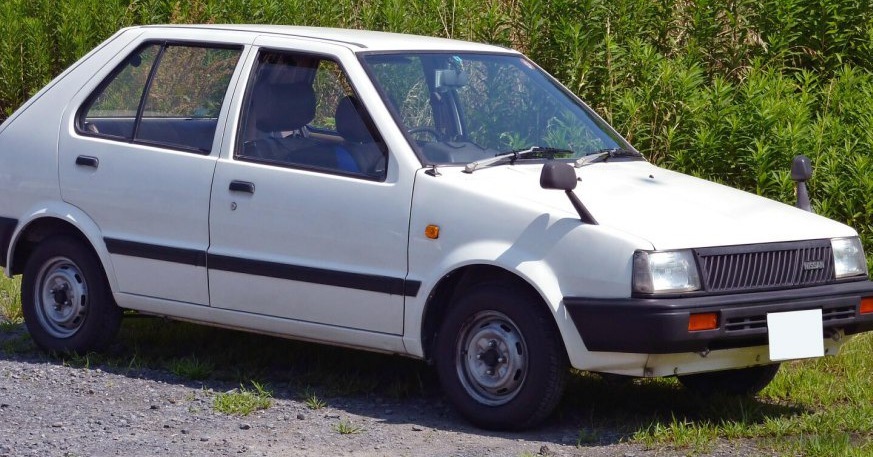
The Nissan March, known as the Micra in many international markets, K10 generation represents Nissan’s entry into the supermini segment. Produced from 1982 to 1989, the K10 was a front-wheel-drive hatchback designed to compete with established European and Japanese rivals like the Fiat Uno, Renault 5, and Suzuki Swift. The 1.0-liter, 50 horsepower variant was a cornerstone of the K10 lineup, particularly in Europe and Japan, offering an affordable and economical transportation solution. This version was specifically targeted at buyers prioritizing fuel efficiency and low running costs over outright performance. It served as the base model, with higher trims offering larger engines and more features.
Technical Specifications
| Brand | Nissan |
| Model | March (Micra) |
| Generation | March (K10) |
| Type (Engine) | 1.0 (50 Hp) |
| Start of Production | 1982 |
| End of Production | 1989 |
| Powertrain Architecture | Internal Combustion Engine |
| Body Type | Hatchback |
| Fuel Type | Petrol (Gasoline) |
| Power | 50 Hp |
| Engine Aspiration | Naturally Aspirated |
| Engine Displacement | 988 cc |
| Transmission | 4-Speed Manual or 3-Speed Automatic |
| Weight (approx.) | 730 – 780 kg (1609 – 1720 lbs) |
| Top Speed (approx.) | 145 km/h (90 mph) |
Powertrain & Engine Architecture
The heart of the K10 March 1.0 was the Nissan E10 engine, a 988cc inline-four cylinder petrol engine. This engine was a simple, naturally aspirated design, utilizing a single overhead camshaft (SOHC) and two valves per cylinder. Fuel delivery was managed by a carburetor, a common feature for vehicles of this era, prioritizing simplicity and cost-effectiveness over the more advanced fuel injection systems. The E10 engine produced 50 horsepower at 6000 rpm and approximately 62 lb-ft of torque at 3600 rpm. Nissan offered both a four-speed manual transmission and a three-speed automatic transmission with this engine. The automatic, while providing convenience, noticeably impacted acceleration. The engine block was cast iron, contributing to its durability, while the cylinder head was aluminum, helping to reduce overall weight. The valvetrain employed rocker arms, a typical design for SOHC engines of the time.
Driving Characteristics
The 1.0-liter March K10 offered modest performance. Acceleration was leisurely, taking approximately 16-18 seconds to reach 60 mph. The car was best suited for urban driving and shorter commutes. The four-speed manual transmission allowed drivers to extract the most from the engine, while the three-speed automatic resulted in a more relaxed, but slower, driving experience. Gear ratios were optimized for fuel economy rather than outright speed. The light weight of the K10 – typically between 730 and 780 kg – helped to mitigate the lack of power. Handling was generally considered safe and predictable, though not particularly sporty. The steering was light, making it easy to maneuver in tight spaces. Compared to the later 1.2 and 1.5-liter versions of the K10, the 1.0-liter model felt significantly underpowered, especially when fully loaded with passengers or cargo. The manual transmission version offered a more engaging driving experience, while the automatic prioritized ease of use.
Equipment & Trim Levels
The K10 March 1.0, as the entry-level model, typically came with a fairly basic level of equipment. Standard features generally included cloth upholstery, a simple dashboard with analog gauges, and basic controls for heating and ventilation. Power steering and electric windows were not standard, but were often available as optional extras on higher trim levels. The interior was designed with practicality in mind, offering reasonable space for passengers and a usable cargo area with the rear seats folded down. Trim levels varied depending on the market, but generally progressed from a very basic “L” trim to more equipped “GL” and “SL” versions. The GL trim often included features like a more comfortable interior, upgraded upholstery, and a better sound system. Optional extras could include a sunroof, alloy wheels, and upgraded audio equipment.
Chassis & Braking
The K10 March utilized a MacPherson strut front suspension and a twist-beam rear suspension. This setup provided a comfortable ride, although it wasn’t particularly sophisticated. The front suspension incorporated coil springs and a stabilizer bar, while the rear suspension relied on leaf springs. Braking was typically accomplished with drum brakes on all four wheels in the base models, although some higher trim levels featured front disc brakes. The braking system was adequate for the car’s weight and performance, but lacked the stopping power of more modern vehicles. Steering was rack and pinion, providing reasonably precise control. The K10’s chassis was relatively lightweight, contributing to its fuel efficiency and nimble handling.
Market Reception & Comparison
The Nissan March K10 1.0 was well-received in its target market as an affordable and economical city car. Critics praised its fuel efficiency, compact size, and ease of driving. However, the 1.0-liter engine was often criticized for its lack of power, particularly when compared to larger-engined rivals. Compared to the 1.2 and 1.5-liter versions of the K10, the 1.0-liter model offered significantly lower performance but also lower running costs. Fuel economy was a major selling point, with the 1.0-liter engine achieving around 45-55 mpg in real-world driving conditions. Reliability was generally good, although the carburetor required periodic maintenance. The K10 1.0 was often seen as a sensible and practical choice for first-time car buyers, students, and those seeking a low-cost transportation solution.
Legacy
The Nissan March K10 1.0 played a significant role in establishing Nissan as a major player in the European supermini market. While the E10 engine isn’t known for its high performance or longevity compared to later Nissan engines, it proved to be a reliable and durable powerplant when properly maintained. Today, the K10 March is gaining a following among classic car enthusiasts, particularly those seeking a simple, affordable, and nostalgic vehicle. Parts availability can be a challenge, but many components are still available through specialist suppliers. The K10 1.0 remains a testament to Nissan’s ability to produce a practical and economical car that met the needs of a wide range of buyers. Its simplicity and affordability continue to appeal to those seeking a classic driving experience.