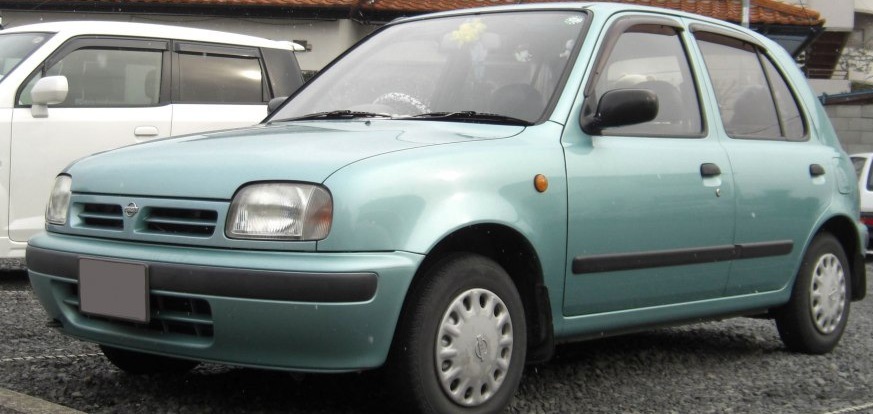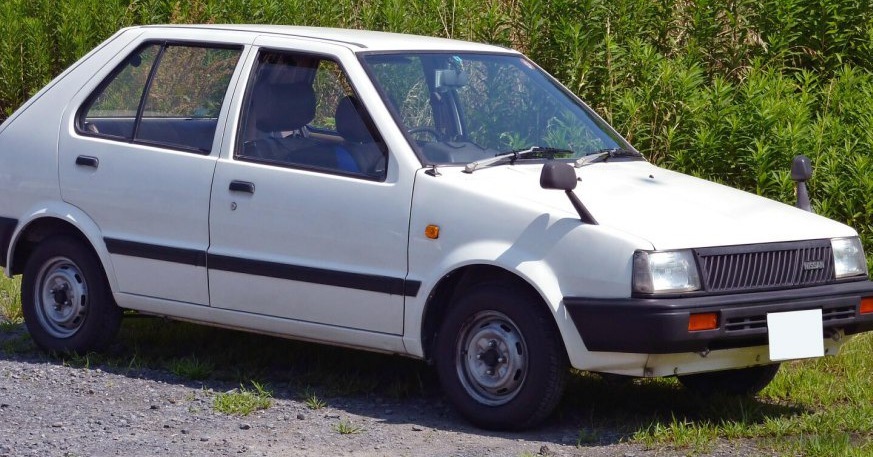
The Nissan March, known as the Micra in many international markets, K10 generation represented a significant step forward for Nissan’s supermini offerings. Produced from 1982 to 1992, the K10 was a front-wheel-drive hatchback designed to compete with established European and Japanese rivals like the Fiat Uno, Renault 5, and Suzuki Swift. The 1.2-liter (60 horsepower) variant, introduced later in the production run, aimed to provide a balance of affordability and usability for a broader customer base. This version was particularly important in markets where smaller displacement engines were favored due to tax regulations or fuel economy concerns. It served as an entry-level option within the K10 lineup, positioned below the more powerful 1.0 and 1.3-liter models.
Technical Specifications
| Brand | Nissan |
| Model | March (Micra) |
| Generation | March (K10) |
| Type (Engine) | 1.2 (60 Hp) |
| Start of Production | 1986 |
| End of Production | 1992 |
| Powertrain Architecture | Internal Combustion Engine |
| Body Type | Hatchback |
| Fuel Type | Petrol (Gasoline) |
| Power | 60 Hp |
| Engine Aspiration | Naturally Aspirated |
| Engine Displacement | 1.2 Liters |
| Transmission | Typically 4-speed Automatic or 5-speed Manual |
| Weight (approx.) | 780 – 850 kg (1720 – 1874 lbs) |
| Top Speed (approx.) | 95 mph (153 km/h) |
| Fuel Economy (combined, approx.) | 45-50 mpg (5.2-5.7 L/100km) |
Powertrain & Engine Architecture
The 1.2-liter engine, designated as the EG12DE, was a naturally aspirated inline-four cylinder engine. It represented an increase in displacement over the earlier 1.0-liter options, offering a modest but noticeable improvement in performance. The engine utilized a single overhead camshaft (SOHC) valvetrain, operating two valves per cylinder. Fuel delivery was managed by a carburetor in earlier iterations of this engine, but later models transitioned to electronic fuel injection (EFI) for improved efficiency and reduced emissions. The EFI system, while relatively simple by modern standards, provided more precise fuel metering and contributed to smoother operation. The 60 horsepower output was achieved at approximately 5600 rpm, with peak torque of around 78 lb-ft (106 Nm) at 3600 rpm. The K10 March 1.2 was commonly offered with either a 4-speed automatic transmission or a 5-speed manual. The automatic transmission was designed for ease of use, prioritizing comfort over outright performance. It was a conventional hydraulic automatic, lacking the electronic controls found in later transmissions.
Driving Characteristics
The 1.2-liter March, particularly when equipped with the automatic transmission, was not designed for spirited driving. Acceleration was adequate for urban and suburban commuting, but overtaking maneuvers required careful planning. The automatic transmission’s gear ratios were optimized for fuel economy rather than rapid acceleration. The 0-60 mph time was estimated to be around 14-16 seconds. Compared to the 1.0-liter version, the 1.2 offered a more relaxed driving experience, especially on highway journeys. The extra power allowed for easier hill climbing and more confident merging onto freeways. However, the manual transmission version provided a more engaging driving experience, allowing the driver to fully utilize the engine’s available power. The K10’s suspension, consisting of MacPherson struts at the front and a torsion beam rear axle, provided a comfortable ride, absorbing bumps and imperfections in the road surface reasonably well. Steering was light and easy, making it maneuverable in tight spaces.
Equipment & Trim Levels
The 1.2-liter March typically represented the base or mid-range trim level within the K10 lineup. Standard equipment generally included cloth upholstery, a basic instrument cluster, and manual windows and door locks. Power steering was often an optional extra, as was air conditioning. Interior plastics were durable but utilitarian, reflecting the car’s affordable price point. Later models might have included features like a basic radio/cassette player and upgraded seat fabrics. The dashboard layout was simple and functional, with clearly labeled controls. The exterior styling was relatively understated, with a focus on practicality rather than aesthetics. Available colors typically included a range of solid and metallic finishes.
Chassis & Braking
The K10 March utilized a monocoque chassis construction, providing a good balance of rigidity and weight. The front suspension featured MacPherson struts with coil springs and an anti-roll bar, while the rear suspension employed a torsion beam axle. This setup provided a comfortable ride and predictable handling. Braking was typically accomplished with front disc brakes and rear drum brakes. The braking system was adequate for the car’s weight and performance, but lacked the sophistication of more modern systems. The steering system was a rack-and-pinion setup, providing light and precise steering feel. The K10’s relatively small size and light weight contributed to its agility and ease of parking.
Market Reception & Comparison
The Nissan March 1.2 was generally well-received as an affordable and reliable city car. Critics praised its fuel efficiency and ease of driving, but noted its lack of outright performance. Compared to the 1.0-liter version, the 1.2 offered a noticeable improvement in drivability, making it a more suitable choice for drivers who frequently traveled on highways or carried passengers. Compared to the more powerful 1.3-liter model, the 1.2 was less expensive to purchase and insure, making it attractive to budget-conscious buyers. Fuel economy was a key selling point, with the 1.2-liter engine achieving around 45-50 mpg in real-world driving conditions. Reliability was also a strong suit, with the K10 March generally proving to be a durable and dependable vehicle.
Legacy
The K10 Nissan March, including the 1.2-liter variant, established the Micra/March as a popular choice in the supermini segment. The K10’s simple and robust design contributed to its longevity, and many examples remain on the road today. The 1.2-liter engine, while not particularly powerful, proved to be reliable and relatively easy to maintain. In the used car market, K10 Marches are often sought after by enthusiasts and collectors, particularly those looking for a classic and affordable city car. Parts availability can be a challenge in some regions, but a dedicated community of owners and suppliers helps to keep these cars running. The K10 laid the foundation for subsequent generations of the Micra/March, which have continued to evolve and improve upon the original’s strengths.