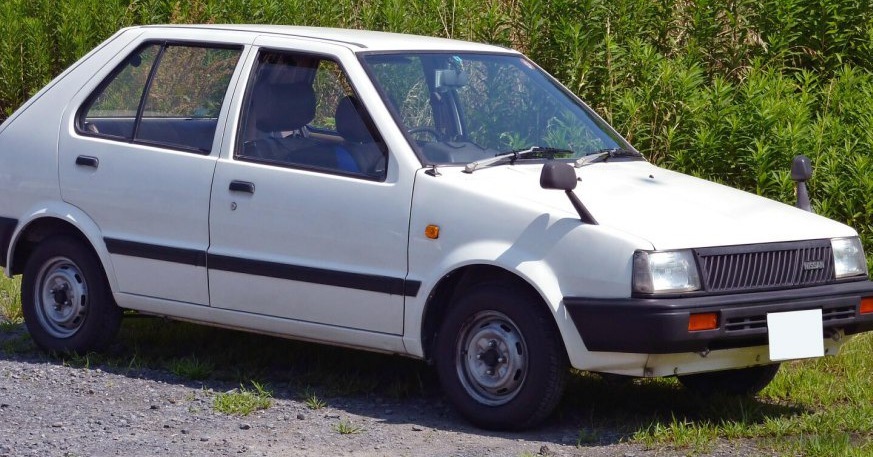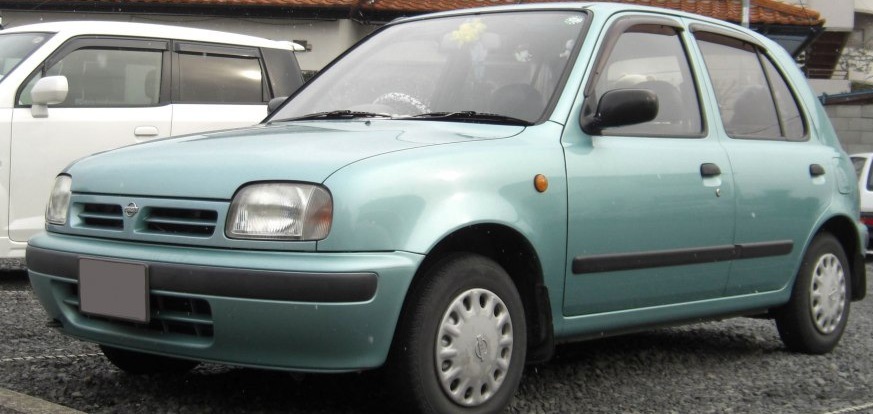
The Nissan March, known as the Micra in many markets, is a supermini car first introduced by Nissan in 1982. The K11 series, produced from 1992 to 2002, represented a significant redesign and became a popular choice in Europe and Japan, known for its compact size, affordability, and fuel efficiency. The 1.0-liter (60 hp) variant, produced between 2000 and 2002, served as the entry-level model in many markets, offering basic transportation with a focus on economy. This version was particularly prevalent in Europe where it competed with other small city cars like the Fiat Punto and Peugeot 106.
Technical Specifications
| Brand | Nissan |
| Model | March |
| Generation | March (K11) |
| Type (Engine) | 1.0 (60 Hp) |
| Start of production | 2000 year |
| End of production | 2002 year |
| Powertrain Architecture | Internal Combustion engine |
| Body type | Hatchback |
| Seats | 5 |
| Doors | 3/5 |
| Fuel consumption (urban) | 7 l/100 km (33.6 US mpg, 40.4 UK mpg, 14.3 km/l) |
| Fuel consumption (extra urban) | 4.8 l/100 km (49 US mpg, 58.9 UK mpg, 20.8 km/l) |
| Fuel Type | Petrol (Gasoline) |
| Acceleration 0 – 100 km/h | 15.5 sec |
| Acceleration 0 – 62 mph | 15.5 sec |
| Acceleration 0 – 60 mph | 14.7 sec |
| Maximum speed | 150 km/h (93.21 mph) |
| Weight-to-power ratio | 13.9 kg/Hp, 71.9 Hp/tonne |
| Weight-to-torque ratio | 10.4 kg/Nm, 95.8 Nm/tonne |
| Power | 60 Hp @ 6000 rpm |
| Power per litre | 60.1 Hp/l |
| Torque | 80 Nm @ 4000 rpm (59 lb.-ft. @ 4000 rpm) |
| Engine layout | Front, Transverse |
| Engine displacement | 998 cm3 (60.9 cu. in.) |
| Number of cylinders | 4 |
| Engine configuration | Inline |
| Cylinder Bore | 71 mm (2.8 in.) |
| Piston Stroke | 63 mm (2.48 in.) |
| Compression ratio | 9.5:1 |
| Number of valves per cylinder | 4 |
| Fuel injection system | Multi-port manifold injection |
| Engine aspiration | Naturally aspirated engine |
| Kerb Weight | 835 kg (1840.86 lbs.) |
| Max. weight | 1340 kg (2954.19 lbs.) |
| Max load | 505 kg (1113.33 lbs.) |
| Trunk (boot) space – minimum | 205 l (7.24 cu. ft.) |
| Trunk (boot) space – maximum | 960 l (33.9 cu. ft.) |
| Fuel tank capacity | 42 l (11.1 US gal, 9.24 UK gal) |
| Length | 3746 mm (147.48 in.) |
| Width | 1595 mm (62.8 in.) |
| Height | 1440 mm (56.69 in.) |
| Wheelbase | 2360 mm (92.91 in.) |
| Front track | 1360 mm (53.54 in.) |
| Rear (Back) track | 1325 mm (52.17 in.) |
| Drivetrain Architecture | The Internal combustion engine (ICE) drives the front wheels of the vehicle. |
| Drive wheel | Front wheel drive |
| Number of gears and type of gearbox | 5 gears, manual transmission |
| Front suspension | Wishbone |
| Rear suspension | Spring Strut |
| Front brakes | Ventilated discs |
| Rear brakes | Drum |
| Assisting systems | ABS (Anti-lock braking system) |
| Steering type | Steering rack and pinion |
| Power steering | Hydraulic Steering |
| Tires size | 165/60 R14 |
| Wheel rims size | 14 |
INTRODUCTION
The Nissan March K11 1.0, produced from 2000 to 2002, was a mainstay of Nissan’s supermini lineup. Positioned as the entry-level model, it offered an affordable and economical option for buyers seeking a small, practical city car. Built on the Nissan ‘B’ platform (also known as the 1HX0/A3 platform shared with the Renault Clio), the K11 generation represented a move towards more modern styling and improved interior space compared to its predecessors. The 1.0-liter engine and five-speed manual transmission combination was designed for maximizing fuel efficiency and providing adequate, if not exhilarating, performance for urban driving.
Powertrain & Engine Architecture
The heart of the K11 1.0 is the CG10DE engine, a 998cc inline-four cylinder petrol engine. This engine utilizes a multi-point fuel injection system, delivering fuel directly to each intake port for improved combustion efficiency. The engine features a single overhead camshaft (SOHC) operating four valves per cylinder, a relatively simple valvetrain design prioritizing reliability and cost-effectiveness. The CG10DE produces 60 horsepower at 6000 rpm and 80 Nm (59 lb-ft) of torque at 4000 rpm. The five-speed manual transmission was the standard offering for this variant, providing a reasonable spread of gears for both city and highway driving. The transmission itself is a conventional design, known for its durability and relatively low maintenance requirements. While an automatic transmission was available on some K11 models, it was typically paired with the larger 1.3-liter engine.
Driving Characteristics
The 1.0-liter March K11 is not a performance car. Acceleration is modest, taking around 15.5 seconds to reach 62 mph (100 km/h). However, the engine is surprisingly willing and provides adequate power for navigating urban environments. The gear ratios are tuned for economy, meaning the engine needs to be revved to extract the most performance. Compared to the 1.3-liter versions, the 1.0 feels noticeably slower, particularly when fully loaded or climbing hills. The manual transmission allows for greater driver control and helps to keep the engine in its optimal power band. The light weight of the vehicle (around 835 kg) helps to mitigate the lack of outright power, making it feel nimble and easy to maneuver in tight spaces. The steering is light and precise, contributing to a pleasant driving experience in city conditions.
Equipment & Trim Levels
The 1.0-liter March K11 typically came with a fairly basic level of equipment, reflecting its position as the entry-level model. Standard features generally included power steering, central locking, and a basic audio system. Interior upholstery was typically cloth, with a simple dashboard layout. Optional extras included air conditioning, electric windows, and alloy wheels. Higher trim levels, such as the ‘S’ or ‘SE’ variants, added more features as standard, but the base 1.0 model prioritized affordability. Safety features were also relatively basic, with ABS becoming increasingly common towards the end of the K11’s production run.
Chassis & Braking
The K11 March utilizes a front-wheel-drive layout with a relatively simple suspension setup. The front suspension consists of independent wishbones, providing a comfortable ride and decent handling. The rear suspension employs a torsion beam setup, which is cost-effective and space-efficient. Braking is handled by ventilated discs on the front wheels and drum brakes on the rear. ABS (Anti-lock Braking System) was not standard on all models but became more prevalent in later years. The suspension is tuned for comfort rather than outright sportiness, providing a compliant ride over uneven surfaces. Stabilizer bars were typically fitted to improve body roll during cornering.
Market Reception & Comparison
The Nissan March K11 1.0 was generally well-received as an affordable and reliable city car. Critics praised its fuel efficiency, compact size, and ease of driving. However, the lack of power was a common criticism, particularly when compared to larger-engined rivals. Compared to the 1.3-liter March, the 1.0 offered significantly better fuel economy but at the expense of performance. The 1.3-liter version was better suited for longer journeys and carrying passengers or luggage. In terms of reliability, the 1.0-liter engine proved to be robust and relatively trouble-free, making it a popular choice for first-time buyers and those seeking a low-cost vehicle.
Legacy
The Nissan March K11 1.0 remains a relatively common sight on used car markets today. Its simple mechanicals and robust engine contribute to its longevity. While not a particularly exciting car to drive, it offers a practical and economical solution for urban transportation. The CG10DE engine is known for its reliability, although regular maintenance is essential to prevent issues. Parts availability is generally good, and repair costs are relatively low. The K11 March 1.0 represents a significant chapter in Nissan’s history, demonstrating their commitment to producing affordable and accessible vehicles for a wide range of customers.