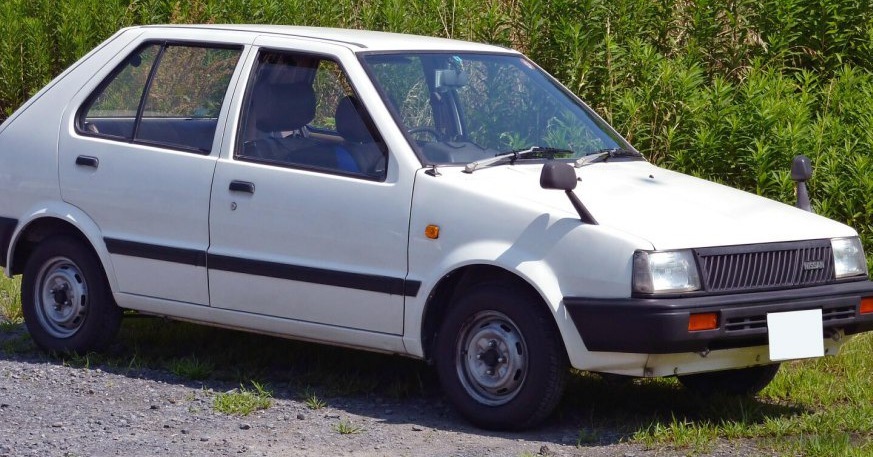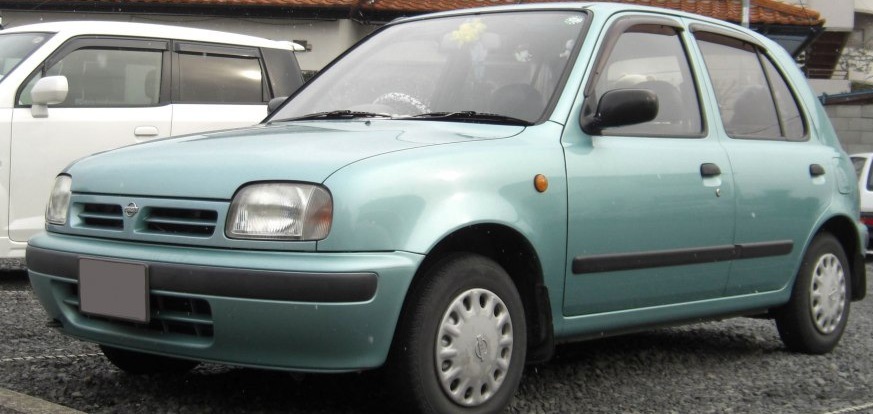
The Nissan March, known as the Micra in many markets, is a supermini car first introduced by Nissan in 1982. The K11 series, produced from 1992 to 2002, represented a significant redesign and became a popular choice in Europe and Japan. The 1.4-liter (82 hp) variant, available from 2000 to 2002, occupied a mid-range position within the K11 lineup, offering a balance between affordability and performance. This version aimed to provide a more refined driving experience than the base 1.0-liter models, while remaining accessible to budget-conscious buyers. It was primarily sold in Europe and Japan, where small, fuel-efficient cars were in high demand.
Technical Specifications
| Brand | Nissan |
| Model | March |
| Generation | March (K11) |
| Type (Engine) | 1.4 (82 Hp) |
| Start of production | 2000 year |
| End of production | 2002 year |
| Powertrain Architecture | Internal Combustion engine |
| Body type | Hatchback |
| Seats | 5 |
| Doors | 3/5 |
| Fuel consumption (urban) | 7.7 l/100 km (30.5 US mpg) |
| Fuel consumption (extra urban) | 5.2 l/100 km (45.2 US mpg) |
| Fuel Type | Petrol (Gasoline) |
| Acceleration 0 – 100 km/h | 11.9 sec |
| Acceleration 0 – 62 mph | 11.9 sec |
| Acceleration 0 – 60 mph | 11.3 sec |
| Maximum speed | 170 km/h (105.63 mph) |
| Weight-to-power ratio | 10.5 kg/Hp |
| Weight-to-torque ratio | 8 kg/Nm |
| Power | 82 Hp @ 6000 rpm |
| Power per litre | 60.8 Hp/l |
| Torque | 108 Nm @ 2800 rpm (79.66 lb.-ft. @ 2800 rpm) |
| Engine layout | Front, Transverse |
| Engine displacement | 1348 cm3 (82.26 cu. in.) |
| Number of cylinders | 4 |
| Engine configuration | Inline |
| Cylinder Bore | 72 mm (2.83 in.) |
| Piston Stroke | 82.8 mm (3.26 in.) |
| Compression ratio | 9.5:1 |
| Number of valves per cylinder | 4 |
| Fuel injection system | Multi-port manifold injection |
| Engine aspiration | Naturally aspirated engine |
| Kerb Weight | 865 kg (1907 lbs.) |
| Max. weight | 1360 kg (2998.29 lbs.) |
| Max load | 495 kg (1091.29 lbs.) |
| Trunk (boot) space – minimum | 205 l (7.24 cu. ft.) |
| Trunk (boot) space – maximum | 960 l (33.9 cu. ft.) |
| Fuel tank capacity | 42 l (11.1 US gal | 9.24 UK gal) |
| Length | 3746 mm (147.48 in.) |
| Width | 1595 mm (62.8 in.) |
| Height | 1440 mm (56.69 in.) |
| Wheelbase | 2360 mm (92.91 in.) |
| Front track | 1360 mm (53.54 in.) |
| Rear (Back) track | 1325 mm (52.17 in.) |
| Drivetrain Architecture | The Internal combustion engine (ICE) drives the front wheels of the vehicle. |
| Drive wheel | Front wheel drive |
| Number of gears and type of gearbox | 5 gears, manual transmission |
| Front suspension | Wishbone |
| Rear suspension | Spring Strut |
| Front brakes | Ventilated discs |
| Rear brakes | Drum |
| Assisting systems | ABS (Anti-lock braking system) |
| Steering type | Steering rack and pinion |
| Power steering | Hydraulic Steering |
| Tires size | 165/60 R14 |
Powertrain & Engine Architecture
The heart of the K11 March 1.4 was the CG14DE engine, a 1.4-liter inline-four cylinder gasoline engine. This engine utilized a multi-port fuel injection system, providing a balance between fuel efficiency and performance. The engine featured a single overhead camshaft (SOHC) valvetrain with four valves per cylinder. The CG14DE was known for its relatively simple design, contributing to its reliability. The 82 horsepower output was achieved at 6000 rpm, with peak torque of 108 Nm (79.66 lb-ft) delivered at 2800 rpm. The engine was transversely mounted in the front of the vehicle, driving the front wheels. The standard transmission for this variant was a five-speed manual, although a four-speed automatic transmission was also available, albeit less common. The automatic transmission, while offering convenience, did impact acceleration and fuel economy compared to the manual version.
Driving Characteristics
The 1.4-liter engine provided a noticeable improvement in performance over the smaller 1.0-liter engines available in the March range. While not a particularly sporty vehicle, the 1.4 offered adequate acceleration for everyday driving, with a 0-60 mph time of around 11.3 seconds. The five-speed manual transmission allowed drivers to keep the engine in its optimal power band, resulting in a more responsive driving experience. The automatic transmission, while smooth, resulted in slower acceleration and a less engaging feel. The K11 March’s handling was generally considered safe and predictable, but not particularly exciting. The suspension was tuned for comfort, providing a reasonably smooth ride on most road surfaces. The relatively light weight of the vehicle contributed to its nimble handling characteristics.
Equipment & Trim Levels
The 1.4-liter March typically came equipped with features such as power steering, central locking, and electric front windows. Higher trim levels offered additional features like air conditioning, alloy wheels, and a radio/cassette player. Interior upholstery was typically cloth, with a simple and functional dashboard layout. Optional extras included a sunroof, upgraded sound system, and metallic paint finishes. The specific trim level determined the level of standard equipment, with the 1.4 often serving as a base for adding optional packages.
Chassis & Braking
The K11 March utilized a front-wheel-drive layout with independent front suspension using a wishbone configuration. The rear suspension employed a torsion beam setup. Braking duties were handled by ventilated discs on the front wheels and drum brakes on the rear. Anti-lock Braking System (ABS) was available, particularly on higher trim levels, enhancing safety. The relatively lightweight construction of the K11 contributed to its braking performance. Stabilizer bars were fitted to improve handling and reduce body roll.
Market Reception & Comparison
The Nissan March 1.4 was generally well-received by critics as a practical and affordable supermini. It was praised for its fuel efficiency, reliability, and ease of driving. However, it was also criticized for its somewhat basic interior and lack of sporty pretensions. Compared to other superminis of the time, such as the Ford Fiesta and Volkswagen Polo, the March offered a competitive price point and a reputation for dependability. The 1.0-liter versions were more economical but lacked the performance of the 1.4, while higher-spec models with larger engines offered more power but at a higher cost. The automatic transmission version, while convenient, suffered from a slight performance penalty and reduced fuel economy compared to the manual.
Legacy
The Nissan March K11, particularly the 1.4-liter variant, has proven to be a remarkably durable and reliable vehicle. Many examples are still on the road today, testament to the quality of its engineering. The CG14DE engine is known for its longevity and relatively low maintenance costs. In the used car market, the K11 March remains a popular choice for budget-conscious buyers seeking a dependable and fuel-efficient city car. While not a collector’s item, well-maintained examples are appreciated for their simplicity and practicality. The K11 March played a significant role in establishing Nissan as a major player in the European supermini segment.