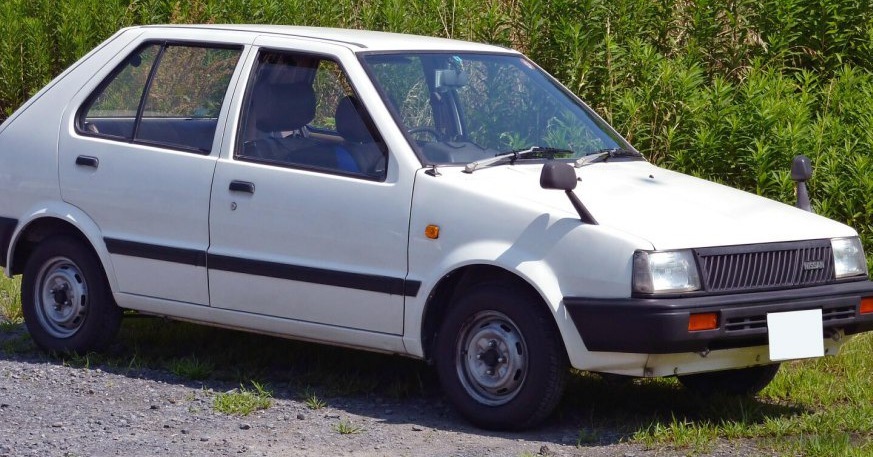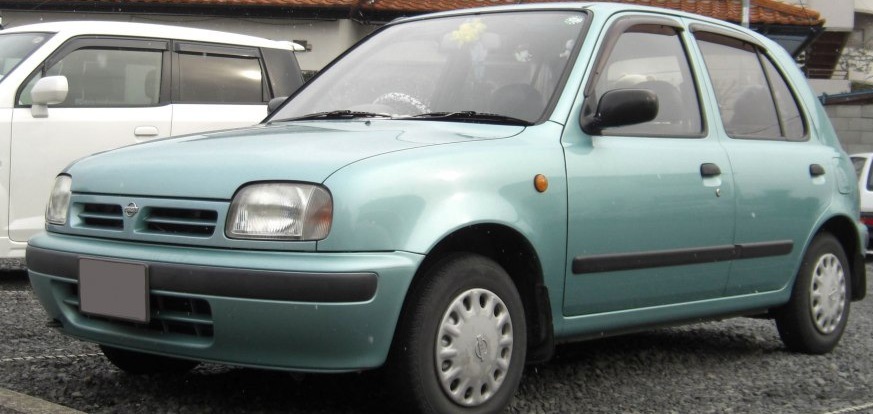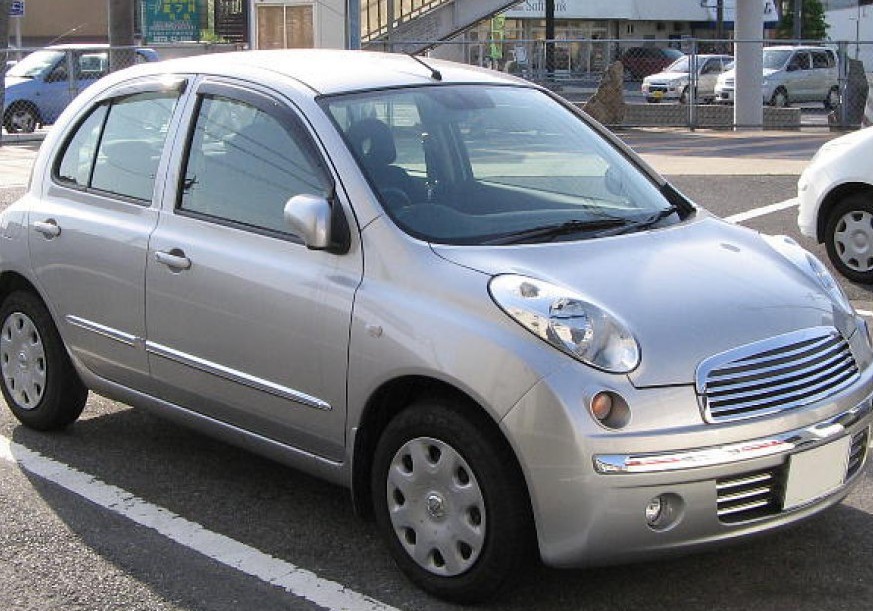
The Nissan March, known as the Micra in many markets outside of North America, is a supermini car produced by Nissan since 1982. The K12 series, manufactured from 2002 to 2010, represented a significant redesign and a move towards a more contemporary aesthetic. The 1.2 i 16V variant, producing 65 horsepower, was a mainstay of the K12 lineup, particularly in European and Asian markets. This version served as the entry point to the range, offering affordable and economical transportation. Production of this specific engine and trim combination ran from 2005 to 2010, catering to buyers prioritizing fuel efficiency and low running costs over outright performance.
Technical Specifications
| Brand | Nissan |
| Model | March |
| Generation | March (K12) |
| Type (Engine) | 1.2 i 16V (65 Hp) |
| Start of production | 2005 year |
| End of production | 2010 year |
| Powertrain Architecture | Internal Combustion engine |
| Body type | Hatchback |
| Seats | 5 |
| Doors | 3/5 |
| Fuel consumption (urban) | 7.4 l/100 km (31.8 US mpg) |
| Fuel consumption (extra urban) | 5.1 l/100 km (46.1 US mpg) |
| Fuel Type | Petrol (Gasoline) |
| Acceleration 0 – 100 km/h | 16.3 sec |
| Acceleration 0 – 62 mph | 16.3 sec |
| Acceleration 0 – 60 mph | 15.5 sec |
| Maximum speed | 154 km/h (95.69 mph) |
| Weight-to-power ratio | 15.1 kg/Hp |
| Weight-to-torque ratio | 8.9 kg/Nm |
| Power | 65 Hp @ 5200 rpm |
| Torque | 110 Nm @ 3600 rpm (81.13 lb.-ft. @ 3600 rpm) |
| Engine layout | Front, Transverse |
| Engine displacement | 1240 cm3 (75.67 cu. in.) |
| Number of cylinders | 4 |
| Engine configuration | Inline |
| Cylinder Bore | 71 mm (2.8 in.) |
| Piston Stroke | 78.3 mm (3.08 in.) |
| Compression ratio | 9.9:1 |
| Number of valves per cylinder | 4 |
| Fuel injection system | Multi-port manifold injection |
| Engine aspiration | Naturally aspirated engine |
| Valvetrain | DOHC |
| Kerb Weight | 980 kg (2160.53 lbs.) |
| Max. weight | 1475 kg (3251.82 lbs.) |
| Max load | 495 kg (1091.29 lbs.) |
| Trunk (boot) space – minimum | 371 l (13.1 cu. ft.) |
| Trunk (boot) space – maximum | 584 l (20.62 cu. ft.) |
| Fuel tank capacity | 46 l (12.15 US gal) |
| Length | 3715 mm (146.26 in.) |
| Width | 1660 mm (65.35 in.) |
| Height | 1525 mm (60.04 in.) |
| Wheelbase | 2430 mm (95.67 in.) |
| Front track | 1470 mm (57.87 in.) |
| Rear (Back) track | 1445 mm (56.89 in.) |
| Minimum turning circle | 9.8 m (32.15 ft.) |
| Drivetrain Architecture | Front wheel drive |
| Number of gears | 5 gears, manual transmission |
| Front suspension | Spring Strut |
| Rear suspension | Torsion |
| Front brakes | Ventilated discs |
| Rear brakes | Disc |
| Assisting systems | ABS (Anti-lock braking system) |
| Steering type | Steering rack and pinion |
| Tires size | 165/70 R14 |
| Wheel rims size | 5.5J x 14 |
Powertrain & Engine Architecture
The heart of the K12 March 1.2 i 16V is the CR12DE engine, a 1.2-liter inline-four cylinder gasoline engine. This engine utilizes a multi-point fuel injection system and a double overhead camshaft (DOHC) valvetrain, contributing to its relatively efficient operation. The engine code ‘CR12DE’ signifies its characteristics: ‘CR’ denotes a compact, refined engine, ‘12’ indicates the displacement in liters (rounded), ‘D’ signifies a DOHC configuration, and ‘E’ represents electronic fuel injection. The 65 horsepower output is achieved at 5200 rpm, while peak torque of 81.13 lb-ft arrives at 3600 rpm. The engine’s compression ratio is 9.9:1. The standard transmission for this variant was a five-speed manual, though a four-speed automatic transmission was also available, albeit less common. The automatic transmission, while offering convenience, did impact acceleration and fuel economy compared to the manual version.
Driving Characteristics
The 1.2-liter engine, paired with the five-speed manual transmission, provided adequate, though not exhilarating, performance. Acceleration from 0-60 mph took around 15.5 seconds, and top speed was approximately 95.69 mph. The engine felt most comfortable in the mid-range, offering sufficient power for everyday driving situations. The automatic transmission, while smooth, noticeably dulled acceleration and required more frequent downshifts when overtaking or climbing hills. The gear ratios were optimized for fuel economy rather than performance. The light weight of the March (around 2160 lbs) helped to mitigate the engine’s modest power output, making it feel reasonably nimble in urban environments.
Equipment & Trim Levels
The 1.2 i 16V typically served as the base trim level for the K12 March. Standard equipment generally included power steering, central locking, electric front windows, and an adjustable steering column. Safety features included ABS brakes and driver and passenger airbags. Interior upholstery was typically cloth, and the dashboard featured a simple, functional design. Optional extras included air conditioning, alloy wheels, and a CD player. Higher trim levels, such as the ‘Visia’ or ‘Acenta’ (depending on the market), added features like air conditioning, electric rear windows, and upgraded interior trim.
Chassis & Braking
The K12 March utilized a front-wheel-drive layout with a MacPherson strut suspension at the front and a torsion beam suspension at the rear. This setup provided a comfortable ride quality, although it wasn’t particularly sporty. The front brakes were ventilated discs, while the rear brakes were solid discs. The relatively light weight of the vehicle contributed to its decent braking performance. Stabilizer bars were typically fitted to the front suspension to reduce body roll during cornering.
Market Reception & Comparison
The Nissan March 1.2 i 16V was generally well-received as an affordable and economical city car. Critics praised its fuel efficiency, compact size, and ease of driving. However, the engine’s lack of power was often cited as a drawback, particularly when compared to larger-engined rivals. Compared to other engines in the K12 lineup, such as the 1.4-liter, the 1.2 offered significantly lower running costs but sacrificed performance. The 1.5-liter dCi diesel engine, available in some markets, provided better fuel economy and more torque, but at a higher purchase price.
Legacy
The K12 Nissan March 1.2 i 16V has proven to be a relatively reliable vehicle, with the CR12DE engine generally considered durable. Common issues include occasional problems with the throttle body and sensors. In the used car market, these models are often sought after by first-time drivers or those looking for an inexpensive and economical runabout. Parts availability remains good, and maintenance costs are typically low. While not a performance icon, the K12 March 1.2 i 16V represents a practical and dependable choice for those prioritizing affordability and fuel efficiency.