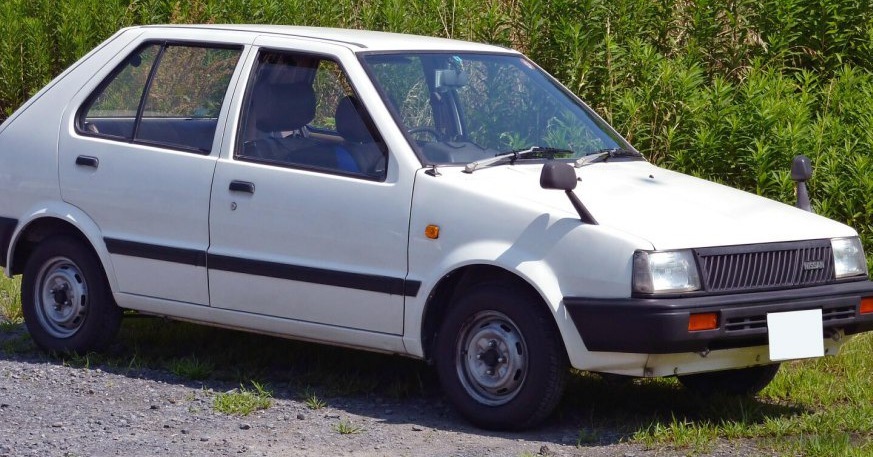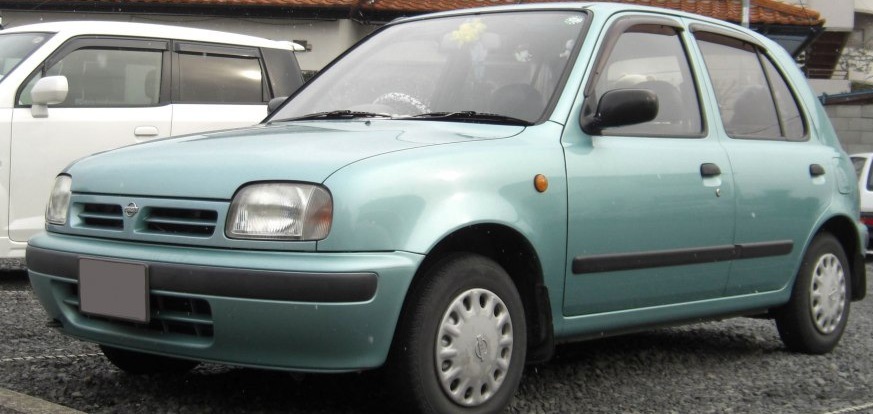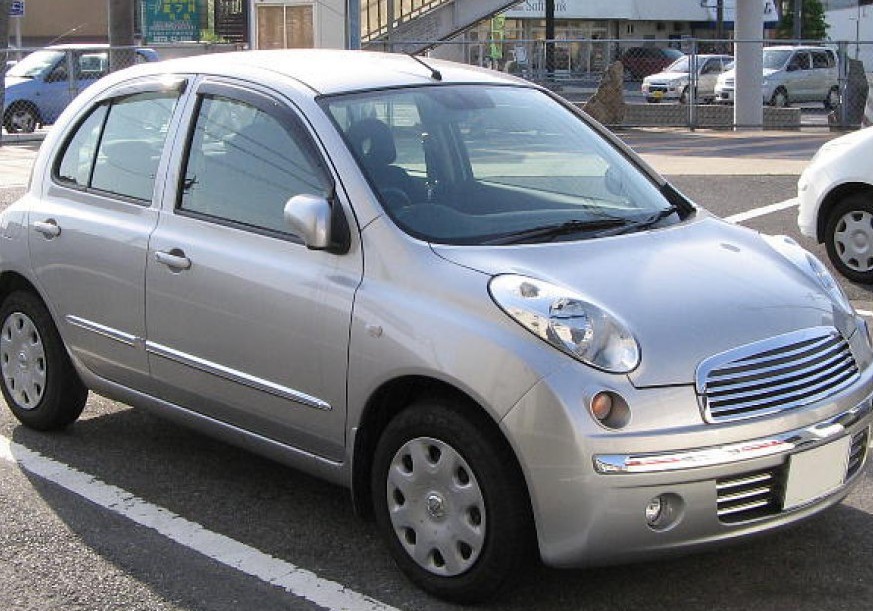
The Nissan March, known as the Micra in many international markets, is a supermini car produced by Nissan since 1982. The K12 series, manufactured from 2003 to 2010, represented a significant redesign and a move towards a more contemporary aesthetic. Within the K12 generation, the 1.4 i 16V (88 hp) Automatic variant occupied a middle ground in the lineup, offering a balance between affordability, fuel efficiency, and ease of use. This model was primarily aimed at urban drivers and those seeking a practical, no-frills vehicle. Production of this specific configuration ran from 2003 to 2005, with later K12 models receiving minor updates and engine refinements.
Technical Specifications
| Brand | Nissan |
| Model | March |
| Generation | March (K12) |
| Type (Engine) | 1.4 i 16V (88 Hp) Automatic |
| Start of production | 2003 |
| End of production | 2005 |
| Powertrain Architecture | Internal Combustion engine |
| Body type | Hatchback |
| Seats | 5 |
| Doors | 3/5 |
| Fuel consumption (urban) | 8.6 l/100 km (27.4 US mpg, 32.8 UK mpg, 11.6 km/l) |
| Fuel consumption (extra urban) | 5.8 l/100 km (40.6 US mpg, 48.7 UK mpg, 17.2 km/l) |
| Fuel consumption (combined) | 6.8 l/100 km (34.6 US mpg, 41.5 UK mpg, 14.7 km/l) |
| Fuel Type | Petrol (Gasoline) |
| Acceleration 0 – 100 km/h | 15 sec |
| Acceleration 0 – 62 mph | 15 sec |
| Acceleration 0 – 60 mph | 14.3 sec |
| Maximum speed | 158 km/h (98.18 mph) |
| Weight-to-power ratio | 11.1 kg/Hp, 90.3 Hp/tonne |
| Weight-to-torque ratio | 7.6 kg/Nm, 131.3 Nm/tonne |
| Power | 88 Hp @ 5600 rpm |
| Power per litre | 63.5 Hp/l |
| Torque | 128 Nm @ 3200 rpm (94.41 lb.-ft. @ 3200 rpm) |
| Engine layout | Front, Transverse |
| Engine Model/Code | CR14DE |
| Engine displacement | 1386 cm3 (84.58 cu. in.) |
| Number of cylinders | 4 |
| Engine configuration | Inline |
| Cylinder Bore | 73 mm (2.87 in.) |
| Piston Stroke | 82.8 mm (3.26 in.) |
| Compression ratio | 9.9:1 |
| Number of valves per cylinder | 4 |
| Fuel injection system | Multi-port manifold injection |
| Engine aspiration | Naturally aspirated engine |
| Valvetrain | DOHC |
| Kerb Weight | 975 kg (2149.51 lbs.) |
| Max. weight | 1475 kg (3251.82 lbs.) |
| Max load | 500 kg (1102.31 lbs.) |
| Trunk (boot) space – minimum | 371 l (13.1 cu. ft.) |
| Trunk (boot) space – maximum | 584 l (20.62 cu. ft.) |
| Fuel tank capacity | 46 l (12.15 US gal | 10.12 UK gal) |
| Length | 3715 mm (146.26 in.) |
| Width | 1660 mm (65.35 in.) |
| Height | 1525 mm (60.04 in.) |
| Wheelbase | 2430 mm (95.67 in.) |
| Front track | 1470 mm (57.87 in.) |
| Rear (Back) track | 1445 mm (56.89 in.) |
| Minimum turning circle | 9.8 m (32.15 ft.) |
| Drivetrain Architecture | The Internal combustion engine (ICE) drives the front wheels of the vehicle. |
| Drive wheel | Front wheel drive |
| Number of gears and type of gearbox | 4 gears, automatic transmission |
| Front suspension | Spring Strut |
| Rear suspension | Torsion |
| Front brakes | Ventilated discs |
| Rear brakes | Disc |
| Assisting systems | ABS (Anti-lock braking system) |
| Steering type | Steering rack and pinion |
| Tires size | 175/60 R15 |
| Wheel rims size | 15 |
INTRODUCTION
The K12 Nissan March represented a departure from its predecessors, adopting a more rounded and contemporary design. Introduced in 2003, it aimed to appeal to a broader audience with improved interior space and a more refined driving experience. The 1.4 i 16V Automatic trim level was positioned as a convenient and accessible option within the range, offering a step up from the base 1.2L engine while remaining more affordable than the sportier or higher-specification models. It was a popular choice in Europe and Asia, where compact city cars are highly sought after. The K12 platform (also shared with the Renault Clio II) provided a solid foundation for the March, emphasizing practicality and reliability.
Powertrain & Engine Architecture
The heart of the 1.4 i 16V Automatic March is the CR14DE engine, a 1.4-liter (1386cc) inline-four cylinder gasoline engine. This engine utilizes a multi-port fuel injection system and a double overhead camshaft (DOHC) valvetrain, contributing to its relatively efficient operation. The 16 valves (four per cylinder) enhance breathing and contribute to the engine’s 88 horsepower output at 5600 rpm and 128 Nm (94.41 lb-ft) of torque at 3200 rpm. The engine is transversely mounted, driving the front wheels. Paired with the CR14DE is a four-speed automatic transmission. This transmission, while not known for its sportiness, prioritized smooth shifts and ease of driving, making it ideal for urban environments. The automatic transmission’s gear ratios were tuned for fuel economy and comfortable cruising rather than rapid acceleration.
Driving Characteristics
The 1.4L Automatic March delivers a predictable, if not particularly exhilarating, driving experience. Acceleration from 0-60 mph takes around 14.3 seconds, and top speed is approximately 98 mph. The automatic transmission contributes to a relaxed driving style, but it can feel somewhat sluggish when attempting quick overtaking maneuvers. Compared to the five-speed manual version of the 1.4, the automatic sacrifices some responsiveness and fuel efficiency. The gear ratios are spaced to prioritize fuel economy, meaning the engine often operates at higher RPMs during acceleration. However, for everyday commuting and city driving, the automatic transmission provides a level of convenience that many drivers appreciate. The steering is light and easy, making it maneuverable in tight spaces.
Equipment & Trim Levels
The 1.4 i 16V Automatic trim typically included features such as power steering, central locking, electric front windows, and an audio system. Air conditioning was often an optional extra, as were alloy wheels and a sunroof. Interior upholstery was typically cloth, with a relatively simple dashboard layout. Higher trim levels within the K12 range offered features like climate control, upgraded audio systems, and more luxurious interior materials. The base models were quite spartan, making the 1.4 Automatic a reasonable compromise between affordability and comfort.
Chassis & Braking
The K12 March utilizes a front strut suspension and a rear torsion beam suspension. This setup provides a comfortable ride quality, although it’s not particularly sporty. The front brakes are ventilated discs, while the rear brakes are discs. Anti-lock Braking System (ABS) was standard, enhancing safety. The relatively lightweight nature of the vehicle (around 975 kg or 2149 lbs) contributes to its manageable handling characteristics. Stabilizer bars were fitted to both the front and rear axles, helping to reduce body roll during cornering.
Market Reception & Comparison
The Nissan March K12, particularly the 1.4 Automatic variant, received generally positive reviews for its practicality, fuel efficiency, and affordability. Critics noted that the automatic transmission wasn’t the most refined on the market, and the engine lacked significant power. However, it was considered a competent and reliable city car. Compared to other superminis of the time, such as the Ford Fiesta or Volkswagen Polo, the March offered a more budget-friendly option. The 1.2L engine was even more economical but lacked the 1.4’s power, while higher-spec models were considerably more expensive. Fuel economy was a strong point, with combined figures around 34.6 US mpg.
Legacy
The Nissan March K12, including the 1.4 i 16V Automatic, has proven to be a relatively reliable vehicle. The CR14DE engine is known for its durability, and the automatic transmission, while not without its quirks, is generally dependable with regular maintenance. Today, these cars are readily available on the used car market at very affordable prices. Common issues include wear and tear on suspension components and occasional problems with the electric windows. However, parts are generally inexpensive and readily available. The K12 March remains a popular choice for first-time drivers, students, and those seeking a cheap and cheerful runabout.